






When Sir Thomas More stood on the scaffold in 1535 he continued to make jokes. We don't often associate humor with executions by berserk kings over religious convictions but that is why humor has always fascinated us and it leads to questions about what is funny, how humor works at such moments, and when it is 'appropriate' to rely on a sense of humor.

Renaissance humor (1500-1700) comes under scrutiny at a conference at the University of Leicester on Friday 18th July, where experts in the literature of the period will gather for the first time to discuss Renaissance humor in some detail.

A flavor of humor of what the conference might have to offer can be found in Ben Jonson's Volpone (1607), in which Jonson's anti-hero, the miser and swindler Volpone, feels such contempt for the medical profession that he twists the English language into a glorious new direction, referring to a money-grabbing quack doctor as 'a turdy-facy, nasty-paty, lousy-fartical rogue.'

Dutch ecologist Marijke van Kuijk has studied the regeneration of the tropical forest in Vietnam. Abandoned agricultural land does regenerate to tropical forest, but only slowly. Two procedures are used to help nature along: pruning of foliage to free up space for trees and planting the desired tree species. Van Kuijk used the PHOLIAGE model to calculate the appropriate measures.

People in the tropics depend heavily on the products and services the forest supplies. However, the natural regeneration process from agricultural land to forest often stagnates at the scrub stage. Some plants and shrubs grow vigorously and become dominant as a result of which young trees do not receive enough light to grow.

European researchers have taken a major step towards the goal of developing printable electronics that can be used for creating radio frequency identification tags and flexible watch displays.

Researchers have long dreamed of being able to print electronic components directly onto organic materials such as paper, fabrics, or plastic.

In addition to being able to fabricate large numbers of everyday devices such as watch displays and other applications cheaply, they envision novel applications including electronic paper, eyeglasses with embedded displays, or even smart clothing.

It’s Physics World time again, folks!

This month’s (July 2008) issue has a cover headline “On reflection: Symmetry and the Standard Model”, and a diagram of the 8-dimensional E8 group squashed flat like a beached jellyfish on the 2-dimensional page. The article itself (by Stephen Maxfield of Liverpool University) is as good a summary of the development the Standard Model as I’ve come across, and does serve to persuade me that those guys, by and large, really do know what they’re talking about. But what are they talking about?

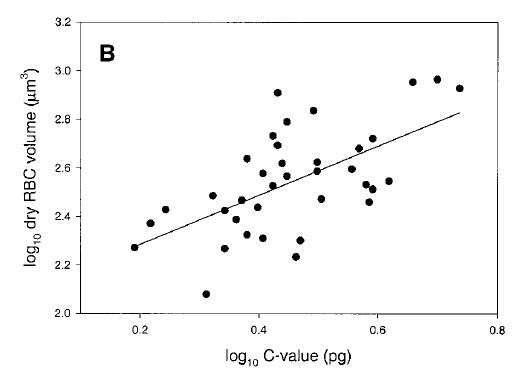
One of the many aggravations I encounter when reviewing manuscripts is that some authors greatly overstate the applicability of statistically significant patterns they report. For example, a statistically significant pattern in a small comparison of a few animals may be extrapolated in the discussion to the kingdom at large.

Today I was disappointed to see a paper that is soon to come out in Zoology that does the opposite -- i.e. takes a non-significant relationship in a handful of species and pretends that it challenges the importance of broad relationships that have been considered important for decades.

The paper in question is:

A dynamic way to alter the shape and size of microscopic three-dimensional structures built out of proteins has been developed by biological chemist Jason Shear and his former graduate student Bryan Kaehr at The University of Texas at Austin.

Shear and Kaehr fabricated a variety of detailed three-dimensional microstructures, known as hydrogels, and have shown that they can expand and bend the hydrogels by altering the chemistry of the environment in which they were built.

Hydrogels have been in development over the last couple of decades and are being used as parts in biology-based microdevices and medical diagnostic technologies, for drug delivery, and in tissue engineering. But the future utility of these "smart materials" relies on finding better ways to control their conformation.

Extinction risks for natural populations of endangered species are likely being underestimated by as much as 100-fold because of a mathematical "misdiagnosis," according to a new study led by a University of Colorado at Boulder researcher.

Assistant Professor Brett Melbourne of CU-Boulder's ecology and evolutionary biology department said current mathematical models used to determine extinction threat, or "red-listed" status, of species worldwide overlook random differences between individuals in a given population.

Such differences, which include variations in male-to-female sex ratios as well as size or behavioral variations between individuals that can influence their survival rates and reproductive success, have an unexpectedly large effect on extinction risk calculations, according to the study.

Six of every 100 patients who die in hospital do so as a consequence of an adverse drug reaction or, in other words, a fatal reaction to medicines, according to research carried out at the Department of Medicine of the University of Granada, in collaboration with the Clinical Hospital San Cecilio of Granada, by Alfredo José Pardo Cabello and directed by Professors Emilio Puche Cañas (Department of Pharmacology) and Francisco Javier Gómez Jiménez (Department of Medicine).

A adverse drug reaction to medicines (ADR) has been defined as any harmful and unwanted effect of a drug, at doses used for prophylaxis, diagnose or treatment. Their repercussion is usually minimal, but sometimes, they can be serious and they can even endanger the patient’s life.

Since earliest recorded history, and presumably beyond, humans have always wanted to fly. First attempts involved imitation of winged creatures around them, and unfailingly ended in disaster.

No workable flying machines have ever looked particularly similar to nature's fliers, and today there is little comparison between a top of the range military chopper and the humble bumblebee, despite similar flight patterns.

In an era in which engineers are increasingly exploiting designs from nature, understanding this paradox is becoming ever more important. Dr Jim Usherwood, from the Royal Veterinary College, has studied the reasons behind these differences in aerodynamics and concluded that scientists should, in this instance, be more hesitant before imitating nature.

The emotional well-being of families where children lack a genetic or gestational link to one or both of their parents (where the children have been conceived through surrogacy, egg donation or donor insemination) has long been a subject of debate.

In the first worldwide study of this issue, British scientists have shown that relationships within such families appear to be functioning well, and that there are few differences between them and families in whom children were conceived naturally.

Miss Polly Casey, from the Centre for Family Research, Cambridge University, UK, will tell the 24th annual conference of the European Society of Human Reproduction and Embryology this week that the study found that the egg donation, surrogacy, and donor insemination families showed more similarities than differences in the psychological well-being of the parents, the quality of parent-child relationships, and the psychological adjustment of the child.

