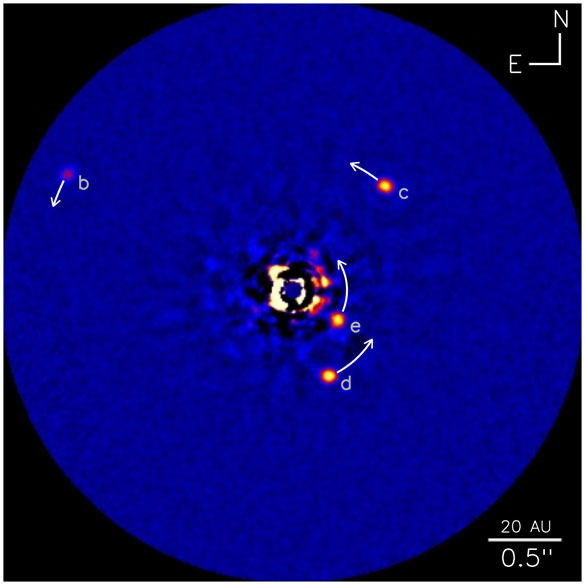
A new fourth planet (known as HR 8799e) which orbits a bright star called HR 8799 some 129 light years from Earth (faintly visible to the naked eye) has been discovered, making it the fourth giant planet found outside our solar system.
Our four giant planets are Jupiter, Saturn, Uranus and Neptune. Like our solar system, HR 8799 also contains two 'debris belts' composed of small rocky or icy objects, along with lots of tiny dust particles, ours being the asteroid belt between the orbits of Mars and Jupiter and the Kuiper Belt, beyond Neptune's orbit.
The social impairment of people with Autism Spectrum Disorders (ASD) can have a profound impact on quality of life.
As part of their research, Eastern Virginia Medical School scientists say they have verified that a specific mouse strain, known as the BALB/c mouse, is a valid animal model of the limited sociability seen in persons with Autism. In the presence of another mouse, BALB/c mice move as far away as possible and do not interact as normal mice do, they say in much the same way people with autism often avoid making social contact with other people.
As if neurotic people weren't already neurotic enough, they now have to be neurotic knowing their relationships and marriages have a lot more difficulty.
But a new study says if neurotic newlyweds have more sex, their marital satisfaction is as high as less neurotic counterparts. That's a science result we can all get behind!
Neuroticism to eroticism
Neuroticism is the tendency to experience negative emotion and people who are high in it get upset easily, change their mood often and worry frequently. People who score high in neuroticism are also less satisfied in romance and relationships, and when they get married they are more likely to divorce.
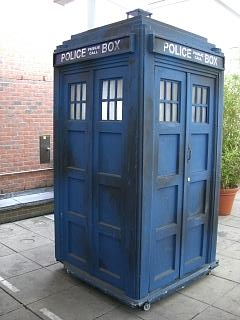
Doctor Who is always getting into some pickle or another. Luckily he has advanced technology (and a time traveling police box/telephone booth) to help solve problems.
If defeating Daleks and keeping a temperamental TARDIS functional is in your future, we have good news; Doctor Who's trusty sonic screwdriver gadget could become a reality for DIY types, according to Bristol University engineers who are out to show how a real life version of the fictional screwdriver, which uses sonic technology to open locks and undo screws, could be created.