






During flowering four different types of floral organs need to be formed:

  • Sepals, which protect the inner organs;
  • The frequently ornamental petals;
  • Stamens, which produce pollen and;
  • The carpels, the female reproductive unit.

This process is orchestrated by a large number of genes.

A synthetic version of a molecule found in the egg cells of the Northern Leopard frog (Rana pipiens) could provide the world with the first drug treatment for brain tumours.

Known as Amphinase, the molecule recognises the sugary coating found on a tumour cell and binds to its surface before invading the cell and inactivating the RNA it contains, causing the tumour to die.

Although it could potentially be used as a treatment for many forms of cancer, Amphinase offers greatest hope in the treatment of brain tumours, for which complex surgery and chemotherapy are the only current treatments.


Amphinase molecule. Credit: Professor Ravi Acharya, University of Bath

A search for the molecular clues of longevity has taken Mayo Clinic researchers down another path that could explain why some people who consume excessive calories don’t gain weight. The study, which was done in laboratory mouse models, points to the absence of a gene called CD38. When absent, the gene prevented mice on high-fat diets from gaining weight, but when present, the mice became obese.

The findings were published this month in the online issue of The FASEB Journal, the journal of the Federation of American Societies for Experimental Biology.

Children suffering from pneumonia could be spared the pain of the doctor’s needle, thanks to new research funded by the British Lung Foundation.

The study, a world-first carried out by researchers at The University of Nottingham, discovered that children given oral treatment recovered as quickly, suffered less pain, required less oxygen therapy in hospital and were able to go home sooner than those given injections.

Two-and-a-half million children are affected by pneumonia each year in Europe. Until now, most children have been admitted to hospital and treated with injected antibiotics.

How does a cell process information? Unlike computers, with CPUs to carry out calculations, and animals, which have brains that process sensory information, cells have no centralized device for processing the many internal and external signals with which they are constantly bombarded. And yet they somehow manage just fine. The single-celled brewers's yeast, for example, can know what kind of food source is available, tell when it's hot or cold, and even find a mate. One key way that cells sense and respond to their environment is via genetic circuits.

When white Americans were asked in a new study to pick a dollar amount they would have to be paid to live the rest of their lives as a black person, most requested less than $10,000. A minor thing.

In contrast, study participants said they would have to be paid about $1 million to give up television for the rest of their lives.

This would seem to state that white people don't think being black is such a big deal in 2007. Not the case at all, says Philip Mazzocco, co-author of a new study study and assistant professor of psychology at Ohio State University's Mansfield campus. Instead, he says the results suggest most white Americans don't truly comprehend the persisting racial disparities in our country.

People on polar expeditions can undergo serious negative psychological changes as they struggle to adapt to their isolated, extreme and confined environment; but also positive changes due to sense of achievement after having coped with such a stressful situation.

Dr Lawrence Palinkas, University of Southern California, Los Angeles, USA and Dr Peter Suedfeld, University of British Columbia, Vancouver, did a review of published data on polar expeditions, specifically focussing on psychological or social dimensions of behaviour.

The authors say: “Polar expeditions include treks and stays at summer camps or year-around research stations.

Researchers at UT Southwestern Medical Center have determined how a substance derived from the bark of the South American lapacho tree kills certain kinds of cancer cells, findings that also suggest a novel treatment for the most common type of lung cancer.

The compound, called beta-lapachone, has shown promising anti-cancer properties and is currently being used in a clinical trial to examine its effectiveness against pancreatic cancer in humans. Until now, however, researchers didn’t know the mechanism of how the compound killed cancer cells.

For more than 100 years, scientists have known that humans carry a rich ecosystem within their intestines. An astonishing number and variety of microbes, including as many as 400 species of bacteria, help humans digest food, mitigate disease, regulate fat storage, and even promote the formation of blood vessels.

By applying sophisticated genetic analysis to samples of a year’s worth baby poop, Howard Hughes Medical Institute researchers have now developed a detailed picture of how these bacteria come and go in the intestinal tract during a child’s first year of life.

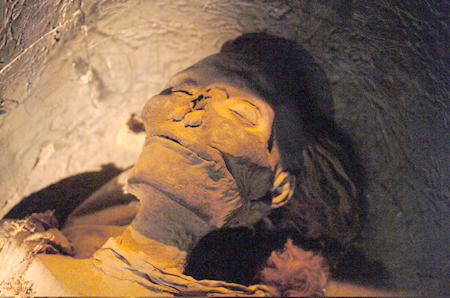
Dr. Zahi Hawass, Secretary General of the Supreme Council of Antiquities in Egypt, sent out this announcement:

On Wednesday (27/6/2007) at 11:00 a.m Culture Minster Farouk Housni and Dr. Zahi Hawass Secretary General of the Supreme Council of Antiquities (SCA) will hold an International Conference at the Egyptian Museum in Tarir in Room 43 to announce the Identification of Hatshepsut's mummy .

Please come to attend the event at 10:00 am. at the Egyptian Museum in order to fix cameras and TV crews.

This is being called the most important discovery in the Valley of the Kings since King Tutankhamun.

