

Corn seedlings are especially susceptible to hungry insect herbivores, such as caterpillars and aphids, because they lack woody stems and tough leaves. So what's a tender, young corn plant to do?

A recent study by Professor Georg Jander's group at the Boyce Thompson Institute (BTI), finds that corn plants may make serious trade-offs when defending themselves against multiple types of insects. Some corn varieties make themselves more vulnerable to aphids after generating defensive compounds against nibbling caterpillars. The results, which appear in the journal Molecular Ecology, may lead to the development of corn plants that are naturally more resistant to certain insects.

Slime Can See

Slime Can See

Feb 09 2016 | comment(s)

After more than 300 years of looking, scientists have figured out how bacteria "see" their world. And they do it in a remarkably similar way to us.

A team of British and German researchers reveal in the journal eLife how bacterial cells act as the equivalent of a microscopic eyeball or the world's oldest and smallest camera eye.

"The idea that bacteria can see their world in basically the same way that we do is pretty exciting," says lead researcher Conrad Mullineaux, Professor of Microbiology from QMUL's School of Biological and Chemical Sciences from Queen Mary University of London (QMUL).

It is 5 years since the potential of social media was considered limitless. Not only was social media revolutionary, but it was literally capable of bringing about revolutions such as the uprisings of the “Arab Spring”. There was no part of our social lives that platforms like Facebook, Twitter and LinkedIn could not change. Concepts like having a “social graph” became generally understood, as was the ability of those graphs to determine what we bought, how we felt, who our friends were and where we would work.
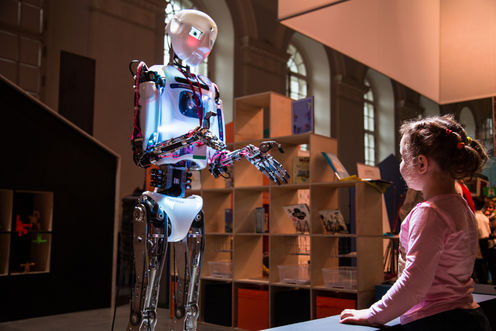
Imagine your child requires a life-saving operation. You enter the hospital and are confronted with a stark choice.

Do you take the traditional path with human medical staff, including doctors and nurses, where long-term trials have shown a 90% chance that they will save your child’s life?

Or do you choose the robotic track, in the factory-like wing of the hospital, tended to by technical specialists and an array of robots, but where similar long-term trials have shown that your child has a 95% chance of survival?

CHICAGO -- An international team of scientists have discovered two new plankton-eating fossil fish species of the genus called Rhinconichthys (Rink-O-nik-thees) from the oceans of the Cretaceous Period, about 92 million years ago, when dinosaurs roamed the planet.

Baltimore, Md., Feb. 8, 2015 -A multi-disciplinary group of researchers at the University of Maryland School of Medicine (UM SOM) have for the first time determined the genetic makeup of various strains of E. coli, which every year kills hundreds of thousands of people around the world.

The paper, which appears in a recent issue of Nature Microbiology, analyzed the DNA of Enteropathogenic Escherichia coli (EPEC), which are the strains of the bacteria that cause diarrhea.

For more than 30 years, Mississippi and West Virginia were the only states in the country that disallowed nonmedical exemptions to mandatory school vaccination laws for religious or philosophical reasons, until they were joined by California last year. These exemption laws have provoked debate over the rights of parents versus the responsibility of government to protect public health. Researchers at Columbia University's Mailman School of Public Health, led by James Colgrove, PhD, professor of Sociomedical Sciences, conducted a review of vaccination policies through legislative rulings and accounts by health officials. They found policy changes remain controversial and alternatives exist to eliminating nonmedical exemptions entirely.

Chestnut Hill, Mass (02/08/2016) - The damaging climate consequences of carbon emissions will grow and persist for millennia without a dramatic new global energy strategy, according to a new set of research-based climate change scenarios developed by an international team of scientists.

Rising global temperatures, ice field and glacial melting and rising sea levels are among the climatic changes that could ultimately lead to the submergence of coastal areas that are home to 1.3 billion people today, according to the report, published online today by the journal Nature Climate Change.

Vitamin B6, which exists in different natural forms called vitamers, is essential for all living organisms, as it participates in numerous aspects of cells' everyday life. Researchers from the University of Geneva (UNIGE), Switzerland, have discovered an unexpected role for this micronutrient, in relation to nitrogen metabolism. Described in the journal The Plant Cell, the results indicate that one of the vitamers informs the plant of its content in ammonium, a basic nitrogen compound needed for the biosynthesis of various molecules essential for life, such as proteins.

Cotton candy machines may hold the key for making life-sized artificial livers, kidneys, bones and other essential organs.

For several years, Leon Bellan, assistant professor of mechanical engineering at Vanderbilt University, has been tinkering with cotton candy machines, getting them to spin out networks of tiny threads comparable in size, density and complexity to the patterns formed by capillaries - the tiny, thin-walled vessels that deliver oxygen and nutrients to cells and carry away waste. His goal has been to make fiber networks that can be used as templates to produce the capillary systems required to create full-scale artificial organs."

