


If you are skeptical of nutrition advice in general, or Miracle Vegetable of the Week claims in mainstream media, you have good reason: In a world where the United Nations body on cancer meta-analyses, which self-identifies as the most important carcinogen-finder in the world, lists sausage as the same level of hazard as cigarettes and mustard gas, it's fine to roll your eyes and groan and wonder how long before yet another meaningless Prop. 65 warning label shows up in California.

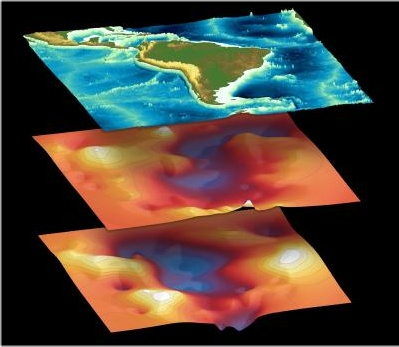
Scientists have nearly completed the first map of the mantle under the tectonic plate that is colliding with the Pacific Northwest and putting Seattle, Portland and Vancouver at risk of the largest earthquakes and tsunamis in the world.

The new report describes how the movement of the ocean-bottom Juan de Fuca plate is connected to the flow of the mantle 150 kilometers (100 miles) underground, which could help seismologists understand the forces generating quakes as large as the destructive Tohoku quake that struck Japan in 2011 and led to the tsunami that caused the issues at the Fukushima nuclear plant.

CAMBRIDGE, MA -- MIT engineers have designed magnetic protein nanoparticles that can be used to track cells or to monitor interactions within cells. The particles, described today in Nature Communications, are an enhanced version of a naturally occurring, weakly magnetic protein called ferritin.

"Ferritin, which is as close as biology has given us to a naturally magnetic protein nanoparticle, is really not that magnetic. That's what this paper is addressing," says Alan Jasanoff, an MIT professor of biological engineering and the paper's senior author. "We used the tools of protein engineering to try to boost the magnetic characteristics of this protein."

If you are planning to take the long trip to Mars, don't forget to pack sleeping pills and skin cream.

A new study examines the medications used by astronauts on long-duration missions to the International Space Station. As one might expect, the study shows that much of the medicine taken by astronauts in space relates to the unusual and confined microgravity environment in which they work or to the actual work that they are doing to complete their missions. Among these medications, the report shows that the use of sleep aids and incidence of skin rashes were higher than expected.  

Mars doesn't have much in the way of Earth-like weather, it does evidently share one kind of weird meteorology: acid fog. 

Astronomer Shoshanna Cole of Ithaca College gathered data from instruments on the 2003 Mars Exploration Rover Spirit and suggests acidic vapors may have eaten at the rocks in a 100-acre area on Husband Hill in the Columbia Hills of Gusev Crater on Mars. 

The work focused on the 'Watchtower Class' outcrops on Cumberland Ridge and the Husband Hill summit. 

Americans are living longer and better than ever so why have white middle-aged Americans seen overall mortality rates increase over the past 15 years? For any other demographic it would mean protests and outrage and calls for action, instead this 'epidemic', which has killed more people than AIDS, has been overlooked.

The paper in the Proceedings of the National Academy of Sciences used data from a variety of surveys and reports and reports a sharp increase in the death rate for middle-aged whites after 1998. This turnaround in mortality reverses decades of progress, and is not seen among African-Americans or Latin-Americans in the United States. 

Women with polycystic ovary syndrome (PCOS) have high levels of androgens in their blood, which has been assumed able to affect fetal development during pregnancy. An international team of researchers led from Karolinska Institutet in Sweden has now identified a hormonal mechanism that might explain why women with PCOS run a higher risk of developing symptoms of mental ill-health, such as anxiety and depression, in adulthood. The results, which are based on animal studies, are presented in the journal 'PNAS'.

A general mathematical theory that predicts how cracks spread through materials like glass and ice can also predict the direction in which rivers will grow, according to a new MIT study.

In fracture mechanics, the theory of local symmetry predicts that, for example, a crack in a wall will grow in a direction in which the surrounding stress is symmetric around the crack's tip.

Scientists at MIT have now applied this theory to the growth of river networks, finding that as a river fed by groundwater cuts through a landscape, it will flow in a direction that maintains symmetric pressure from groundwater around the river's head.

EEAST LANSING, Mich. - Stealthy diseases sometimes trick plants by hijacking their defense signaling system, which issues an alarm that diverts plant resources for the wrong attack and allows the enemy pathogens to easily overrun plants.

A team of international scientists led by Michigan State University, however, is helping plants counter these attacks by boosting plants' alert system. New research in the current issue of Proceedings of the National Academy of Sciences shows that the team has engineered the receptor for jasmonate, a plant hormone that plays a central role in plant defense, to fend off such stealthy attacks from highly evolved pathogens.

The Cascadia subduction zone (CSZ) has captured major attention from paleoseismologists due to evidence from several large (magnitude 8-9) earthquakes preserved in coastal salt marshes. Stratigraphic records are proving to be useful for learning about the CSZ's past, and microfossils may provide more answers about large ancient earthquakes.

They may also allow modelers to learn more about potential major hazards related to earthquakes in the area, which would contribute to public preparedness for such events.

