

Since posting this I have discovered that the difference signal I was looking at was not daily minimum temp, but daily maximum temp. A new analysis of minimum temps will be found here.
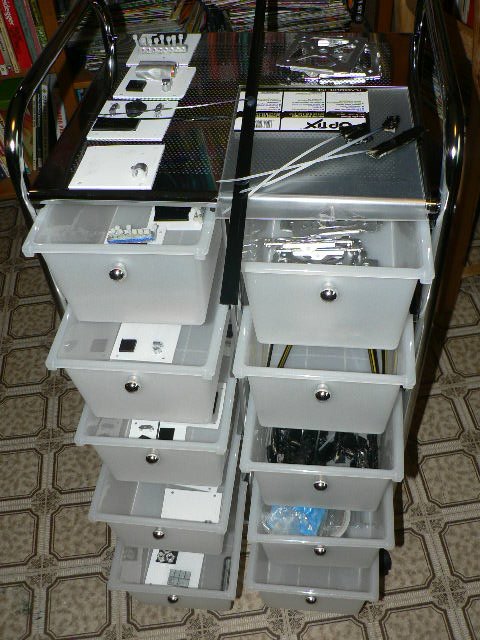
I am a firm believer that simulations improve reality.  If you want to launch a CubeSat, you should start with a fictional CubeSat, a very small orbiting satellite concept.  After deciding what you'd want to orbit the Earth (or Moon), you move to a 1:1 scale mockup.  Only after you've broken a fair amount of plastic and fake hardware should you begin 'bending metal' on the real ones.

The process of prototyping and mockups is a standard part of engineering.  The framework for doing so in an interesting manner is entirely based in the world of games.
The Science of Law

  Scattered throughout the pages of the history of the common law are many references to it being a science.  Science may be called the pursuit of fact by means of well-defined procedures.  Anyone who has ever visited any two courts of common law jurisprudence will have seen at first hand that their procedures inevitably differ somewhat.  The greatest difference will be found between English and American criminal courts.  Whereas in America the trial proper begins when the prosecutor addresses the jury, followed by the defence, in English Crown Courts the defence is not allowed to address the jury until all evidence has been shown or heard.

Attention, activist groups: Open-minded people don't change their view when you control what they learn and they only get one side of the issue, according to a new paper, so framing can only take you so far.

The results of a new paper in the Journal of Communication suggest that climate change deniers may be less effective in swaying public opinion than many scientists and advocates fear, and may even hurt their own cause among those who are most open-minded, according to the authors. 

Nuclear power is not an environmental issue.

There is just no way to spin that it is.  What started off with activists being anti-nuclear weapon has morphed into irrational, anti-science stances against all energy - even reactors that simply cannot have a meltdown and use old nuclear waste for fuel.  Who could protest against such a thing?

Well, when you have tens and hundreds of millions of dollars at stake, and a lot of that money is coming from aging hippies who bought into the Ralph Nader/Jane Fonda hysteria that nuclear power was causing a cancer epidemic and the Apocalypse, you have to play along.


Dopamine, the neurotransmitter celebrity chemical du jour in brain stories, gets invoked a lot because it can make a lot of correlations possible - and that means fun for journalists who either want to highlight the ridiculous or scare you

Like guns? Dopamine. Are you a Democrat? Dopamine. But aside from its 'pleasure chemical' designation, dopamine has lots of roles in the brain. So if a man takes antipsychotic medication, he may lactate as a side effect, because those medications focus on dopamine. And if there is an addiction story, dopamine is invoked.

A promising anti-cancer therapy - suppression of the protein mammalian target Of Rapamycin  (mTOR) - has failed to achieve hoped-for success in killing tumor cells.

mTOR plays an important role in regulating how cells process molecular signals from their environment, and it is observed as strongly activated in many solid cancers. Drug-induced suppression of mTOR has until now shown success in causing the death of cancer cells in the outer layers of cancerous tumors, but has been disappointing in clinical trials in dealing with the core of those tumors.  

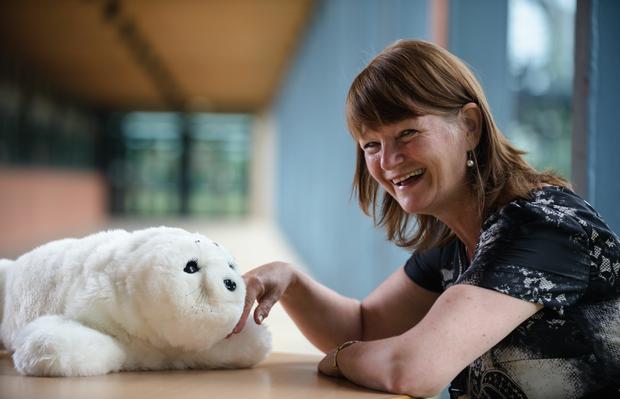
Interacting with a therapeutic robot companion made people with mid- to late-stage dementia less anxious and also had a positive influence on their quality of life, according to a pilot study

PARO, a robotic harp seal, was used to investigate the effect of interacting with an artificial companion compared with participation in a reading group. PARO is fitted with artificial intelligence software and tactile sensors that allow it to respond to touch and sound. It can show emotions such as surprise, happiness and anger, can learn its own name and learns to respond to words that its owner uses frequently.
How lifeless materials became organic molecules that are the bricks of animals and plants is a science question for the ages.

The world's first known odd couple: 250 million years ago, a mammal forerunner and an amphibian shared a burrow in South Africa.

Scientists scanning a 250 million-year-old fossilized burrow from the Karoo Basin of South Africa have discovered that two unrelated vertebrate animals nestled together and were fossilized after being trapped by a flash flood event. Facing harsh climatic conditions subsequent to the Permo-Triassic (P-T) mass extinction, the amphibian Broomistega and the mammal forerunner Thrinaxodon cohabited in a burrow.


