




Discovery of a new protein that controls the presence of the Vel blood group antigen on our red blood cells will make it possible to use simple DNA testing to find blood donors for patients who lack the Vel antigen and need a blood transfusion, say researchers. 

The world produces a lot of food, enough to feed billions more than are living right now. There is a distribution issue, which will be solved as science engineers more crops that can grow in more local conditions, but one way to make more food available right now will also save people money - reducing food waste.

4 out of every 10 pounds produced in the United States alone goes to waste, claimed  John Floros, Ph.D.,  dean of the College of Agriculture at Kansas State University, in a keynote talk at the American Chemical Society meeting.  

New research hopes to create reactions necessary for industries such as pharmaceutical companies but eliminate the resulting waste from traditional methods. 

Traditional methods – dating back thousands of years – involve using solutions to speed up chemical reactions that are used to make products that we use every day. However, the leftover waste or solvents can often be a volatile compound.

Disposal and recycling is also becoming a growing and more costly challenge for companies as they follow increasing federal environmental regulations.

Researchers have designed a new kind of adaptive material with tunable transparency and wettability features - imagine a tent that blocks light on a dry and sunny day, and becomes transparent and water-repellent on a dim, rainy day. Or highly precise, self-adjusting contact lenses that also clean themselves. 

The new material was inspired by natural dynamic, self-restoring systems, such as the liquid film that coats your eyes - tears. Individual tears join up to form a dynamic liquid film with an obviously significant optical function that maintains clarity, while keeping the eye moist, protecting it against dust and bacteria, and helping to transport away any wastes – doing all of this and more in literally the blink of an eye. 

At some point everyone has heard the question: "Which came first, the chicken or the egg.".  What is surprising about this question is that it can still produce any debate.

It is surprisingly obvious yet one wonders what has contributed to its longevity and its countinued appearance in various arguments.

Why obvious?  Well, let's consider the premises.  Unless one is predisposed to believing that animals simply appear, then we must reject the premise that a chicken can exist as a fully formed adult without any previous existence.  As a result, the only element left to examine is the egg.  Yet, an egg doesn't spring into existence fully formed either.

Animal and dairy scientists  presenting at the Lactation Biology Symposium in Phoenix, Arizona have discovered that drinking milk at an early age can help mammals throughout their lives. The presentations focused on epigenetics, or how gene expression changes based on factors like environment or diet. Epigenetic changes modify when or how certain traits are expressed. 

But understanding exactly how milk affects the body is a complicated story of hormones, antibodies and proteins, as well as other cells and compounds researchers have not yet identified.

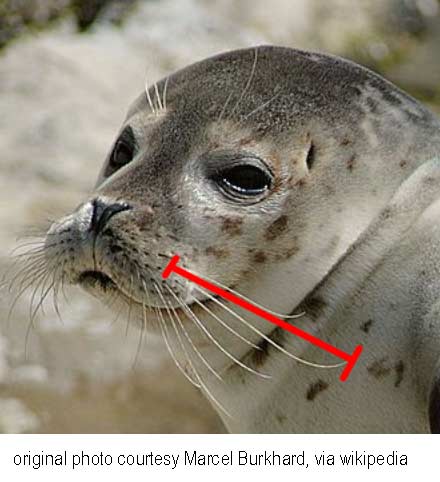
In order to clear any doubts regarding the comparative growth rates of the whiskers of harbor seals (Phoca vitulina) and Steller sea lions (Eumetopias jubatus), researchers at the Institute of Marine Science, University of Alaska Fairbanks, and the Mystic Aquarium, CT, U.S.A. performed a series of experiments in 2001.

The whiskers of participant seals and sea lions were stable-isotope-labeled with Carbon 13 and Nitrogen 15, and whisker growth rates were measured over a period of  more than two years.

The results:

Health plans that offer low premiums and high deductibles believe that patients with deductibles of $1,000 or more for individual coverage (or twice that for family coverage) will shop around for the best price to get their health care.

For an administration that promised to 'restore science to its rightful place' and that is run by a man who calls himself 'scientist in chief' there is sure a lot of anti-science activity going on.

A model based on global population data spanning the years from 1900 to 2010 has caused a research team to predict the opposite of what Doomsday Prophets of the 1960s and beyond insisted would happen -  the number of people on Earth will stabilize around the middle of the century and perhaps even start to decline. 

The results coincide with the United Nation's downward estimates, which claim that by 2100 Earth's population will be 6.2 billion, if low fertility and birth rate continues on its current path, below the 7 billion we are at now.

