Despite the intent in biology to eliminate group selection, it invariably turns up as the only reasonable explanation for the cohesion of species and the behavior of large groups of animals.
Additionally, the struggle to explain altruism using
kin selection and
inclusive fitness is perpetually haunted by the requirement that the entire premise hinges on the existence of an actual "altruism" gene. In other words, Hamilton's rule and inclusive fitness are meaningless if there isn't a genetic component to cooperation and altruism.
In a pinch and need to go back in time or flee to Alpha Centauri in a hurry? Find a mathematician, quick!
If only Einstein's theory of special relativity were extended to work beyond the speed of light, things would be easy. But of course Einstein's theory holds that nothing could move faster than the speed of light. Special Relativity was published in 1905 and explained how motion and speed is always relative to the observer's frame of reference. The theory connects measurements of the same physical incident viewed from these different points in a way that depends on the relative velocity of the two observers.
1. Thou shalt not screw thine early adopters. They made thou what thou art, even showing patience with thine inattention to upward compatibility. Yea, though they paid high early prices, thou hast refused them free upgrades. Now as they glance at their boxes of obsolete connectors, power sources,
software and disk drives, they plan to make their next purchases from thine upstart competitor.
The Las Cañadas volcanic caldera on Tenerife in the Canary Islands has generated at eight major eruptions during the last 700,000 years, catastrophic events which resulted in eruption columns of over 10 miles high and expelled widespread pyroclastic material over 60 miles.
For comparative purposes, even the smallest of those Tenerife eruptions expelled over 25 times more material than the 2010 eruption of Eyjafjallajökull, Iceland. The Las Cañadas volcano is an IAVCEI (International Association of Volcanology and Chemistry of the Earth's Interior) Decade Volcano – identified by the international community as being worthy of particular study in light of their history of large, destructive eruptions and proximity to populated area.
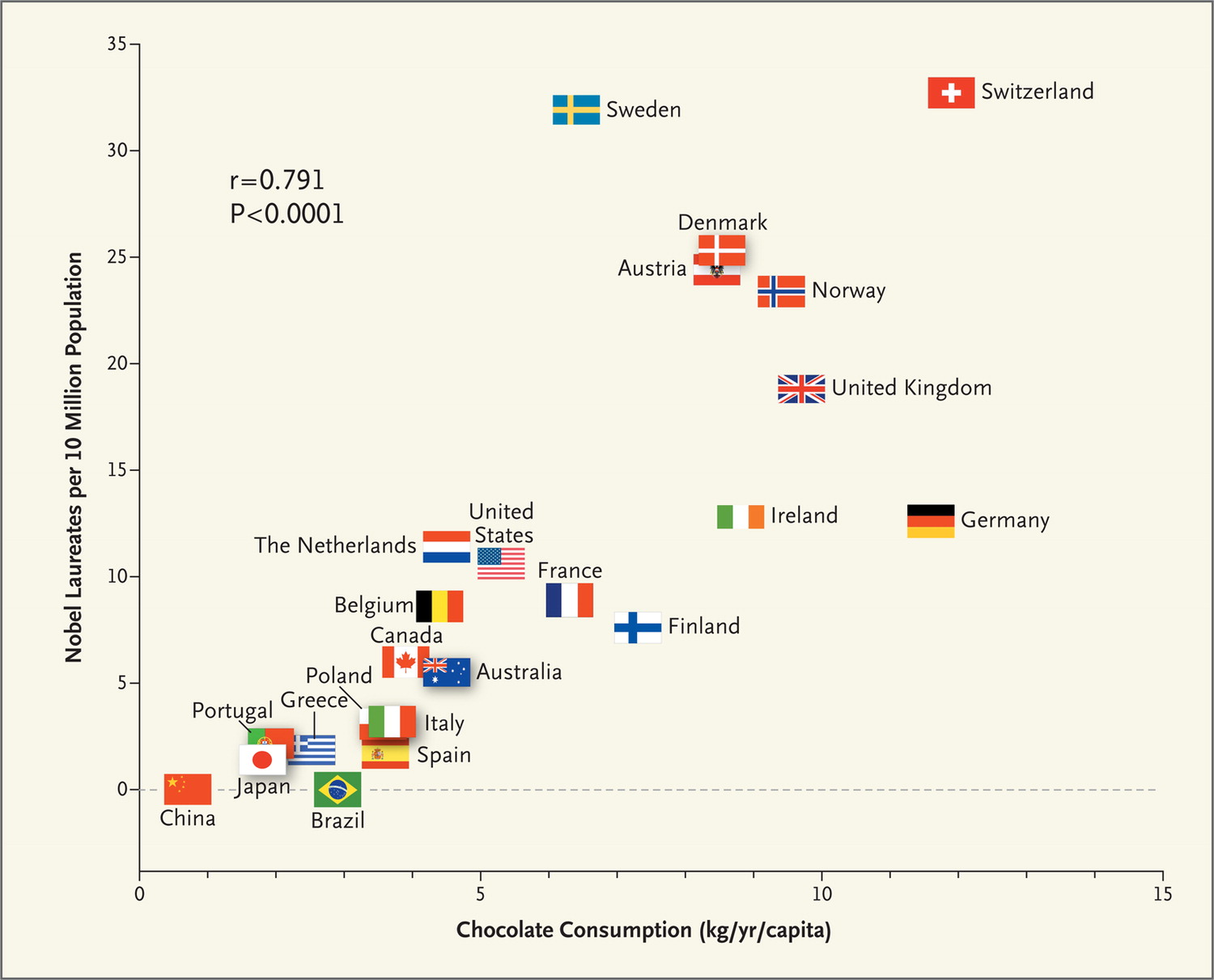
Winston Churchill liked his chocolate and he liked it rich and dark. At least that is what Hitler must have been convinced of as he decided to lure the British prime minister not with cigars but with dark chocolate. Churchill
barely escaped his death by chocolate and went on to
win the Nobel Prize in literature.
Coincidence?
In a landmark essay published in 1872, the physician George Huntington was the first to articulately describe a condition which he referred to as 'hereditary chorea'. Of his experience with hereditary chorea, which clearly left a strong impression on him, he wrote:
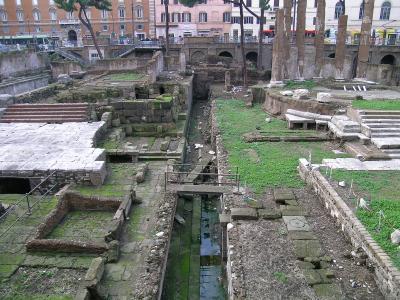
A concrete marker to condemn the assassination of Julius Caesar has confirmed that the legendary statesman and general was stabbed right at the bottom of the Curia of Pompey while he sat, presiding over a meeting of the Senate. Currently, the remains of this building are located in the archaeological area of Torre Argentina, right in the historic center of the Roman capital.
Caesar's adopted son and successor, Augustus, ordered the structure created to protest the death of his father. The classical texts had stated Julius Caesar was stabbed in the Curia of Pompey on March 15th of the year 44 B.C. but it lacked material evidence.
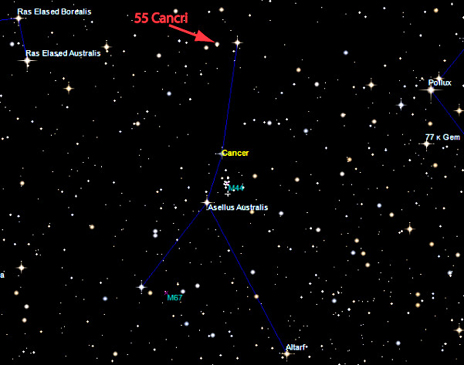
A rocky planet twice Earth's size, called 55 Cancri e, that orbits a nearby star is likely a diamond planet, according to new research.
55 Cancri e has a radius twice Earth's and a mass eight times greater, making it a "super-Earth." It is one of five planets orbiting the sun-like star, 55 Cancri, that is located 40 light years from Earth yet visible to the naked eye in the constellation of Cancer. The planet orbits at hyper speed; its year lasts just 18 hours, in contrast to Earth's 365 days. It is also blazing hot, with a temperature of about 3,900 degrees Fahrenheit, researchers said, a far cry from a habitable world.
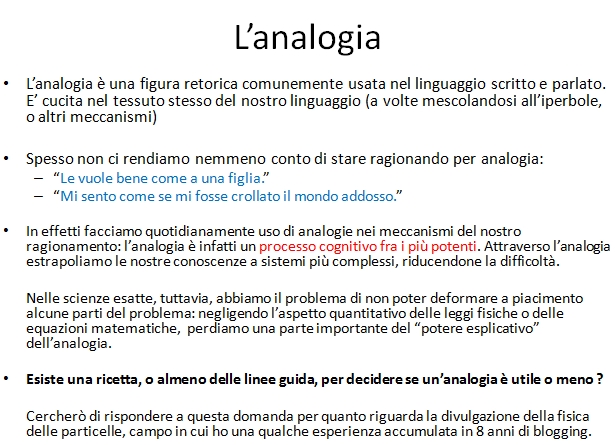
Yesterday I spent a very interesting day at
Comunicare Fisica 2012, a conference held in TORINO which brought together researchers, high-school teachers, journalists and other professionals working in the field of the popularization of science. The session in the afternoon dealt with the use of the web 2.0, and of course among the topics discussed in the talks was the use of blogs.
I’ve been meaning to write a column on steady-state economics for some time. Last year, I even did some preliminary research, before getting caught up in topical current events instead. Then, last week, I returned to my internet perusal, again typing in my search phrase, “zero growth economy.” To my consternation, the results had changed dramatically. While the radically different economic philosophy I was after still topped the list, many of the recent hits came from news articles reporting on the dire economic straits of Europe, the United States, and even China.