





A neuroprotectant drug has been shown to protect the human brain against the damaging effects of stroke. The clinical trial was a randomized, double blind, multi-center trial that was conducted in Canada and the USA. The study evaluated the effectiveness of NA-1 (Tat-NR2B9c) when it was administered after the onset of small strokes that are incurred by patients who undergo neurointerventional procedures to repair brain aneurysms. This type of small ischemic stroke occurs in over 90% of aneurysm patients after such a procedure, but usually does not cause overt neurological disability. 
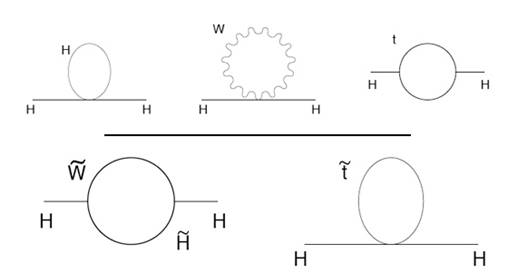
Five years ago I was fascinated by an analogy used by my friend Michelangelo Mangano to explain the problem of naturalness, a crucial issue in fundamental physics, and maybe the biggest single indicium we have that new physics beyond the standard model of particle physics should exist, and be not too far away from our current experimental reach.
To celebrate International Cephalopod Awareness Days, I decided to comb through all the cephalopod news since last October (and there's been quite a bit of it) to bring you the top ten essential, not-to-be missed stories of cephalopod science and culture. The theme of 2012 seems to have been the discovery of unexpected and slightly embarrassing habits . . .
The Nobel Prize in Physiology or Medicine was awarded jointly to John B. Gurdon and Shinya Yamanaka for – you guessed it- stem cell research. Or more specifically, “for the discovery that mature cells can be reprogrammed to become pluripotent". The announcement was unsurprising, as it was widely speculated that Yamanaka’s work on induced pluripotent stem cells (iPSCs) and Gurdon’s early cloning experiments would be likely candidates for the prize. The dynamic duo had already shared the Albert Lasker Basic Medical Research Award three years ago. 
A recent study published in Environmental Sciences Europe has attracted attention because it documents a net increase in pesticide use on genetically engineered crops in the US.  The author, Chuck Benbrook, is certainly qualified to consider pesticide issues, and I have had positive interactions with him over the years; however as an organic advocate he has a very different perspective on pesticides than I do.

“Considerable work exists to describe the functions of yeah.” explain authors Chad D. Nilep and colleague Tamara Grivičić from the Department of Linguistics at the University of Colorado. And there has also been some academic research investigating the so-called ‘Creaky Voice’. But the team’s study is one of the very first to investigate the two together (i.e. Yeah + Creaky Voice).

Small Is Ugly

Small Is Ugly

Oct 08 2012 | comment(s)

The small is weird. No – I do not mean supposed "quantum weirdness", which is not* about small stuff. The non-quantum behavior of the small is counterintuitive enough. Many misconceptions could be avoided with some awareness about how the surfaces of objects, even smooth looking metal surfaces, look like at small scales (think mountainous battle fields).

New data shared today with Europe's epilepsy community at the 10th European Congress on Epileptology (ECE) in London, demonstrated the efficacy of Fycompa(R) (perampanel) in reducing partial-onset seizures, the most common form of epilepsy, and its effectiveness and flexibility of use as add-on therapy. 

The successful treatment of partial-onset seizures (the most common form of epilepsy) remains a significant challenge in some patients and the incidence of uncontrolled partial epilepsy remains high, despite many existing anti-epileptic drugs (AEDs); between 20 - 40% of patients with epilepsy have remained poorly controlled despite these treatments.[1] The new data supports the use of perampanel as a new therapeutic option for this hard-to-treat patient population.

For some appliances, newer is not always better.  If you have an old dryer, you are better off not replacing it with an EnergyStar, more efficient model.  Unless you want to wait forever to dry your clothes, whereas newer refrigerators work better but people hold on to old ones just the same.

 Around 1 in 4 Brits admit that they have at least one household appliance that is still in regular use in their home that is more than 25 years old. Many of the people surveyed said they had held on to the appliance to get as much value for their money as possible but some say it was handed down to them by a relative and therefore it has sentimental value. 

Women may own the social sciences and education but they are under-represented in more math-intensive fields, according to a paper which looks at the US, EU, Brazil, South Africa, India, Korea and Indonesia. It was conducted by advocates of international gender issues from Women in Global Science&Technology and the Organization for Women in Science for the Developing World and it was funded by the Elsevier Foundation.

They make special note that the EU and US are low in female representation in hard science fields - but so is everyone else.

