





A new phase in the Gene Wars is about to beginthis time focused on the nexus of genetics and economics.

Nature carried a provocative article last week laying the ground work for what should be a fiery debate over the nascent field of genoeconomics. The prestigious American Economic Review is set to publish a peer reviewed paper co-authored by two economists, Quamrul Ashraf and Oded Galor, that argues that a country’s economic well being could be linked to the population’s genetic make-up.

Why, in difficult driving conditions or when lost, do people turn down the volume of their radio? Some new research links motor skills and perception, specifically as it relates to a second finding; a new understanding of what the left and right brain hemispheres "hear."

The findings, the first to match human behavior with left brain/right brain auditory processing tasks, may eventually point to strategies that could help stroke patients recover their language abilities and to improve speech recognition in children with dyslexia. 
Researchers have discovered that females with multiple sexual partners can be more fertile than those that are monogamous, and this because of an “overproduction” of sons.  The study,  published as a provisional article but already one of the most accessed in BCM Evolutionary Biology, helps to explain a puzzle haunting evolutionary biologist for decades: why so many females chase multiple sexual partners in a mating season, when this is costly and dangerous, and one is enough to fertilize all her eggs.
It's no surprise that when I get interested in a topic I opt for full immersion. Come on, people--you've seen the zebra print! You've seen the wigs!

What's my latest? Apparently, a deep immersion into Peter Singer, whose chapter "Taking Life: Humans" I've assigned to my students in Comp 1, along with Harriet McBryde Johnson's "Unspeakable Conversations."
Despite the intent in biology to eliminate group selection, it invariably turns up as the only reasonable explanation for the cohesion of species and the behavior of large groups of animals.

Additionally, the struggle to explain altruism using kin selection and inclusive fitness is perpetually haunted by the requirement that the entire premise hinges on the existence of an actual "altruism" gene.  In other words, Hamilton's rule and inclusive fitness are meaningless if there isn't a genetic component to cooperation and altruism.
In a pinch and need to go back in time or flee to Alpha Centauri in a hurry?  Find a mathematician, quick!

If only Einstein's theory of special relativity were extended to work beyond the speed of light, things would be easy.   But of course Einstein's theory holds that nothing could move faster than the speed of light. Special Relativity was published in 1905 and explained how motion and speed is always relative to the observer's frame of reference. The theory connects measurements of the same physical incident viewed from these different points in a way that depends on the relative velocity of the two observers.

1. Thou shalt not
screw thine early adopters. They made thou what thou art, even showing patience with thine inattention to upward compatibility. Yea, though they paid high early prices, thou hast refused them free upgrades. Now as they glance at their boxes of obsolete connectors, power sources, software and disk drives, they plan to make their next purchases from thine upstart competitor.

The Las Cañadas volcanic caldera on Tenerife in the Canary Islands has generated at eight major eruptions during the last 700,000 years, catastrophic events which resulted in eruption columns of over 10 miles high and expelled widespread pyroclastic material over 60 miles.

For comparative purposes, even the smallest of those Tenerife eruptions expelled over 25 times more material than the 2010 eruption of Eyjafjallajökull, Iceland.  The Las Cañadas volcano is an IAVCEI (International Association of Volcanology and Chemistry of the Earth's Interior) Decade Volcano – identified by the international community as being worthy of particular study in light of their history of large, destructive eruptions and proximity to populated area.

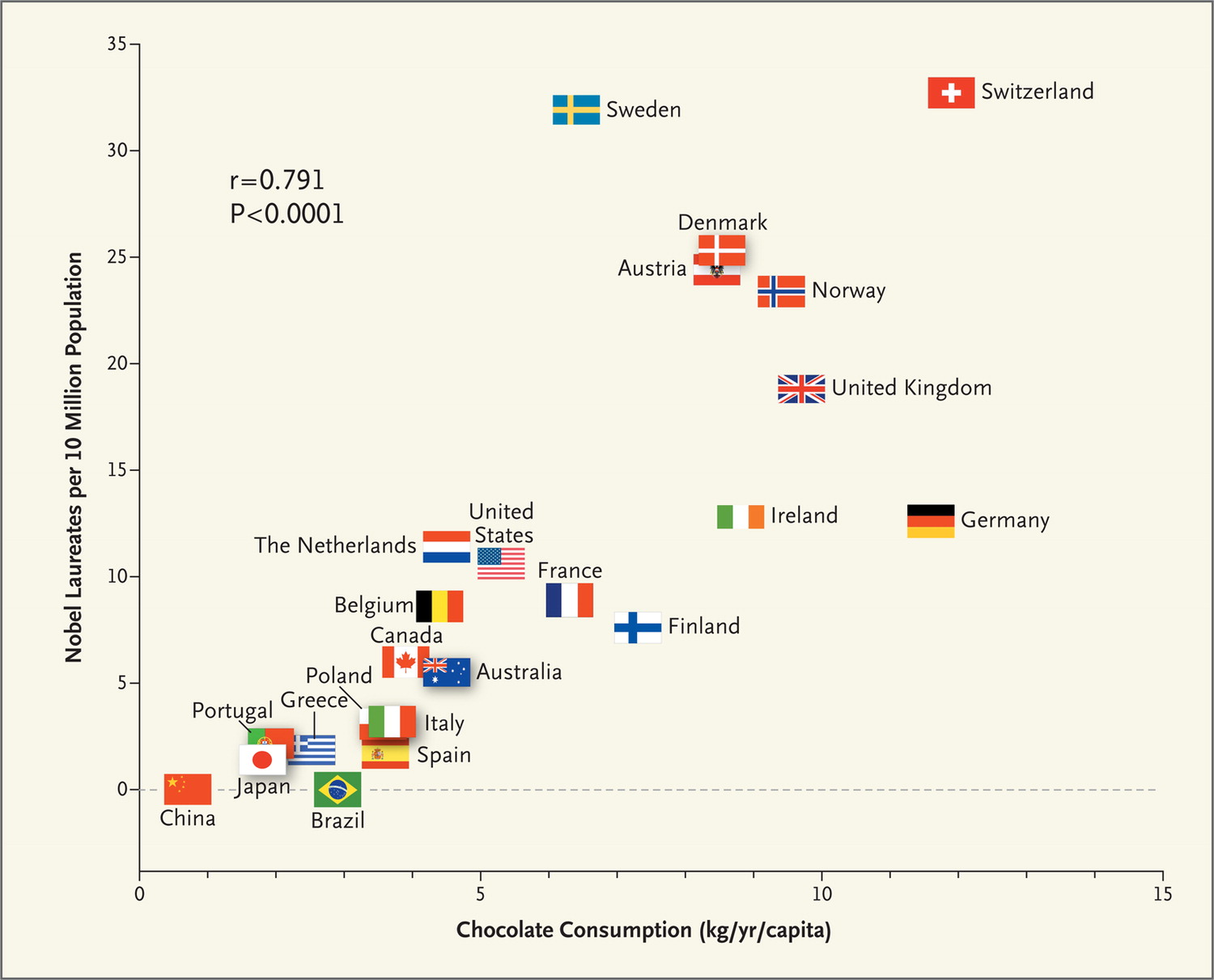
Winston Churchill liked his chocolate and he liked it rich and dark. At least that is what Hitler must have been convinced of as he decided to lure the British prime minister not with cigars but with dark chocolate. Churchill barely escaped his death by chocolate and went on to win the Nobel Prize in literature.

Coincidence?
In a landmark essay published in 1872, the physician George Huntington was the first to articulately describe a condition which he referred to as 'hereditary chorea'. Of his experience with hereditary chorea, which clearly left a strong impression on him, he wrote:


