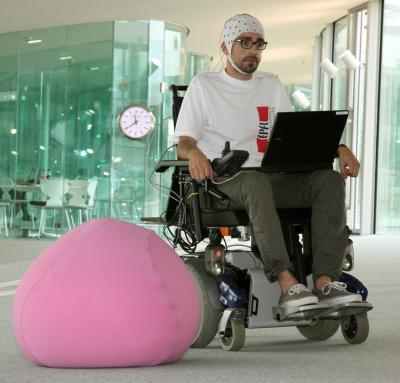
Researchers have tested a range of neuroprosthetic devices, from wheelchairs to robots to advanced limbs, that work with their users to intelligently perform tasks.

They work by decoding brain signals to determine the actions their users want to take, and then use advanced robotics to do the work of the spinal cord in orchestrating the movements. The use of shared control - new to neuroprostheses - "empowers users to perform complex tasks," says José del R. Millán, who presented the new work at the Cognitive Neuroscience Society (CNS) conference in San Francisco today.

In ancient times, attributing effects to the moon made some sense. If it could change tides, which everyone except Galileo recognized it did, why not cause effects in people? 

The UN Intergovernmental Panel on Climate Change (IPCC) is a group of climate change experts representatively selected from regions around the world that periodically releases Assessment Reports in order to inform policymakers and the public about the latest evidence for climate change. The publication of each report is a key event in the debate about climate change, but their reception and coverage in the media has varied widely.

A new paper has for the first time analyzed how Twitter, TV and newspapers reported the IPCC's climate evidence. Understanding how media coverage varies is important because people's knowledge and opinions on climate change are influenced by how the media reports on the issue.

Natural wetlands usually emit methane and sequester carbon dioxide. Anthropogenic interventions, in particular the conversion of wetlands for agriculture, result in a significant increase in CO2 emissions, which overcompensate potential decreases in methane emission. A large international research team now calculated that the conversion of arctic and boreal wetlands into agricultural land would result in an additional cumulative radiative forcing of about 0,1 MilliJoule (mJ) per square meter for the next 100 years.

Urine is commonly believed to be sterile until it reaches the urethra but that has led to numerous misconceptions about what can and should or should not be done with it. Drinking urine is a bad idea, for example, because even though it is sterile it contains urea and other substances that can still be toxic.
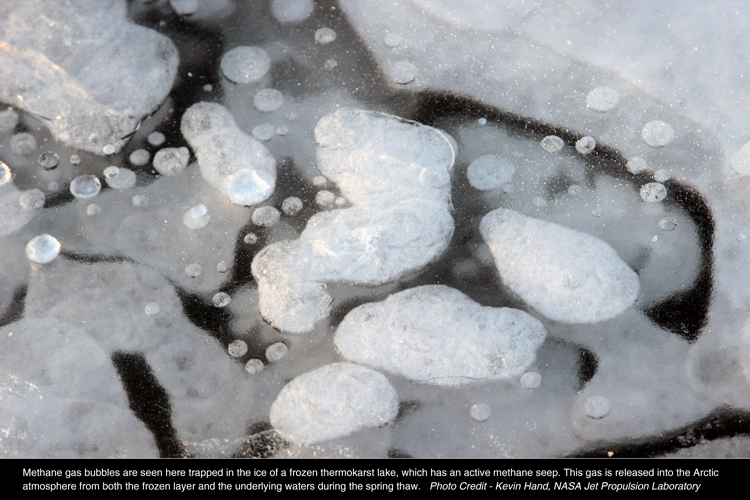
A new study finds that in scenarios of increasing global temperatures, methane-generating microbes, found in thawing lake sediments may ramp up production.

Though methane stays in the atmosphere for far less time than CO2, it is 25X more potent during that period. Concerns about methane have risen because of concerns about possible leaks due to increased natural gas, which produces far less CO2 than coal, and that methane may be released as climate changes.

Anti-vaccination beliefs can cause real, substantive harm, as shown by the recent outbreak of measles in the US. These developments are as shocking and distressing as their consequences are predictable. But if the consequences are so predictable, why do the beliefs persist?

It is not simply that anti-vaxxers don’t understand how vaccines work (some of them may not, but not all of them). Neither are anti-vaxxers simply resistant to all of modern medicine (I’m sure that many of them still take pain killers when they need to). So the matter is not as simple as plain stupidity. Some anti-vaxxers are not that stupid, and some stupid people are not anti-vaxxers. There is something more subtle going on.

A new study has identified a familial association in spontaneous coronary artery dissection, a type of heart attack that most commonly affects younger women, suggesting a genetic predisposition to the condition, researchers say.

A diagnosis of thyroid cancer can be devastating to professional singers, because surgical removal of the thyroid commonly causes voice changes. Massachusetts Eye and Ear surgeons developed a neural monitoring system to be used intraoperatively to improve outcomes. In the first study of its kind, they confirmed the hypothesis that the careers of singers and professional voice users are not impaired after thyroid surgery using this device.

The sale of human breast milk on the internet poses serious risks to infant health and needs urgent regulation, according to a new editorial in BMJ.

The nutritional benefits of breast milk for babies are widely documented, but many new mothers find it difficult or are unable to breastfeed. In addition to social pressure, this pushes some mothers to purchase human breast milk on the internet - a market that has been growing rapidly. Despite appearing as healthy and beneficial products, many new mothers and even some healthcare workers are not aware that this market is "dangerous" and "putting infant health at risk" because it is not regulated, argues Sarah Steele, a lecturer at the Global Health, Policy and Innovation Unit at Queen Mary University London, and colleagues.

