






Are we running out of helium? Lee Sobotka, professor of chemistry and physics at Washington University in St. Louis, says it is being depleted so rapidly in the world’s largest reserve, outside of Amarillo, Tex., that supplies are expected to be gone there within the next eight years.

The helium we have on earth is not readily renewable, it has been built up over billions of years from the decay of natural uranium and thorium. The decay of these elements proceeds at a super-snail’s pace.

It will impact more than balloons and kids' voices, Sobotka says. “Helium’s use in science is extremely broad but its most important use is as a coolant. Helium is non-renewable and irreplaceable.

A class of chemicals in red wine grapes may significantly reduce the ability of bacteria to cause cavities, according to a study published recently in the Journal of Agricultural and Food Chemistry.

The findings suggest that specific polyphenols, present in large amounts in fermented seeds and skins cast away after grapes are pressed, interfere with the ability of bacteria to contribute to tooth decay. Beyond cavities, the action of the wine grape-based chemicals may also hold clues for new ways to lessen the ability of bacteria to cause life-threatening, systemic infections.

Bacteria that eat sugar and release cavity-causing acid onto teeth may soon be made dramatically more vulnerable to their own acid. Researchers have identified key genes and proteins that, if interfered with, can take away the ability of a key bacterial species to thrive as its acidic waste builds up in the mouth.

The ability of Streptococcus mutans (S. mutans) to survive in acid is one reason that the species is the main driver of tooth decay worldwide. Past research has shown that this ability has several components including a bacterial enzyme called fatty acid biosynthase M (FabM), which when shut down, makes S. mutans almost precisely 10,000 times more vulnerable to acid damage.

An international study investigating the carbon sink capacity of northern terrestrial ecosystems discovered that the duration of the net carbon uptake period (CUP) has on average decreased due to warmer autumn temperatures.

Net carbon uptake of northern ecosystems is decreasing in response to autumnal warming according to findings published in Nature. The carbon balance of terrestrial ecosystems is particularly sensitive to climatic changes in autumn and spring. Over the past two decades autumn temperatures in northern latitudes have risen by about 1.1 °C with spring temperatures up by 0.8 °C.

Many northern terrestrial ecosystems currently lose carbon dioxide (CO2) in response to autumn warming, offsetting 90% of the increased carbon dioxide uptake during spring.

SANTA CLARA, California, January 2 /PRNewswire/ --

Marvell announced the TopDog 11n-450, an 802.11n 3x3 WLAN solution with three spatial streams, the industry's first 802.11n chip operating at 450 Megabits-per-second (Mbps). With maximum bandwidth more than eight times faster than 802.11g 54 Mbps versions and 1.5 times faster than current 802.11n 300 Mbps offerings, the new product will enable significant performance enhancements for notebooks and desktop PCs, printers, routers, set top boxes, digital TVs, gaming devices and DVD players and recorders. The TopDog 11n-450 provides 500 percent increased range over 802.11g, as well as 160 percent increased range compared to competing 802.11n solutions.

A married couple who sailed from England to America around 1630 may be the ancestors of hundreds of people alive today who are at risk for a hereditary form of colon cancer.

Researchers from Huntsman Cancer Institute (HCI) at The University of Utah have discovered a founder mutation—a mutation that has been traced from many individuals in the present-day population back to a common ancestor—which may contribute to a significant percentage of colon cancer cases in the United States.

An article reporting the finding was published today in Clinical Gastroenterology and Hepatology.

Just as additives help gasoline burn cleaner, a research report published in the January 2008 print issue of The FASEB Journal shows that the food industry could take a similar approach toward reducing health risks associated with fatty foods.

These “meal additives” would be based on work of Israeli researchers who discovered that consuming polyphenols (natural compounds in red wine, fruits, and vegetables) simultaneously with high-fat foods may reduce health risks associated with these foods.

“We suggest a new hypothesis to explain polyphenols,” said Joseph Kanner, senior author of the report. “For the first time, these compounds were demonstrated to prevent significantly the appearance of toxic food derivative compounds in human plasma.”

The January 2008 issue of BioScience includes an article by biologist Edward O. Wilson that argues for a new perspective on the evolution of advanced social organization in some ants, bees, and wasps (Hymenoptera).

Wilson’s article surveys recent evidence that the high level of social organization called “eusociality,” found in some Hymenoptera (and rarely in other species), is a result of natural selection on nascent colonies of species possessing features that predispose them to colonial life. Wilson concludes that these features, principally progressive provisioning of larvae and behavioral flexibility that leads to division of labor, allow some species to evolve colonies that are maintained and defended because of their proximity to food sources.

That's the suggestion from a new UCLA study that tracked levels of cortisol, a key stress hormone, among 30 Los Angeles married couples involved in one of our age's trickiest juggling acts — raising kids when both parents work full time.

"At least as far as women are concerned, being happily married appears to bolster physiological recovery from work," said Darby E. Saxbe, the study's lead author and a UCLA graduate student in clinical psychology. "After a tough day at the office, cortisol levels dropped further among happily married women than less happily married ones.

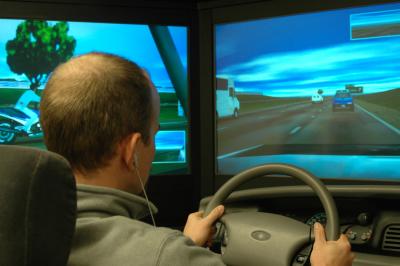
Motorists who talk on cell phones drive slower on the freeway, pass sluggish vehicles less often and take longer to complete their trips, according to a University of Utah study.

“At the end of the day, the average person’s commute is longer because of that person who is on the cell phone right in front of them,” says University of Utah psychology Professor Dave Strayer, leader of the research team. “That SOB on the cell phone is slowing you down and making you late.”

“If you talk on the phone while you’re driving, it’s going to take you longer to get from point A to point B, and it’s going to slow down everybody else on the road,” says Joel Cooper, a doctoral student in psychology.

Cooper is scheduled to present the study in Washington on Wednesday, Jan.

