Not literally aspirin, but researchers at the Boyce Thompson Institute for Plant Research (BTI) say methyl salicylate (MeSA), an aspirin-like compound, alerts a plant's immune system to shift into high gear.

It has long been known that plants often develop a state of heightened resistance, called systemic acquired resistance, following pathogen infection; this phenomenon requires the movement of a signal from the infected leaf to uninfected parts of the plant. Until now, however, no one knew what that signal was.

"Now that we have identified a signal that activates defenses throughout the plant, as well as the enzymes that regulate the level of this signal, we may be able to use genetic engineering to optimize a plant's ability to turn on those defenses," said Daniel F.

Evolution has mastered the art of turning trash to treasure - though, for scientists, witnessing the transformation can require a bit of patience. In new genetic research, scientists have traced the 170 million-year evolution of a piece of “junk” DNA to its modern incarnation as an important regulator of energy balance in mammals.

The discovery, they said, suggests that regions of the genome formerly presumed to be a genetic junkyard may actually be a hardware superstore, providing components that can be used to evolve new genes or new species.

Energy lost from hot engines could save billions of dollars if it could be captured and converted into electricity via thermoelectric devices, according to Clemson University physicist Terry Tritt.

“Thermoelectric generators are currently used in NASA’s deep-space probes to convert the heat of radioactive elements to electrical energy, powering these systems for over 30 years,” Tritt said. “Thermoelectric energy conversion is a solid-state technology that is environmentally friendly. One of the more promising ‘down-to-earth’ applications lies in waste-heat recovery in cars.”

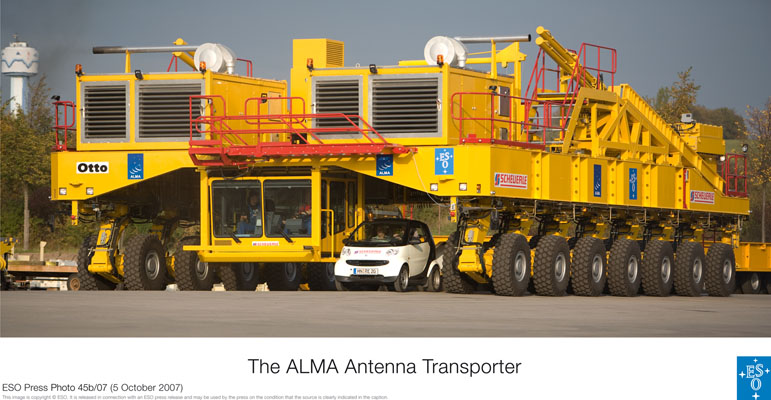
Otto, the first of the two ALMA antenna transporters, was given its name at a ceremony on the compounds of heavy-vehicle specialist Scheuerle Fahrzeugfabrik GmbH, in Baden-Württemberg. This new colossus is 10 meters wide, 20 meters long and 6 meters high and will be shipped to Chile by the end of the month.

The transporter was named 'Otto' in honor of Otto Rettenmaier, the owner of the Scheuerle company. "The rather unusual move to name a vehicle is a recognition of the remarkable achievement these unique machines represent," said Hans Rykaczewski, the European ALMA Project Manager. "Their sizes alone would justify using superlatives to describe them.

Correlation is not causation but a new study in the journal Fertility & Sterility found that mothers who experienced an increase in weight from the beginning of the first pregnancy to the beginning of the second pregnancy may be slightly more likely to give birth to a baby boy during their second pregnancy.

A slightly greater number of males than females are born worldwide every year but in recent decades there has been a decline in the ratio of male to female newborns in several industrialized countries, including Canada, Denmark, England, Germany, Japan and the United States.

That may be the result of nutrition, say researchers from Harvard School of Public Health (HSPH) and Karolinska Institutet in Stockholm, Sweden.

A remarkable change takes place in the brains of tiny songbirds every year, and some day the mechanism controlling that change may help researchers develop treatments for age-related degenerative diseases of the brain such as Parkinson’s and dementia.

Researchers from the University of Washington and the University of California, Berkeley, report a striking shrinkage in the size of the brain regions that control singing behavior of Gambel’s white-crowned sparrows. This transformation is triggered by the withdrawal of testosterone, a naturally occurring steroid hormone, and is apparent within 12 hours. The study is the first to report such rapid regression of brain nuclei caused by the withdrawal of a hormone and a change in daylight conditions in adult animals.

Ford Motor Company announced that soy-based polyurethane foam will be used in seats in the 2008 Ford Mustang. Ford spent seven years researching biomaterials with various industry representatives. Partnerships with Urethane Soy Systems Company (USSC) and Lear Corporation made flexible foam technology a reality in Ford vehicles.

"Consumers may not realize that petroleum is a major ingredient in auto applications such as seating," says Todd Allen, United Soybean Board (USB) New Uses chair and a soybean farmer from West Memphis, Ark. "The move by Ford to replace petroleum in auto interiors with soybean oil is revolutionary, for the automotive industry."

Over the years, two strands of thought on sustainable development have emerged; ecologism and environmentalism. Ecologism offers a solution by emphasizing the need for major socioeconomic reform aimed at a post-industrial era. Environmentalism focuses on the preservation, restoration, and improvement of the natural environment within the present framework.

Writing in International Journal of the Environment and Sustainable Development, Rasmus Karlsson suggests that space could provide us with a third alternative; a sustainable future not possible from an earthbound only perspective. An industrial space age.

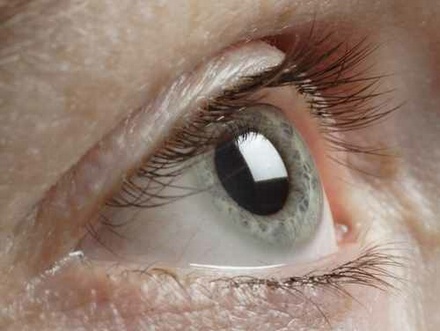
Every year, in Germany alone, around 7000 people wait for a new cornea to save their eyesight. But donor corneas are in short supply. In an EU project, researchers have developed an artificial cornea which is to be clinically tested in early 2008.

A patient whose cornea is damaged through a congenital malformation, hereditary disease or corrosion is at risk of going blind. One solution is to implant a donor cornea. The central part of the natural cornea is removed in a circular fashion, and the new cornea is inserted and sutured in place. A vast number of patients are affected: every year, 40,000 people in Europe alone hope for a donor – often in vain.

Physiotherapy ultrasound machines are commonplace in medicine and sports injury treatment but if patients are treated with the incorrect level of ultrasonic power it could not only be less helpful, it could lead to further injury.

Calibration is the answer and scientists at the National Physical Laboratory (NPL) say they have created technology that can greatly improve the accuracy of the calibration and therefore the quality of the treatment.

NPL has developed an acoustic absorber that can be retro-fitted into current calibration equipment to increase its accuracy.