




With over 120,000 patients in the United States waiting for a kidney transplant, scientists and physicians are constantly looking to expand the pool of available organs through increasing donation and optimizing allocation. Researchers analyzed data from thousands of transplants and developed a scoring system for donor kidneys that they hope might expand the pool of available organs in two ways. They published their findings in the Annals of Transplantation.

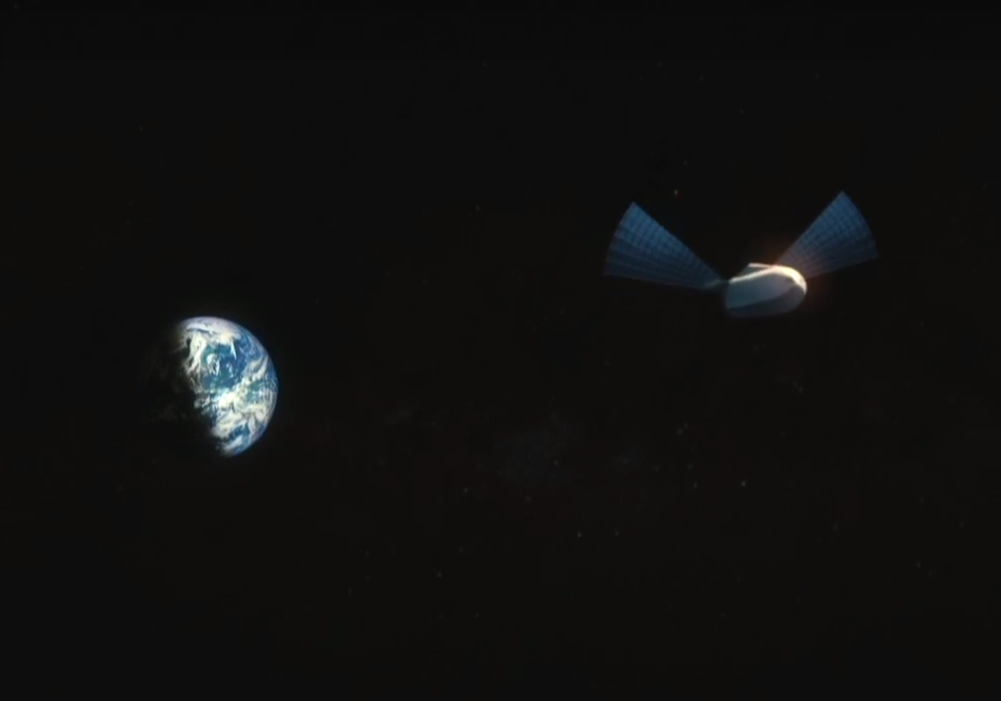
I've just been listening to Elon Musk's much anticipated talk about his vision for colonization of our solar system. Many find this idea inspiring, that by technological means, we can become a multiplanetary species. 

Here is the talk, in case any of you haven't seen it yet.

For a summary of the technical details he revealed in the talk, see this article on Space.com

It seems like a hundred years ago that the International Agency for Research on Cancer (IARC) was considered a neutral force for public good - but it was only 51.

In 1965, when the Agency was created by the United Nations, there was a lot of optimism about science and the future and IARC was created to instill confidence in the public about the difference between real harm and scaremongering.

Laterality is the preference of human beings for one side of our bodies; being left-handed or right-handed, for example, or having a preference for using one eye or ear or the other.

In the view of primatologist Eder Domínguez-Ballesteros, "lateralized behavior in humans may in some way have been reflected in their technological products, in particular, in the things they made. Besides, flint knapping -inherent in our genus since the first stages in its evolution- is an excellent source of information for studying lateralization in humans."

Ice cream sellers Ben&Jerry's, which are a division of a giant multinational food conglomerate, seem to have a lot of marketing leeway, because they are claiming global warming is coming for your ice cream freezer.

Many nutrition groups think global warming is the best thing that could happen to their ice cream, with its loads of fat and sugar and implications for diabetes, but they are not selling to those people anyway, they are selling to fat people who like to buy organic, or people who think ice cream is health food if it was made using free-range peanut butter, or something.

Many people today believe they possess a soul. While conceptions of the soul differ, many would describe it as an “invisible force that appears to animate us”.

It’s often believed the soul can survive death and is intimately associated with a person’s memories, passions and values. Some argue the soul has no mass, takes no space and is localized nowhere.

Shrubs are more widespread than trees in nature and on Earth. A new study explains their global success. It turns out that the multiple stems of shrubs are of key importance. This feature contributes to both better growth and better survival than in trees of similar size, according to the research team behind the study.

Shrubs with flowers and berries are popular in parks and gardens, and in nature they are far more widespread than trees: shrubs grow on at least 40 per cent of the world’s land surface while for trees the figure is only 28 per cent. Still, relatively few efforts have been made to fully understand them.

The group known as Islamic State (IS) reportedly used a sulpur-mustard gas against US troops in Iraq.

In nuclear reactors, energetic neutrons slam into metal atoms that are ordered in a lattice, displacing them with enough force to trigger a cascade of collisions. Laurent Béland,Yuri Osetsky and Roger Stoller, of the Energy Dissipation to Defect Evolution Energy Frontier Research Center at the Department of Energy's Oak Ridge National Laboratory, modeled radiation damage and discovered that the number of defects ultimately created in a material correlates with atomic displacements that high-pressure shock waves generate early in the collision cascade.

Researchers produced the first molecular map of the genes that are active in the various cells of the human pancreas. They have also revealed differences in genetic activity between people with type 2 diabetes and healthy controls.

