

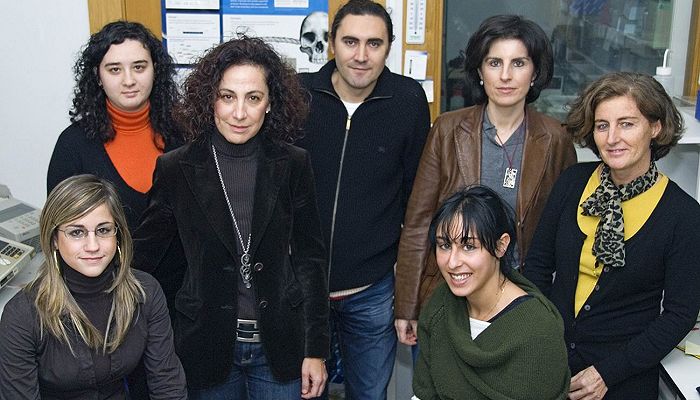






A research team from the Leioa campus of the University of the Basque Country (UPV/EHU), and led by Ms Concepción de la Rúa, has reconstructed the history of the evolution of human population and answered questions about history, using DNA extracted from skeleton remains.

Knowing the history of past populations and answering unresolved questions about them is highly interesting, more so when the information is obtained from the extraction of genetic material from historical remains. An example is the necropolis at Aldaieta (Araba) where some of these mysteries about these peoples have been answered – thanks to the study of their DNA.

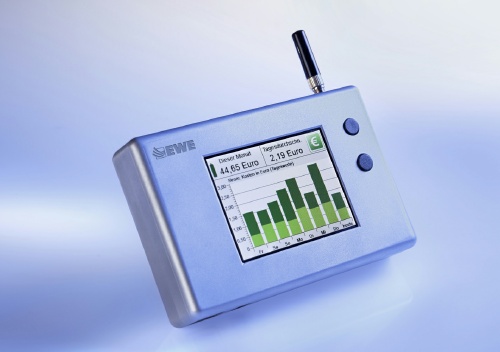
In many homes, an employee from the electric or gas company comes by to read the meter and you only find out power consumption after the fact. That doesn't tell you precisely how much energy the customer has used at what times or with which devices but a new technology being developed will allow private households to check their power consumption – at all times of the day and night - and save a lot of money in the process.

This new solution enables intelligent metering technologies, says says ISE project manager Dr. Harald Schäffler of the system being tested with Oldenburg-based energy provider EWE. “The EWE Box is an innovative communication gateway that records and saves the readings from the electricity and gas meters and transmits them to a control center via DSL.”

A new study suggests that many children diagnosed with severe language disorders in the 1980s and 1990s would instead be diagnosed as having autism today and so the rise in the number of cases of autism may be related to changes in how it is diagnosed.

Professor Dorothy Bishop, a Wellcome Trust Principal Research Fellow at the University of Oxford, led a study which revisited 38 adults, aged between 15-31, who had been diagnosed with having developmental language disorders as children rather than being autistic.

Professor Bishop and colleagues looked at whether they now met current diagnostic criteria for autistic spectrum disorders, either through reports of their childhood behaviour or on the basis of their current behaviour. The results are published this month in the journal Developmental Medicine & Child Neurology.

Israelis and Palestinians may not be able to agree right now on their present or future, but, if a pair of Los Angeles archaeologists have their way, they soon will see eye to eye on their past.

Working tirelessly for the past five years, Ran Boytner, a University of California, Los Angeles archaeologist and Lynn Swartz Dodd, an archaeologist at the University of Southern California, have guided a team of prominent Israeli and Palestinian archaeologists to arrive at the first-ever agreement on the disposition of the region's archaeological treasures following the establishment of a future Palestinian state.

Patient safety incidents cost the federal Medicare program $8.8 billion and resulted in 238,337 potentially preventable deaths during 2004 through 2006, according to HealthGrades' fifth annual Patient Safety in American Hospitals Study.

HealthGrades' analysis of 41 million Medicare patient records found that patients treated at top-performing hospitals had, on average, a 43 percent lower chance of experiencing one or more medical errors compared to the poorest-performing hospitals.

The overall incident rate was approximately three percent of all Medicare admissions evaluated, accounting for 1.1 million patient safety incidents during the three years studied. With the Centers for Medicare and Medicaid Services scheduled to stop reimbursing hospitals for the treatment of eight major preventable errors, including objects left in the body after surgery and certain post-surgical infections, starting October 1, the financial implications for hospitals are substantial.

The Texas Petawatt laser reached greater than one petawatt of laser power on Monday morning, March 31, making it the highest powered laser in the world, Todd Ditmire, a physicist at The University of Texas at Austin, said.

When the laser is turned on, it has the power output of more than 2,000 times the output of all power plants in the United States. (A petawatt is one quadrillion watts.) The laser is brighter than sunlight on the surface of the sun, but it only lasts for an instant, a 10th of a trillionth of a second (0.0000000000001 second).

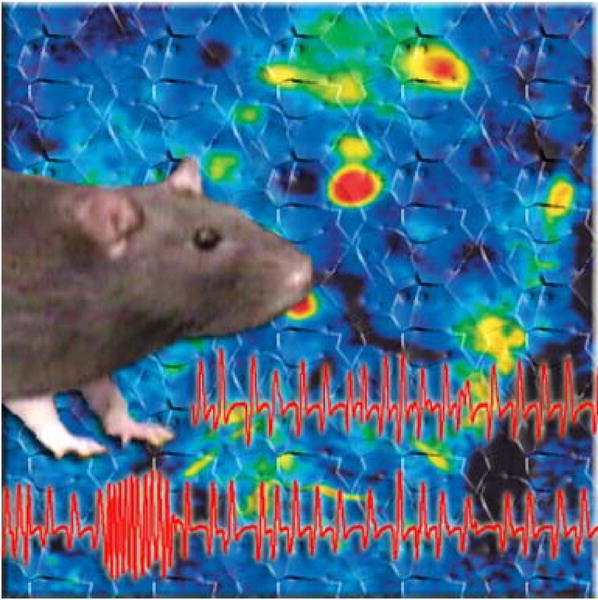
140 milliseconds. So in less time than it took you to read those two words a rat knew everything he needed to know about what his nose detected.

Daniel Wesson and colleagues from Boston University write that rats are able to discriminate odors much more quickly than previously thought.

Odor perception in mammals begins when olfactory sensory neurons in the animal's nose detect an odor molecule and then transmit that information to the brain. The first brain area to receive these signals is the olfactory bulb, where the sensory neurons end in small structures called glomeruli. Olfactory cues trigger complex patterns of activity both in the olfactory sensory neurons and in the glomeruli within the brain.

Fungi processing audio signals. E. Coli storing images. DNA acting as logic circuits. It’s not only possible, in some cases it’s already happened.

Performing digital signal processing using organic and chemical materials without electrical currents could be the wave of the future, according to Sotirios Tsaftaris, Northwestern University research professor of electrical engineering and computer science, and Aggelos Katsaggelos, Ameritech Professor of Electrical Engineering and Computer Science, in their recently published “point of view” piece in the Proceedings of the IEEE (Institute of Electrical and Electronics Engineers.)

Digital signal processing uses mathematics and other techniques to manipulate signals like visual images and sound waves after those signals have been converted to a digital form. This processing can enhance images and compress data for storage and transmission, and such processing chips are found in cell phones, iPods, and HD TVs.

An interactive map of U.S. carbon dioxide emissions from fossil fuels says we still have things to learn about where it's coming from - and where the worst offenders are.

The maps and system, called Vulcan, show CO2 emissions at more than 100 times more detail than was available before. Until now, data on carbon dioxide emissions were reported, in the best cases, monthly at the level of an entire state. The Vulcan model examines CO2 emissions at local levels on an hourly basis.

Researchers say the maps also are more accurate than previous data because they are based on greenhouse gas emissions instead of estimates based on population in areas of the United States.

Oprah Winfrey introduced the so-called "first pregnant man" to viewers of her April 3rd show this past week. Thomas Beatie appeared, six months pregnant, with his wife Nancy and his obstetrician, Dr. Kimberly James (by satellite hookup). You can see the complete show here. But many viewers thought the whole thing was blown out of proportion because Thomas was born with a perfectly normal uterus.

At the end of my first column on the issue, I said I would post another piece discussing the actual science of male pregnancy.

Is it really possible today? The answer, as I abstract from my 1997 book, Remaking Eden, is "almost certainly yes, but . . ."

