SUNNYVALE, California, March 31 /PRNewswire/ --

- In Q1 Company Adds 20 New Clients Including Microsoft, Mini, Paramount Pictures, and Toyota, to Worldwide Advertiser Roster

- Also Launches New Production Group to Optimize Creative for Mobile Video Viewing

BASEL, Switzerland, March 31 /PRNewswire/ --

- Epilepsy Drug to be Tested as Treatment for Anxiety

Synosia Therapeutics today announced the start of a multi-site, Phase II clinical trial to evaluate the efficacy of rufinamide (SYN-111), a sodium channel blocker, as a potential treatment for general anxiety disorder.

HONG KONG, March 31 /PRNewswire/ --

- Fast Expanding Coal Energy Business with Total Coal Reserves of Over 570 Million Tons

Kiu Hung International Holdings Limited ("Kiu Hung International" or the "Company", HKEx: 381) has today completed the acquisition of the entire equity interest of Lucky Dragon Resources Limited ("Lucky Dragon") with a total consideration of HK$772 million.

Lucky Dragon owns the entire equity interest in Tongliao City Heng Yuan Mining Company Limited ("Heng Yuan") which in turn owns (i) the mining rights and operation facilities of the Huanghuashan Coal Mine and (ii) the exploration rights of the Bayanhushuo Coalfield.

In Screw 'Sustainability' - And I Am Here To Tell You Why we discussed the fact that Mother Nature is a bloody bitch. She is the mother of catastrophe. She has nurtured brilliant innovations like cells and DNA but she has also given us 142 mass extinctions, 80 glaciations in the last two million years, a planet that may have once been a frozen iceball, and a klatch of global warmings in which the temperature has soared by 18 degrees in ten years or less.

Mother Nature has sunken the pleasant habitat of land creatures to the bottom of swamps and has lifted the havens of sea creatures --ocean bottoms -- to the mountain tops. She has very seldom given us a Garden of Eden, a green and sunny utopia in which she and we live together in harmony and peace.

Nature tosses us challenges and dares us to survive. More properly, she challenges us to thrive.

What’s more, evolution is all about breaking Mother Nature’s rules — defying gravity when a lizard stands, denying buoyancy when a fish controls its depth in the sea, and saying “no” to gravity when a bird has the audacity to fly. That audacity is Mother Nature’s way of feeling out new paths of growth and radical new possibilities. How do we know? Birds have been paid off big time for their insolence. There are four times as many species of birds as there are of us land-lubbing mammals. Each species represents another victory over nature, another corner of nature’s maze turned into a new niche. Each triumph is another of nature’s own victories in the breakthrough biz.

That's why talk about 'sustainability' today is riddled with problems — and with the seeds of self-defeat. The lowest periods in recorded human history have come when society tried to maintain a status quo.

MUMBAI, India, March 31 /PRNewswire/ --

The IBF will hold its landmark Supply Chain Forecasting & Planning Training & Forum: A Hands-On Workshop in Mumbai on 19 & 20 May 2008. This 2-day workshop will teach key forecasting methods and processes that are vital to a firm's success. The Mumbai workshop is paired with a Supply Chain Forecasting Forum where attendees can share forecasting & planning knowledge with peers in an open atmosphere.

The need to raise customer service levels and minimize costs is ever-present today. This IBF event offers an understanding of forecasting and planning to help meet those goals. Attendees will be able to use these how-to lessons immediately upon returning to their office.

It's well known that the left and right sides of the brain differ in many animal species and this is thought to influence cognitive performance and social behavior. For instance, in humans, the left half of the brain is concerned with language processing whereas the right side is better at comprehending musical melody.

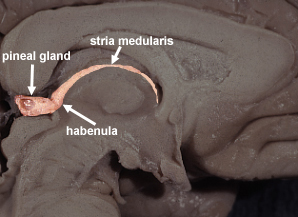
Researchers from University College London have pinpointed for the first time the left/right differences in how brains are wired at the level of individual cells. To do this, a research team led by Stephen Wilson looked at left and right-sided neurons (nerve cells) in a part of the brain called the habenula.

By causing habenular neurons to produce a bright green fluorescent protein they saw that they form remarkable "spiral-shaped" axons, the long nerve fibres that act as the nervous system's transmission lines.

Nitrous oxide, laughing gas, can't get any respect. Unlike carbon dioxide and methane, laughing gas has been largely ignored by world leaders as a worrying greenhouse gas but nitrous oxide must be taken more seriously, said Professor David Richardson from the University of East Anglia at the Society for General Microbiology’s 162nd meeting this week.

The potent gas is mainly coming from waste treatment plants and agriculture. Its release is increasing at the rate of 50 parts per billion or 0.25% every year. This means that it can be better controlled with suitable management strategies, but only if the importance of nitrous oxide (N2O) is widely recognised first.

“It only makes up 9% of total greenhouse gas emissions, but it’s got 300 times more global warming potential than carbon dioxide”, says Prof Richardson. “It can survive in the atmosphere for 150 years, and it’s recognised in the Kyoto protocol as one of the key gases we need to limit.”

"Awake", a film starring Hayden Christenson and Jessica Alba, is a psychological thriller about a horrifying phenomenon called "anesthetic awareness" where a patient's failed anesthesia leaves him fully conscious but physically paralyzed.

How common is it? Research shows that between one and three in every 1,000 patients experience some form of wakefulness during operations.

Some may not remember a period of consciousness during an operation – anesthetic drugs can interfere with recall – but they may still suffer subsequent psychological difficulties. In some cases patients aren't given enough of the sedative element of an anesthetic to keep them asleep.

LONDON, March 30 /PRNewswire/ -- A pilot scheme for Personal Budgets for people with long term conditions has been discussed in the media today (Sunday) after the Department of Health confirmed it was considering the plan.

Also known as Individual Budgets, the scheme could mean people with multiple sclerosis (MS) will be able to plan what health care they receive and when they receive it.

The Government is already trialling Personal Budgets in social care and this will extend the scheme into the NHS.

MS Society chief executive, Simon Gillespie, said: "This is an opportunity to provide people with MS with the effective care they need when they need it and in the most appropriate way.

Torn posters, tape and tomato skins may seem like strange research topics for physicists and applied mathematicians, but it's perfectly normal for a team of researchers from the Centre National de la Recherche Scientifique (CNRS) in Paris, the Universidad de Santiago, Chile, and MIT.

Such real-world applications are not only fun to study, but “we can really learn things that will be useful for industry and help us understand the everyday world around us. It is also a great way to motivate students to be interested in science,” says Pedro Reis, one of the authors of the paper and an applied mathematics instructor at MIT.

So they have tackled the issue of why wallpaper never comes off the way you want it. “You want to redecorate your bedroom, so you yank down the wallpaper. You wish that the flap would tear all the way down to the floor, but it comes together in a triangle and you have to start all over again,” said