Sometimes you open Nature magazine and are surprised by the latest discovery in quantum mechanics or molecular biology. Browsing through the March 5, 2009 issue I was stunned by an article penned by sociologist Harry Collins, entitled “We cannot live by scepticism alone” (The Brits call it “scepticism,” not “skepticism.”).
Insects such as honeybees and bumble bees are predictable in the way they move among flowers, typically moving directly from one flower to an adjacent cluster of flowers in the same row of plants. The bees' flight paths have a direct affect on their ability to hunt for pollen and generate "gene flow", fertilization and seed production that results when pollen moves from one plant to another. The study of gene flow has experienced more attention in part due to the recent introduction of genetically modified organisms (GMOs) into the environment.
The most abundant material on Earth exhibits some unusual chemical properties when placed under extreme conditions.
Lawrence Livermore National Laboratory scientists have shown that water, in hot dense environments, plays an unexpected role in catalyzing complex explosive reactions. A catalyst is a compound that speeds chemical reactions without being consumed. Platinum and enzymes are common catalysts. But water rarely, if ever, acts as a catalyst under ordinary conditions.
Detonations of high explosives made up of oxygen and hydrogen produce water at thousands of degrees Kelvin and up to 100,000 atmospheres of pressure, similar to conditions in the interiors of giant planets.
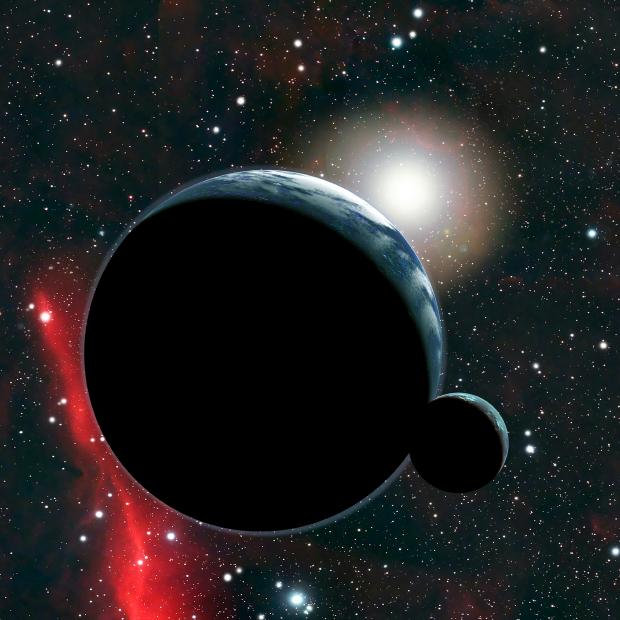
Does a twin Earth exist somewhere in our galaxy? NASA's
Kepler spacecraft just launched to find such worlds, though in a very specific area. If that search succeeds, the next questions driving research will be: Is that planet habitable? Does it have an Earth-like atmosphere?
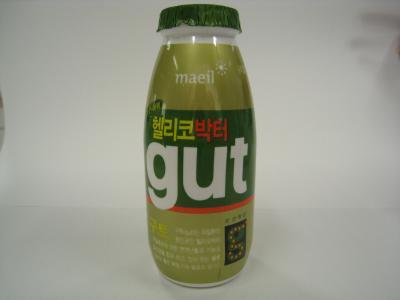
Results of the first human clinical studies confirm that a new yogurt fights the bacteria that cause gastritis and stomach ulcers with what researchers describe as almost vaccine-like effects, according to scientists at the 237th National Meeting of the American Chemical Society.
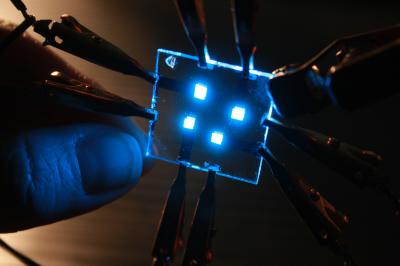
Lighting consumes one-fifth of the electricity generated in the United States. Solid-state lighting offers tremendous potential to improve the situation – once major research challenges are overcome.
The most promising technology is the organic light-emitting diode, or OLED. These multi-layered devices produce light by running an electrical current through a specially engineered host material into which light-producing phosphorescent molecules are embedded or "doped." The white light envisioned for large-scale applications, such as rooms and buildings, consists of red, green and blue light.
Undergraduates are getting another free pass, ethically, and blame is being shifted to educators because apparently confusion about what constitutes plagiarism, not malicious intent, is the leading cause of plagiarism at the graduate school level, according to George M. Bodner, a chemistry professor at Purdue University who serves on the Ethics Committee of the ACS, at their meeting in Salt Lake City. His presentation was part of an ACS initiative to educate the larger scientific community about ethics in chemistry.
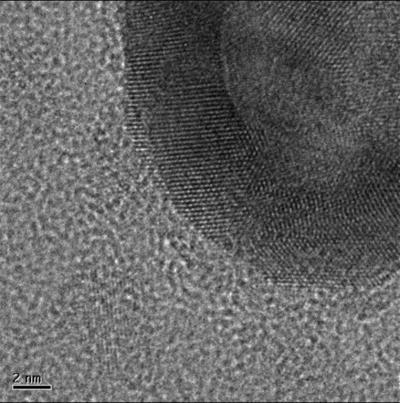
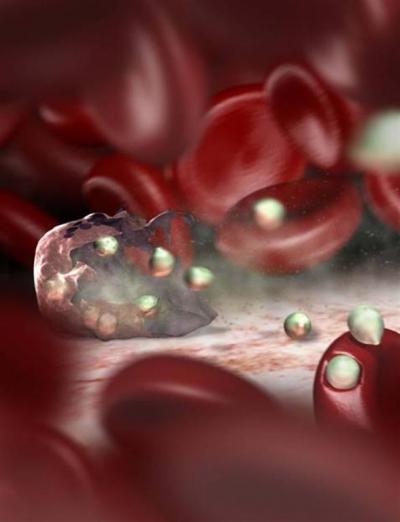
Researchers are describing a long-awaited advance toward applying the marvels of nanotechnology in the battle against cancer. They have developed the first hollow gold nanospheres — smaller than the finest flecks of dust — that search out and "cook" cancer cells. The cancer-destroying nanospheres show particular promise as a minimally invasive future treatment for malignant melanoma, the most serious form of skin cancer, the researchers say. Melanoma now causes more than 8,000 deaths annually in the United States alone and is on the increase globally.
Researchers in Canada are reporting that proteins found in a common garden pea show promise as a natural food additive or new dietary supplement for fighting high blood pressure and chronic kidney disease (CKD). Those potentially life-threatening conditions affect millions of people worldwide.
The study was presented at the ACS meeting in Salt Lake City and says that peas can relieve symptoms of CKD naturally.
Peas long have been recognized as nutritional superstars, with healthful amounts of protein, dietary fiber, and vitamins wrapped in a low-fat, cholesterol-free package. The new research focuses on the yellow garden pea, a mainstay pea variety enjoyed as a veggie side-dish and used as an ingredient in dozens of recipes around the world.
Carbohydrates are tough molecules to build because of their complicated, branched structure. So instead of trying to build carbohydrates from scratch, scientists today use molecules isolated from nature, a painstaking process that could take months.
Speaking at the ACS meeting in Salt Lake City, Peter H. Seeberger, Ph.D., described development of an automated carbohydrate synthesizer, a device that builds these intricate molecules in a few hours — rather than the months or years required with existing technology.