






A unique, patent-pending collection of microbes that can be used both for cleaning up the environment and addressing our energy needs has earned the U.S. Department of Energy's Savannah River National Laboratory kudos from a newsletter covering the rapidly expanding field of nanotechnology. 

Nanotech Briefs awarded SRNL's BioTiger™ a spot on its fourth annual Nano 50™ list, described as the top 50 technologies, innovators and products expected to revolutionize the industry. Nanotech Briefs will present the awards during the National Nano Engineering Conference, Nov. 12-13 in Boston. For more information, visit www.techbriefs.com/nano.
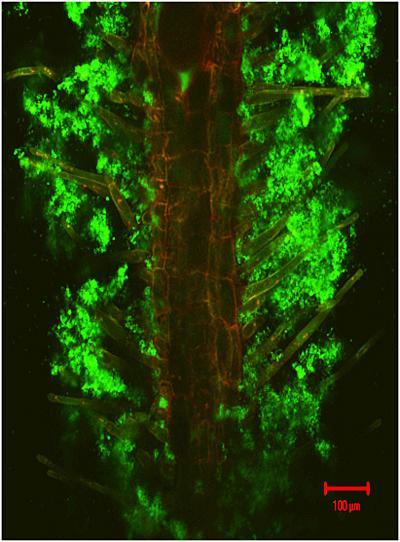
Researchers at the University of Delaware have discovered that when the leaf of a plant is under attack by a pathogen, it can send out an S.O.S. to the roots for help, and the roots will respond by secreting an acid that brings beneficial bacteria to the rescue.

The finding quashes the misperception that plants are "sitting ducks"--at the mercy of passing pathogens--and sheds new light on a sophisticated signaling system inside plants that rivals the nervous system in humans and animals.


The green represents the beneficial bacterium Bacillus subtilis, which has formed a biofilm on the Arabidopsis root surface.  Photo Credit: University of Delaware/Thimmaraju Rudrappa
A single molecule in the intestinal wall, activated by the waste products from gut bacteria, plays a large role in controlling whether the host animals are lean or fatty, a research team, including scientists from UT Southwestern Medical Center, has found in a mouse study.

When activated, the molecule slows the movement of food through the intestine, allowing the animal to absorb more nutrients and thus gain weight. Without this signal, the animals weigh less. 

The study shows that the host can use bacterial byproducts not only as a source of nutrients, but also as chemical signals to regulate body functions. It also points the way to a potential method of controlling weight, the researchers said.

According to a report by the UN Scientific Committee on the Effects of Atomic Radiation in 2000, patients are exposed to about 200 times more ionizing radiation than medical workers. In some countries, this figure can be nearly 500 times.

In the quest to discover the root of illnesses, patients have to undergo an increasing number of scans and tests that may involve the use of ionising radiation to detect the source and scope of an ailment. However, this practice could also put patients at risk.

"There has been concern that new technologies are not providing the amount of patient protection that medical professionals had expected.

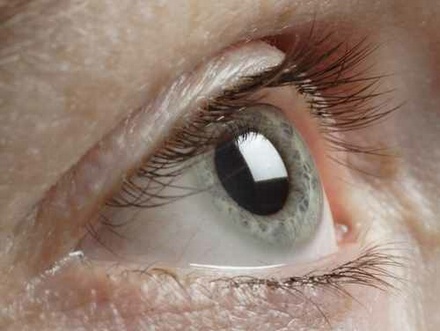
Massachusetts General Hospital (MGH) researchers have used gene therapy to restore useful vision to mice with degeneration of the light-sensing retinal rods and cones, a common cause of human blindness. Their report, appearing in the Oct. 14 Proceedings of the National Academy of Sciences, describes the effects of broadly expressing a light-sensitive protein in other neuronal cells found throughout the retina.

Two new articles examine the theory of "fetal programming" and their effect on racial health disparities. The studies, published in American Journal of Human Biology, suggest that the higher rates of hypertension and cardiovascular disease present in African Americans may be a consequence of low birth weights, and that these low birth weights may be a result of social rather than genetic factors.

Tricking students into learning with fun has always been a ploy of educators. When I was a kid, my kindergarten teacher, tricked my class into enjoying reading by serving eggs and ham that were dyed green. In sixth grade, while studying Ancient Egypt, we made papier-mache sarcophagi. To this day, I still remember well Dr. Seuss’s Green Eggs and Ham (I will not eat them, Sam I am), and I know what the heck a cartouche is.

Nowadays, students are embracing this same concept, incorporating their interests into their fields of study and making learning fun. They’re studying what they feel passionately about.

And what has always interested college students?--Beer. Duh. 

The extra layer of information that you add to a message when speaking is called prosody. The most important conclusion is that prosody lies not only in the voice but also in the facial expression. Further it appears that auditory and visual information together are more effective than the same information separately. 

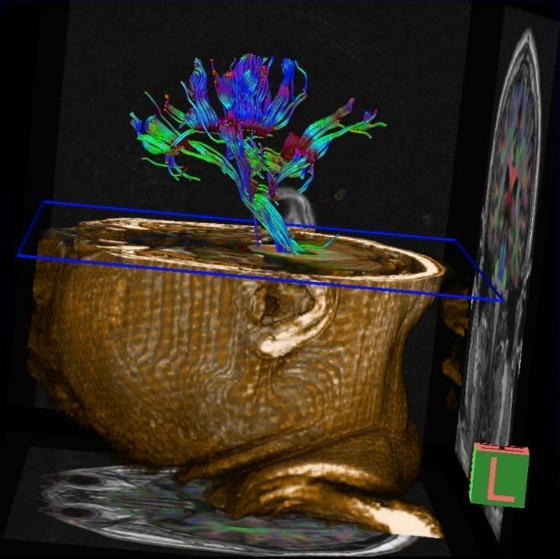
In middle age we begin to lose myelin, the fatty sheath of "insulation" that coats our nerve axons and allows for fast signaling bursts in our brains. So if you want to be the best at anything requiring speedy brain reaction times, you'd better get it in by age 39.

Writing in Neurobiology of Aging, Dr. George Bartzokis, professor of psychiatry at the UCLA Semel Institute for Neuroscience and Human Behavior at UCLA, and colleagues compared how quickly a group of males ranging in age from 23 to 80 could perform a motor task and then correlated their performances to their brains' myelin integrity.

The researchers found a striking correlation between the speed of the task and the integrity of myelination over the range of ages. Put another way, after middle age, we start to lose the battle to repair the myelin in our brain, and our motor and cognitive functions begin a long, slow downhill slide.

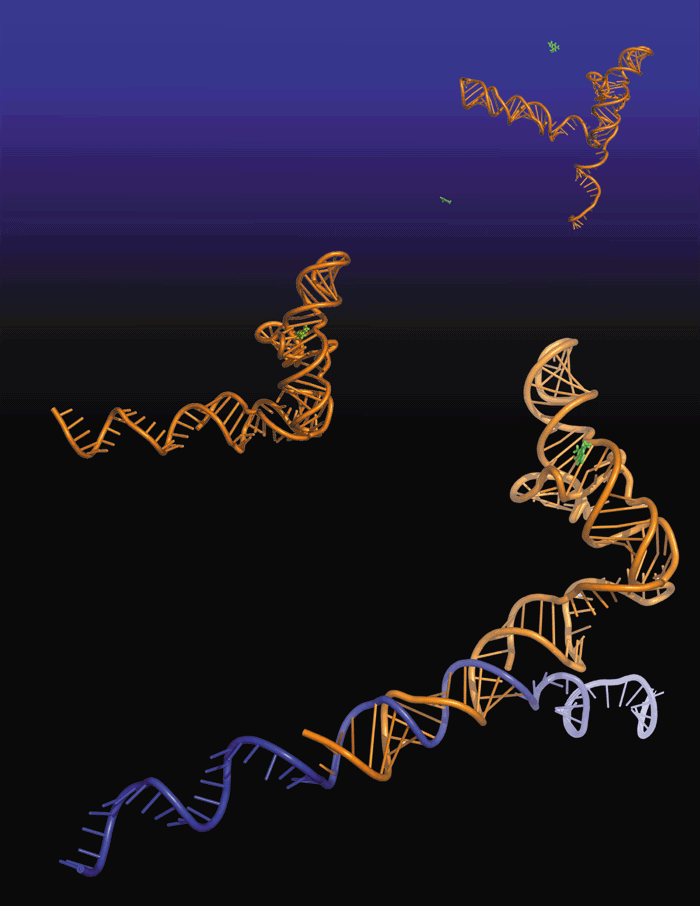
Engineers from the California Institute of Technology (Caltech) have created a "plug-and-play" synthetic RNA device--a sort of eminently customizable biological computer--that is capable of taking in and responding to more than one biological or environmental signal at a time.

In the future, such devices could have a multitude of potential medical applications, including being used as sensors to sniff out tumor cells or determine when to turn modified genes on or off during cancer therapy.

A synthetic RNA device is a biological device that uses engineered modular components made of RNA nucleotides to perform a specific function--for instance, to detect and respond to biochemical signals inside a cell or in its immediate environment.


