







Scientists from Université Laval’s Faculty of Medicine have succeeded in producing neurons in vitro using stem cells extracted from adult human skin. This is the first time such an advanced state of nerve cell differentiation has been achieved from human skin, according to lead researcher Professor François Berthod. This breakthrough could eventually lead to revolutionary advances in the treatment of neurodegenerative illnesses such as Parkinson’s disease. Berthod and his team described the method used to produce these neurons in a recent issue of the Journal of Cellular Physiology.

The researchers used skin obtained from plastic surgery procedures.

At any given time, most of the roughly 30,000 genes that constitute the human genome are inactive, or repressed, closed to the cellular machinery that transcribes genes into the proteins of the body. In an average cell, only about one in ten genes is active, or expressed, at any given moment, with its DNA open to the cell' transcriptional machinery.

A dynamic cast of gatekeeper enzymes controls this access to the DNA, adding and removing particular molecules to open or close the genome to transcription as needed. Fully explicating the complex interplay among these enzymes and the molecules they manage has been a primary goal for scientists seeking to understand the mechanisms governing gene control.

Drilling is complete on an Alaskan North Slope well, cofunded by the Department of Energy, that could prove to be an important milestone in assessing America's largest potential fossil energy resource: gas hydrate.

Gas hydrate is an ice-like solid that results from the trapping of methane molecules - the main component of natural gas - within a lattice-like cage of water molecules. Dubbed the "ice that burns," this substance releases gaseous methane when it melts.

The size of the global gas hydrate resource is staggering, holding more ultimate energy potential than all other fossil fuels combined, according to the U.S. Geological Survey (USGS).

THIS IS A CONTEST: THE WINNER WILL BE SENT A FREE COPY OF MY BOOK "Challenging Nature."
 
The five chemicals shown in the picture below are all consumed by millions of Americans as a means for increasing alertness (sometimes some are used for other purposes as well).

Daniel Holz, one of the guys at Cosmic Variance, raises interesting questions about art and science, arising from a talk he attended by Felice Frankel, a photographer who produces stunning scientific images.

He was surprised and disappointed, he says, by her insistence that she is not an artist and her photos are not to be considered art. He quotes her as saying: "This is why I am not an artist: I am deeply committed to maintaining the integrity of the science."

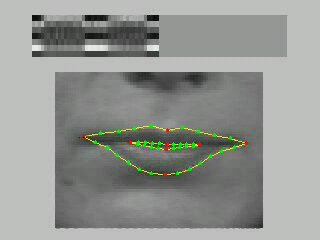
Researchers at the University of East Anglia are about to embark on an innovative new project to develop computer lip-reading systems that could be used for fighting crime.

The three-year project, which starts next month, will collect data for lip-reading and use it to create machines that automatically convert videos of lip-motions into text. It builds on work already carried out at UEA to develop state-of-the-art speech reading systems.


CLICK ABOVE FOR MOVIE.

African and African American women are more likely to die of breast cancer than their white counterparts because they tend to get the disease before the menopause, suggests new research from the University of East Anglia and the Children’s Hospital Boston in collaboration with researchers in the US and Italy.

A racial disparity in mortality rates from breast cancer in the US first appeared in the 1970s coinciding with the introduction of mammography.

Bacteria could be used to help steady buildings against earthquakes, according to researchers at UC Davis. The microbes can literally convert loose, sandy soil into rock.

When a major earthquake strikes, deep, sandy soils can turn to liquid, with disastrous consequences for buildings sitting on them. Currently, civil engineers can inject chemicals into the soil to bind loose grains together. But these epoxy chemicals may have toxic effects on soil and water, said Jason DeJong, an assistant professor of civil and environmental engineering at UC Davis.

Habitual intake of caffeinated beverages provides protection against heart disease mortality in the elderly, say researchers at SUNY Downstate Medical Center and Brooklyn College.

Using data from the first federal National Health and Nutrition Examination Survey Epidemiologic Follow-up Study, the researchers found that survey participants 65 or more years old with higher caffeinated beverage intake exhibited lower relative risk of coronary vascular disease and heart mortality than did participants with lower caffeinated beverage intake.

USC's lego-like autonomous robotic units show off ability to reconfigure into different systems for different tasks.

Wei-Min Shen of the University of Southern California's Information Sciences Institute recently reported to NASA significant progress in developing "SuperBot," identical modular units that plug into each other to create robots that can stand, crawl, wiggle and even roll. He illustrated his comments with striking video of the system in action, video now posted on line.

