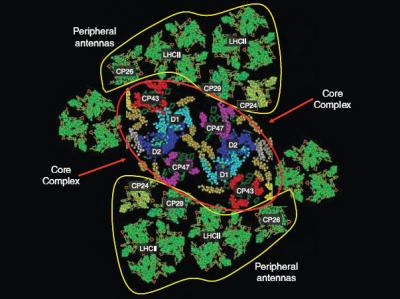
Photosynthesis is of great interest outside biology, specifically in the energy industry. Using photosynthesis, green plants are able to harvest energy from sunlight and convert it to chemical energy at an energy transfer efficiency rate of approximately 97 percent and if scientists can create artificial versions of photosynthesis, the dream of solar power as the ultimate green and renewable source of electrical energy could be realized.
However, a potential pitfall for any sunlight-harvesting system is that if the system becomes overloaded with absorbed solar energy, it most likely will suffer some form of damage. Plants solve this problem on a daily basis with a photo-protective mechanism called energy-quenching. Excess energy, detected by changes in pH levels, is safely dissipated from one molecular system to another, where it can then be routed down relatively harmless chemical reaction pathways.
In a study of the molecular mechanisms by which plants protect themselves from oxidation damage should they absorb too much sunlight during photosynthesis, a team of researchers has discovered a molecular “dimmer switch” that helps control the flow of solar energy moving through the system of light harvesting proteins. This discovery holds important implications for the future design of artificial photosynthesis systems that could provide the world with a sustainable and secure source of energy.