




US states as different as California, West Virginia and Hawaii share one thing in common - half of automobile fatalities involving young drivers, ages 16 to 25 years, involved pot or alcohol. And those results were from years before the cultural push to make marijuana legal.

Bisphenol A, known as BPA, is in the middle of an environmental culture war and a hurriedly-rushed replacement, Bisphenol S (BPS), is just as big a concern.

We need plastic, food items are covered in plastic to make them last longer and protect them from microbes, but we know that plastic bottles and films take between 100 and 400 years to degrade, so the quest for alternative materials to plastics has been ongoing. That means we should not rush to embrace things just because they are 'not BPA', which still has no evidence of harm (unless hyperactive zebrafish count).

A new research project has identified a specific gene in soybean that has great potential for soybean crop improvement because it can be bred to better tolerate soil salinity - that means less changes to soil and the ecosystem while still getting more food.

The researchers from the University of Adelaide in Australia and the Institute of Crop Sciences in the Chinese Academy of Agricultural Sciences in Beijing pinpointed a candidate salt tolerance gene after examining the genetic sequence of several hundred soybean varieties. 

How can a product which can be made for free be profitable? It happens all of the time. Words are free, for example, yet the Wall Street Journal sells good ones to its customers. Science 2.0 was built on open source tools but lots of consulting companies do the work for people less skilled in programming.
We've all seen athletes on the sidelines of a football game with a mask over their mouths inhaling oxygen. It may seem odd that anyone stands around for 60 seconds, moves for 10 and then has to go sit on a bunch with an oxygen tank but oxygen is life, and the belief is greater oxygen in the blood will mean greater athletic performance.

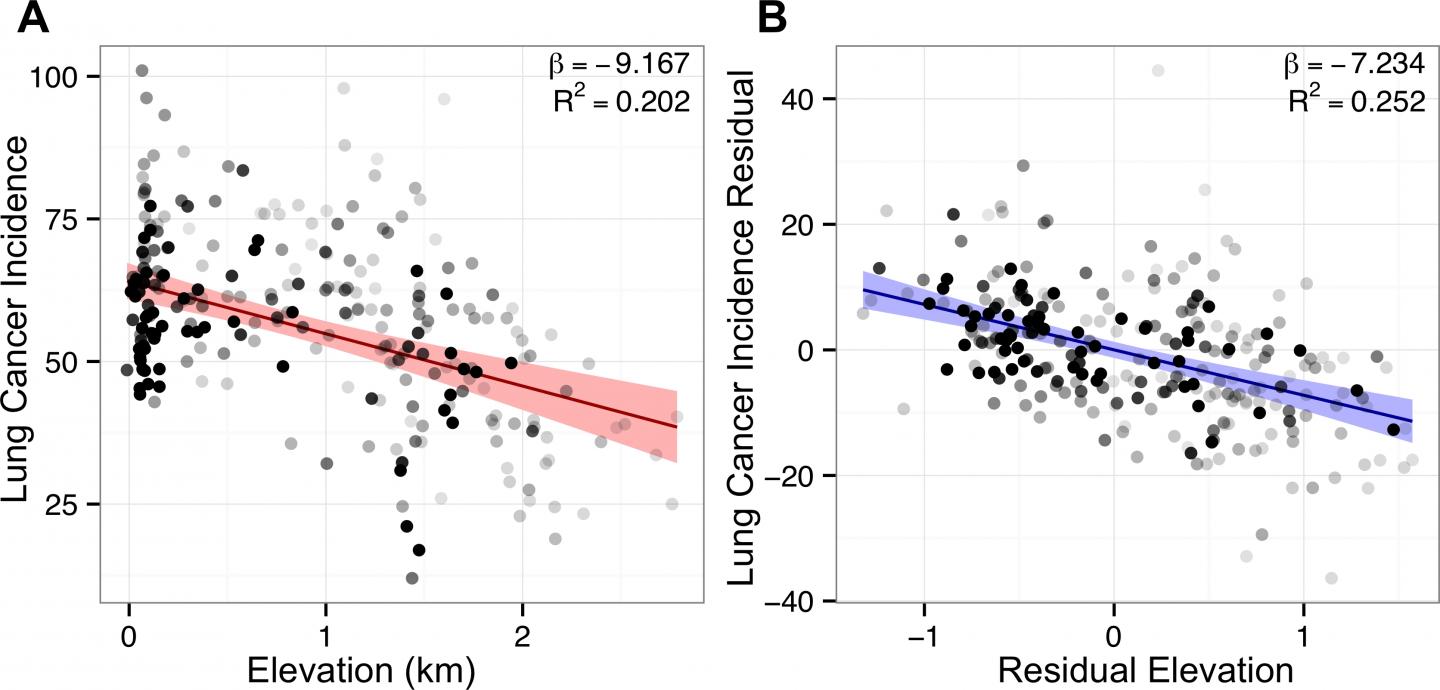
It may also mean more lung cancer, is it said. Why? People at higher elevations get less respiratory cancer than people at lower ones, for other cancers it is no different. Is that just epidemiology scrambling for curves to match again or is there something to it? Will boosting metabolism that way also boost the rates of cancer?

A recent study showed that a virtual reality cognitive training game could be a screening tool for patients with mild cognitive impairment (MCI) among a sample of older adults. Mild cognitive impairment  is a condition that often predates Alzheimer's disease and is characterized by memory loss and inability to execute complex activities such as financial planning. 

The CMS Collaboration at the LHC collider has recently measured a non-negligible rate for the fraction of Higgs boson decays into muon-tau pairs, as I reported in this article last summer. The observation is not statistically significant enough to cause an earthquake in the world of high-energy physics, and sceptics like myself just raised a gram of eyebrows at the announcement - oh yeah, just another 2-sigma effect. However, the matter becomes more interesting if there is a theoretical model which allows for the observed effect, AND if the model is not entirely crazy.
By Marsha Lewis, Inside Science

(Inside Science TV) – Everything from food, to air to water runs the risk of becoming contaminated. Now, chemists at the Lawrence Livermore National Laboratory in California have developed a technology that can detect and track dangerous particles in food and in the air.

“The DNA in the material can be used to identify those particles," said George Farquar, a chemist at Lawrence Livermore National Laboratory.

With the technology, called DNA Trax, researchers create tiny sugar-based particles and label them with a unique DNA signature. The particles can be sprayed onto food or released into the air to track the source of contaminants.

Donate data like blood and we can look for answers in the patterns we find. nomadFra/Shutterstock

By Anya Skatova,University of Nottingham and James Goulding, University of Nottingham


Dearcmhara shawcrossi, Scottish dino-fish. Todd Marshall

By Stephen Brusatte, University of Edinburgh

Today my colleagues and I had the great privilege to announce a remarkable new discovery: a dolphin-like reptile that prowled the Middle Jurassic waters 170 million years ago.

