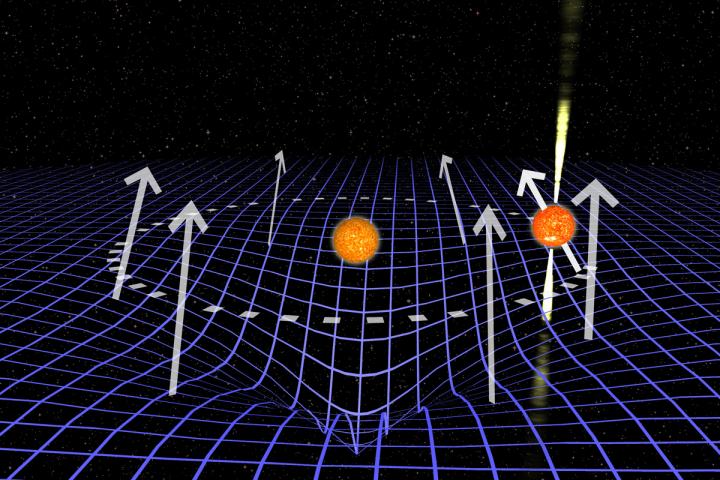




In an interstellar race against time, astronomers measured the space-time warp in the gravity of a binary star and determined the mass of a neutron star just before it vanished from view.

The researchers measured the masses of both stars in binary pulsar system J1906. The pulsar spins and emits a lighthouse-like beam of radio waves every 144 milliseconds. It orbits its companion star in a little under four hours.  The mass of only a handful of double neutron stars have ever been measured, with J1906 being the youngest. It is located about 25,000 light years from Earth. 

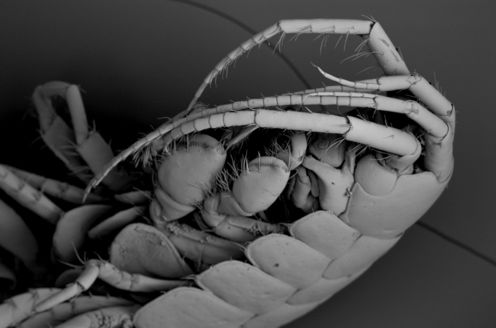
Up close and personal with the demon shrimp. Amaia Green Etxabe - University of Portsmouth

By Alex Ford,University of Portsmouth

Demon vs killer shrimp sounds like the latest CGI movie to come out of Hollywood. But in fact these are two particularly pernicious crustaceans that have been making their way westward across Europe from countries surrounding the Black Sea, eradicating native freshwater rivals en route.

80 percent of current coal reserves, 50 percent of gas reserves and 33 percent of oil reserves should remain in the ground by 2050 to avoid the 2°C target established by the Intergovernmental Panel on Climate Change and used as a benchmark by policy makers, according to a new estimate.

So much for that Peak Oil of 1992. We need to worry about Oil Glut instead.

The paper identifies the geographic location of existing reserves that should remain unused - it's no secret that is China, Russia and the United States, along with 260 billion barrels oil reserves in the Middle East. The Middle East should also leave over 60% of its gas reserves in the ground.

A new report by the National Research Council offers guidance to schools on necessary steps for putting the Next Generation Science Standards (NGSS) into practice over the next decade.

Next Generation Science Standards were drawn from A Framework for K-12 Science Education: Practices, Crosscutting Concepts, and Core Ideas, a 2011 Research Council report. Next Generation Science Standards. The standards are based on the ideas that science and engineering involve both knowing and doing; that developing rich, conceptual understanding is more productive for future learning than simply memorizing discrete facts; and learning experiences should be designed with coherent progressions over multiple years.


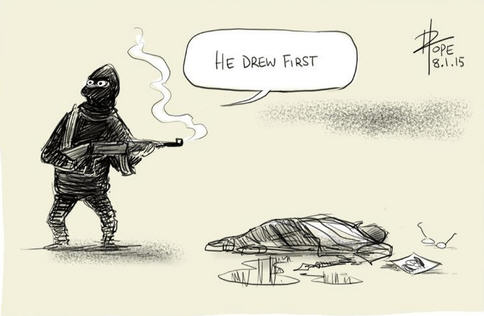
David Pope's cartoon posted on Twitter. David Pope

By Robert Phiddian, Flinders University

Cartoonists and satirists in “the West” are confronted with the risks of their expressive freedom today as a consequence of the assassinations at Charlie Hebdo in Paris.

You may feel safe working at the coffee house because you are not using their public Wi-Fi connection. Think again.

And that smartphone is even more vulnerable to snooping.

The new breed of coffee shop hackers can see what you're doing by analyzing the low-power electronic signals your laptop or smartphone emits - even when it's not connected to the Internet. 

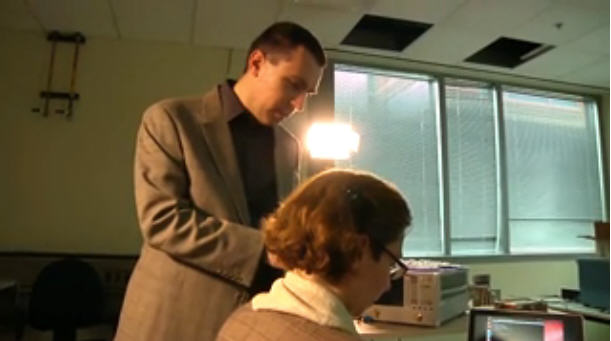
The race is on to plug these information 'leaks' but the first challenge is finding out where they originate. To help, Georgia Institute of Technology engineers have developed a metric for measuring the strength of the leaks - known technically as "side-channel signal" - to help prioritize security efforts. 

Dogs successfully migrated to the Americas about 10,000 years ago, according to a new study. That's a long time ago but still thousands of years after the first human migrants crossed the land bridge from Siberia to North America. Dogs have been associated with humans in findings from 11,000 to 16,000 years ago. 

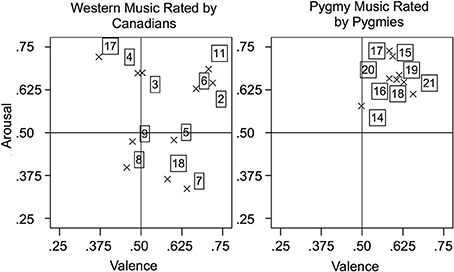
Whether you are a a hipster in Montreal or a Pygmy in the Congolese rainforest, certain aspects of music will touch you the same way.

That applies to scores we associates with very different films, and therefore tones, like Psycho, Star Wars, and Schindler's List, according to a team of scholars who arrived at this conclusion after traveling deep into the rainforest to play music to a very isolated group of people, the Mbenzélé Pygmies, who live without access to radio, television or electricity.


Is artificial super-intelligence lurking nearby, under wraps? eugenia_loli, CC BYBy Tony Prescott, University of Sheffield

A study of circadian rhythms in skin stem cells finds that this biological clock plays a key role in coordinating daily metabolic cycles and cell division. The paper shows how the body's intrinsic day-night cycles protect and nurture stem cell differentiation and provides insights into a mechanism whereby an out-of-synch circadian clock can contribute to accelerated skin aging and cancers.

Bogi Andersen, professor of biological chemistry and medicine at University of California - Irvine, and Enrico Gratton, professor of biomedical engineering, focused their efforts on the epidermis, the outermost protective layer of the skin that is maintained and healed by long-lived stem cells.

