







Despite a malfunction that ended its primary mission in May 2013, the Kepler spacecraft is still alive and working and its data has found a new "super-Earth".

NASA's Kepler spacecraft detected planets by looking for transits, when a star dims slightly as a planet crosses in front of it. The smaller the planet, the weaker the dimming, so brightness measurements must be precise and that requires maintaining a steady pointing. Kepler can't really do that any more, its primary functionality came to an end when the second of four reaction wheels used to stabilize the spacecraft failed. Without at least three functioning reaction wheels, Kepler couldn't be pointed accurately.

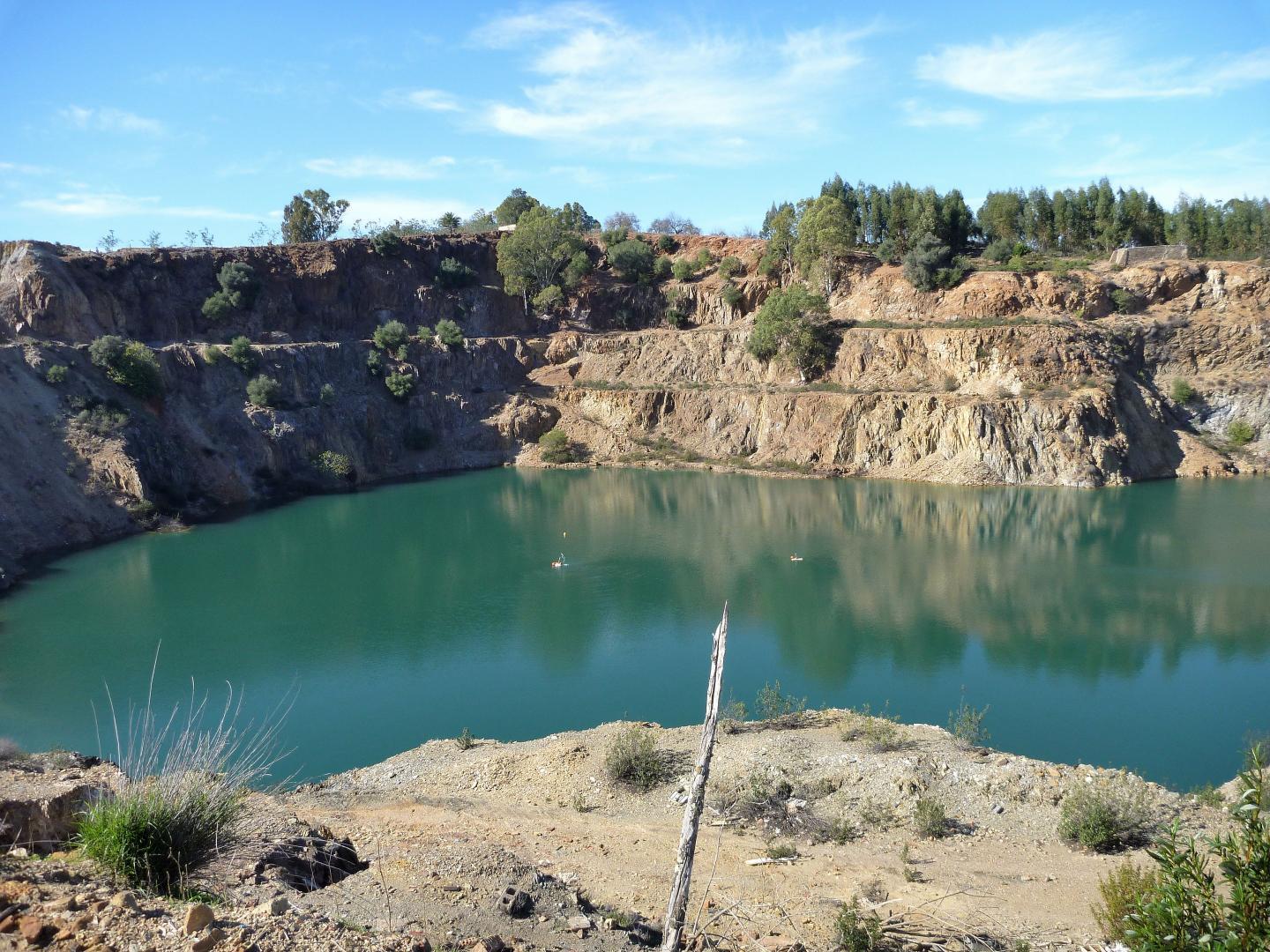
In the former mining area Herrerias in Andalusia, the deep waters of Pit Lake Guadiana show extremely high concentration of dissolved carbon dioxide (CO2). 

Levels are so high that if it were to bubble up, human beings close-by would be jeopardized. To demonstrate a possible fix, scientists of the Spanish Institute of Geology and Mining, the University of the Basque Country (UPV/EHU, Bilbao) and the Helmholtz Centre for Environmental Research (UFZ) constructed a pilot plant for degassing.

A fountain pulls deep water through a pipe to the surface, where the gas can escape from the water. The buoyancy produced by the bubbles provides the energy required for driving the flow.

Hydrogen peroxide (H2O2) is a strong oxidizer. You may know it as a wound disinfectant or as a bleaching agent for hair and teeth but it is also created naturally in our bodies, as part of our cellular oxidation.

H2O2 belongs to a group of natural chemicals called reactive oxygen species (ROS) and when the process gets out of hand, too much oxidation can have a damaging effect on cells and their components. Unchecked free radicals, the most well-known ROS, are believed to play a role in carcinogenesis, degenerative diseases, and even aging. To prevent that, our cells also contain antioxidant enzymes known as peroxiredoxins that degrade H2O2 molecules. We don't want to have no H202, despite the chemophobia of environmental and food activists, we want just enough.


What rising sea level? Peter, CC BY-SA

By Mark Maslin,University College London

There are many complex reasons why people decide not to accept the science of climate change.

The doubters range from the conspiracy theorist to the skeptical scientist, or from the paid lobbyist to the raving lunatic.

Though it has higher risks in older people, and those are well-known and cautioned against, prescription use of benzodiazepines increases steadily with age, despite the known risks for older people, according to a comprehensive analysis of benzodiazepine prescribing in the United States.

Benzodiazepines are a widely used class of sedative and anti-anxiety medications.  They are effective in relieving anxiety and take effect more quickly than antidepressant medications often prescribed for anxiety. However, the prevalence of anxiety disorders declines with age. Guidelines recommend non-pharmacologic approaches and antidepressants over benzodiazepines as first-line treatment in older people. 


Nightwatchman Nathan Lyon bowled by Mohammed Sharmi last week. AAP/ David Mariuz

By Tim Trudgian, Australian National University

Imagine you are captain of the national cricket team. With 20 minutes left in day one of a test match, your top-order batsman is dismissed. Do you employ a nightwatchman? That is, do you send in a tail-end batsman to see out the bowling until the end of the day’s play and protect your top-order?

Well, a little bit of math can show you that you shouldn't.

Though deaths due to drug use and hepatitis C have gone up, falling death rates due to cancer and heart disease have resulted in a global life expectancy increase of 5.8 years in men and 6.6 years in women between 1990 and 2013, according to an analysis from the Global Burden of Disease Study 2013 (GBD 2013).

In high-income regions, falling death rates from most cancers (down by 15%) and cardiovascular diseases (down by 22%) have increased life expectancy, while rapidly declining death rates for diarrhea, lower respiratory tract infections, and neonatal disorders have helped extend life expectancy in low-income countries (see figure 7 page 14, and table 2 pages 15-23). 

Airline pilots can be exposed to the same amount of UV-A radiation as if they visited a tanning bed, because airplane windshields do not completely block UV-A radiation.

In 2009, researchers detected methane on Mars, suggesting the planet may be biologically or geologically active. 

Now NASA's Mars Curiosity rover has measured a tenfold spike in methane in the atmosphere around it and detected other organic molecules in a rock-powder sample collected by the robotic laboratory's drill.


