




Exposure to media that promotes conspiracy theories may increase belief in them, but exposure to debunking information can decrease that belief, a new study has found.

The report, published in the January-March edition of the journal Communication Quarterly and conducted by researchers at the University of Missouri and Indiana University-Purdue University Columbus, suggests that messages can influence peoples' beliefs, even in a fragmented media world.

An international collaboration recently analyzed existing cohort studies and randomized trials on coronary risk and fatty acid intake and drew a conclusion that will surprise you if you only get your science and health news from mainstream newspapers or television -  the evidence to support restricting the consumption of saturated fats in order to prevent heart disease isn't there.

And consumption of polyunsaturated fats is probably not a bad idea but there is insufficient evidence for guidelines which advocate the high consumption of polyunsaturated fats (such as omega 3 and omega 6) to reduce the risk of coronary disease. 

In mainstream media, everywhere from Fox News to Time (and here on Science 2.0, though with a little more skepticism) a

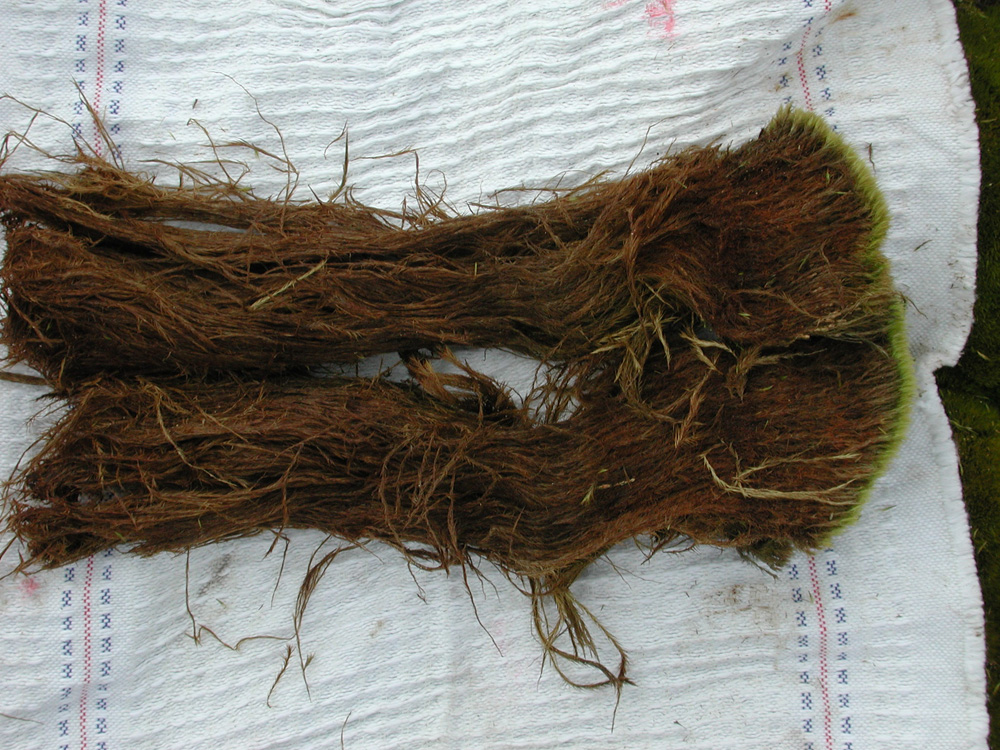
Even after over 1,500 years frozen in Antarctic ice, moss can come back to life and continue to grow.

Writing in Current Biology, the team report that they observed moss regeneration after at least 1,530 years frozen in permafrost.  For the first time, this vital part of the ecosystem in both polar regions has been shown to have the ability to survive century to millennial scale ice ages and it is the first study to show such long-term survival in any plant; similar timescales have only been seen before in bacteria. Mosses are known to survive environmental extremes in the short-term with previous evidence confirming up to a 20 year timescale for survival. 

The antibiotic-resistant bacterium Klebsiella pneumoniae sequence type 258 (ST258) is the predominant cause of human infections among bacteria classified as carbapenem-resistant Enterobacteriaceae (CRE), which kill approximately 600 people annually in the United States and sicken thousands more.

Most CRE infections occur in hospitals and long-term care facilities among patients who are already weakened by unrelated disease or have undergone certain medical procedures.  

Life is just packed full of surprises.

You just never know when you'll get stuck in an elevator with the finalists for the new Victoria's Secret Catalog (all of whom just happen to be in estrus). 

You never know when you open your door if Ed McMahon will be standing there with a $1 million check from Publishers Clearing House.  (OK, this one you do know, since he's somewhat dead). Or a paroled member of the Manson Family. Or Paris Hilton with a parakeet on her head. 

So,  just when you think you've already seen the worst possible science paper in the entire history of multicellular life, life pulls the rug out from under you.

Please observe the following unusual locomotive behavior which begins at around 55 seconds into this video – when Groucho Marx starts to run.

Groucho is displaying a behaviour which scientists now call ‘Groucho Running’ *see note.


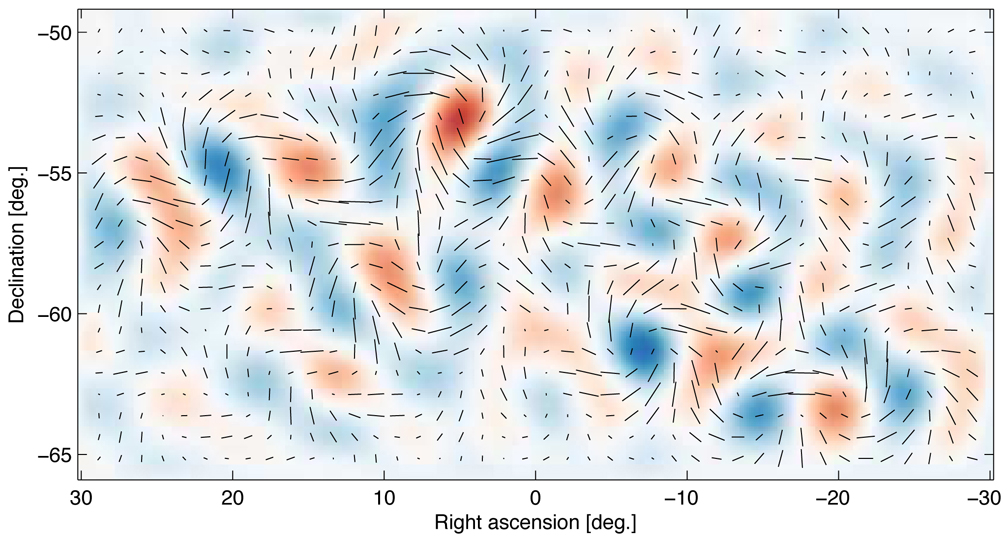
Almost 14 billion years ago, the universe we inhabit burst into existence in an extraordinary event that initiated the Big Bang. In the first fleeting fraction of a second, the universe expanded exponentially, stretching far beyond the view of our best telescopes. All this, of course, was just theory.

Researchers from the BICEP2 collaboration today announced the first direct evidence for this cosmic inflation. Their data also represent the first images of gravitational waves, or ripples in space-time. These waves have been described as the "first tremors of the Big Bang." Finally, the data confirm a deep connection between quantum mechanics and general relativity.

Does BPA make you fat?


