




Gleaning from the natural process of X chromosome inactivation, scientists recently discovered a way to “turn off” the extra copy of chromosome 21 in Down syndrome, a strategy that might one day cure this disorder.

Rapid coastal subsidence in the central Ganges-Brahmaputra Delta (Bangladesh) since the 17th century has been deduced from submerged salt-producing kilns.

NASA's Curiosity rover on Mars, which first landed inside the Gale Crater on Aug. 6th, 2012, may provide clues as to how the red planet lost its original atmosphere, which scientists believe was much thicker than the one left today.

Today I am quite happy to report of a new groundbreaking result from the CMS collaboration at the CERN LHC - the experiment to which I devote 100% of my research time. We published overnight a report on the Cornell arxiv, and will present this week at the EPS conference in Stockholm, of the observation of B_s meson decays to muon pairs, an exceedingly rare process which is of extreme importance for the searches of new physics beyond the standard model. And in so doing, CMS now leads this race, with better results than LHCb and ATLAS. (UPDATE: but see below, at the bottom of the article).

Heart tissue sustains irreparable damage in the wake of a heart attack but because cells in the heart cannot multiply and the cardiac muscle contains few stem cells, the tissue is unable to repair itself — it becomes fibrotic and cannot contract properly.

The search is on for innovative methods to restore heart function and so scientists have been exploring cardiac "patches" that could be transplanted into the body to replace damaged heart tissue. 

If a physics department has no women, does that mean there is hiring discrimination?

Only if your job in sociology is to find discrimination. Simple statistics shows that is not true or there would be claims of discrimination in psychology, where lots of departments have no men. Yet when it comes to gender equality advocates, physics is always mentioned and psychology never is.

A new analysis by the American Institute of Physics (AIP) Statistical Research Center debunks the claim that the existence of all-male departments is evidence of hiring bias. Labor statistics have backed that up; not only are women hired equally for faculty and tenure jobs in science academia, they are over-hired based on their representation. 

Everything in moderation, goes an old saying, and it is true that too much alcohol can be bad for you in lots of ways.  But teetotalers, those who abstain from alcohol completely, aren't extending their lives either.

As a class, people who don't drink at all have a higher mortality risk than light drinkers. But nondrinkers are a diverse bunch, and the reasons people have for abstaining affects their individual mortality risk, in some cases lowering it on par with the risk for light drinkers, according to a University of Colorado analysis.

Maybe some day, depression and anxiety could benefit from good vibrations.

University of Arizona researchers have found in a recent study that ultrasound waves applied to specific areas of the brain appear able to alter patients' moods. The discovery has led the scientists to conduct further investigations with the hope that this technique could one day be used to treat conditions such as depression and anxiety.

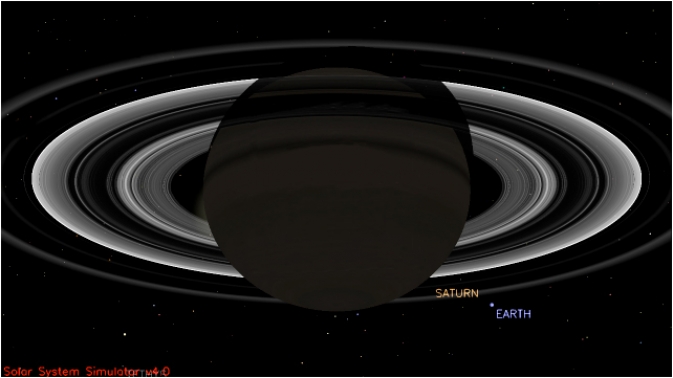
Tomorrow, we are being photographed from space.

No, it is not another NSA spying operation, it is NASA's Cassini and MESSENGER spacecraft, taking pictures of Earth from Saturn and Mercury.

The image taken from the Saturn system by Cassini will occur between 2:27 and 2:42 PDT (that's 5:27 and 5:42 p.m. EDT and 21:27 and 21:42 UTC) tomorrow, July 19th. Since Cassini is 898 million miles away from us, nearly 10 times the distance from the sun to Earth, it may not see you specifically but NASA is encouraging the public to get participatory and wave at Saturn at the time of the portrait and then pictures via social media.

Women are waiting longer before getting married - if they get married at all, according to a new analysis.

The U.S. marriage rate is now at 31.1 - which in statistical terms means roughly a rate of 31 marriages per 1,000 married women, not 31 percent. That rate is 60 percent lower than 1970. In 1920 the marriage rate was 92.3. The wave of gay marriage legislation across the US will likely cause a temporary blip in that, at least until expensive gay divorces kick in, but the overall trend will remain downward.


