



Long-term cigarette smoking impacts morbidity and mortality, no question about that, but there may be a good reason to stop smoking in the weeks before surgery even if you don't intend to quit overall. 

In a review article, researchers from the University of California San Francisco and Yale University examined neurosurgical literature to characterize the impact of active smoking on neurosurgical outcomes. They found strong evidence for the association between smoking and perioperative complications throughout the surgical literature. 

Scholars have linked higher IQ at early school age to weight gain and increased head size in the first month of a baby's life.

The results were determined - as apparently intelligence is - by analyzing data from more than 13,800 children who were born full-term.  

The findings in Pediatrics were that babies who put on 40% of their birth weight in the first four weeks had an IQ 1.5 points higher by the time they were six years of age, compared with babies who only put on 15% of their birth weight. Those with the biggest growth in head circumference also had the highest IQs.

Fibromyalgia is a blanket term for a general painful condition that affects approximately 10 million people in the United States.

Because it lacks consistent symptoms and treatments, some doctors believe an unknown number of instances are psychosomatic but a new paper in PAIN MEDICINE concludes that fibromyalgia may have a rational biological basis, located in the skin. 

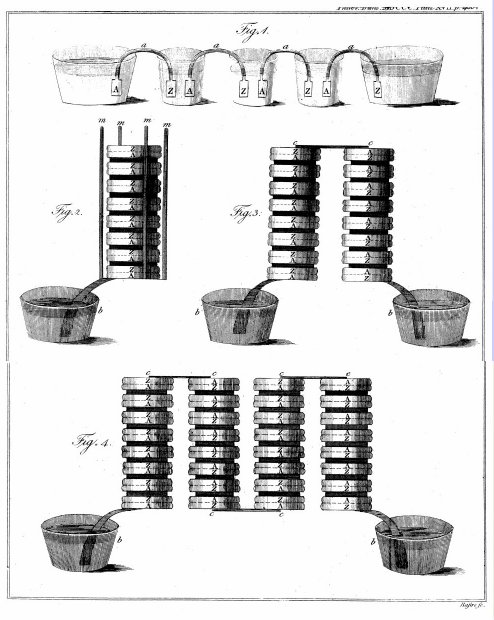
Electric Batteries - by A. Volta

In this article I present my translation of Alessandro (Alexander) Volta's original French paper, which I published as -
Batteries électriques - By A. Volta
Batteries électriques - by Alexander Volta

In 1800 the Royal Society published Alexander Volta's description of how he built his batteries.

It is not widely known that Volta invented both the 'wet' and the 'dry' battery.  Most writers mention Volta's pile - a 'dry' battery, but omit to mention his 'crown of cups', or 'wet' battery.

Sustainability programs are not just about advocation and action - a lot of thought also goes into how many people working together can change the world.

It doesn't matter what issue, conservation or climate change action, some groups work using strength of numbers while others believe a dedicated core is best - and just as many groups have been huge flops using both. The mystery of how to keep a group dynamic powerful rather than unproductive hasn't been solved.

A team of researchers has identified a highly promising new anti-tuberculosis compound that attacks the tuberculosis (TB) bacterium in two different ways.

Although isoniazid and rifampin, two front-line TB drugs, came into use in 1952 and 1967 respectively, new TB infections still occur at the rate of roughly one per second. At any moment about a third of the existing human population is infected. Though it is mostly winactive, latent TB, active TB still kills over one million people each year, with Russia, Africa, China and Southeast Asia especially hard hit.

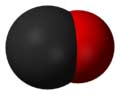
Carbon Monoxide – dubbed “The Silent Killer” is a colourless and odourless gas – highly toxic to human beings. It’s a common pollutant in city air, coming mainly from vehicle exhaust emissions.

But what if “CO, in small doses, is a boon to the well-being of urbanites, better equipping them to deal with environmental stress”?

Almost no one outside New York City government and health advocates engaged in social experimentation thought a ban on some drink sizes for New York City made any sense or would actually do any good. 

Soda companies were obviously against it. They would prefer not to be demonized in Mayor Michael Bloomberg's latest culture war. Small businesses were against it, since a ton of products sold by large companies like Starbucks and McDonald's were somehow exempted. Movie theaters were against it, since overpriced giant sizes of popcorn and drinks are part of the experience (and a lot of the profit).

Fracking, which mines natural gas using horizontal, hydraulically fractured wells, is widespread across Pennsylvania, with high-volume horizontal hydraulic fracturing (HVHHF) from the Marcellus and Utica shales covering up to 280,000 km² of the Appalachian Basin. 

A new paper in the Annals of the New York Academy of Sciences by Dr.Erik Kiviat, of the Hudsonia ecology group, says that natural gas wells are a threat to biodiversity, including pollution from toxic chemicals, the building of well pads and pipelines, and changes to wetlands.

