



I’ve already mentioned the nonsensical paper “published” in (surprise, surprise) arXiv in which the authors claim that the origin of life occurred long before the origin of the Earth based on the application of Moore’s Law to DNA.

I won’t go into all the reasons that this is silly — for that, you can see critiques by PZ Myers and Massimo Pigliucci. Suffice it to say that the data, the analysis, and the interpretation are all problematic.

Edward Joseph Snowden, a 29 year-old systems administrator, the whistleblower behind the NSA surveillance revelations and already called biggest scandal of them all, wants transparency; so might I. But is transparency even possible, and what does transparency entail?


Vincent J. Torley in “Bad science by Dr. Victor Stenger, arguing in the cause of atheism” argues well about quite difficult and controversial physics.

Law, Lies and Logic


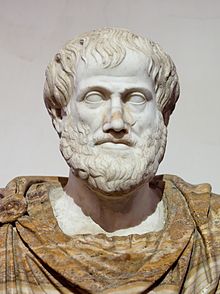
The foundations of logical science, and of that part of law which concerns itself with logic rather than rhetoric, were laid by Aristotle, in 350 B.C.E.

His analysis of reasoning with demonstrable facts, as against appeals to "reason", came in a golden age of rhetoric.  He noted that the tools of rhetoric had not been built from an analysis of how language is used, but had been built piecemeal.  He, on the other hand, built his tools of logic from an observational foundation.

Humans have long been yearning for an immortal life and everlasting youth—to continue living freely without having to confront death. A renowned novel written by Mary Shelley, Frankenstein, reveals this desire for immortality.

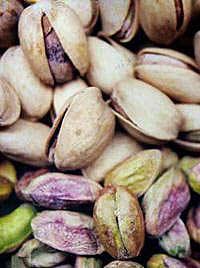
A team from the School of Family and Consumer Sciences at Eastern Illinois University have discovered a reliable method of persuading people to eat up to 50% less pistachio nuts – just leave them in their shells.
Statistics data analysis is one of those things that experimental physicists learn along the way. It is not a topic usually included in the curriculum studiorum of physics students at Universities: only few basic ingredients are taught during laboratory courses, and not much is added to that during a typical Ph.D. program.

One usually learns the most common tools to fit histograms, combine measurements, estimate uncertainties on the field, as these things are always needed to produce publishable physics results. But several key statistical concepts often remain fuzzy and obscure in the mind of a large fraction of experimental physicists throughout their career. I know this because this happened to me, too - for quite a few years after my graduation.
Recently I attended a talk by Ronnie de Sousa, a philosopher at The University of Toronto, by the somewhat unusual, almost oxymoronic, title of “Love and Reason” (as opposed to, say, Love or Reason). It turned out to be a fascinating tour de force ranging from the Countess of Champagne and her 1176 verdict on the nature of love, to cognitive scientist’s Helen Fisher studies of the chemical underpinning of different aspects of love. Here I will limit myself to a few aspects of de Sousa’s talk (who graciously provided me with his original slides), but Ronnie is finishing a paper on the subject, so stay tuned for much more if what follows happen to sufficiently stimulate your curiosity.

Temple Grandin’s “The Autistic Brain: Thinking Across the Spectrum” [1] belongs to a new(ly fashionable but old) way of thinking that supports my own approach, namely that pathologic (psychopathic) thinking is necessary for new-enlightenment, for example in the face of existential dangers evolving in the technological substrate (Robopocalypse, Global Suicide).


