






I. Preface


I recently posted an article (Part I) in which I proposed a hypothetical scenario, in which an individual who is offered marijuana takes time out to research the drug exclusively through recent articles on PubMed to see if its a good idea or bad idea. It was meant more as an intellectual exercise, not a commentary or piece of advocacy for either side of the legalization debate (although the commentary after quickly delved into that debate). I wrote the article for the following reasons:
Occasional readers of this blog, I reckon, have time and again been left wondering what is the matter with these lower mass limits on new particles that physicists so copiously produce with their subnuclear physics experiments. How are they determined ? Why always lower mass limits and (almost) never upper limits ? And why do we care ?
Galactan is a polymer of galactose, a six-carbon sugar that can be readily fermented by yeast into ethanol and is a target of interest for those researching advanced biofuels produced from cellulosic biomass.

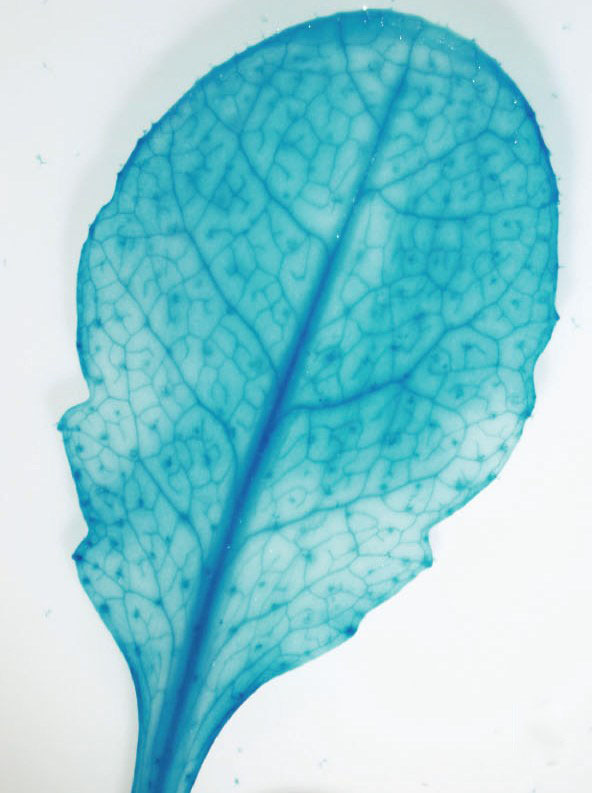
Galactans are polysaccharide components of pectin, the sticky sugar substance that binds together the individual cells in plant cell walls (and is used to make delicious jellies and jams). The β-1,4-galactan component of pectin is especially abundant in the “tension wood” that forms in cell walls in response to mechanical stress from wind or snowfall. An international collaboration has identified the first enzyme capable of substantially boosting the amount of galactan in plant cell walls.
Sex is not just an activity confined to higher animals such as mammals and not just for reproduction. The changes in offspring that result during reproduction are integral to the continuing adaptation and evolution of millions of species of plants, fungi and other organisms throughout the food chain. 
Disclaimer: I have never smoked pot. Not interested. But, I have been very interested in the decades-old debate about it. On one side you have people who claim it as a benign, useful substance that should be legal. On the other side, you have people who claim it is a dangerous and destructive and should be banned. I was surprised to realize to myself recently that I couldn't articulate a good argument for either side. I didn't know enough. 
So I wanted to do an experiment. But not that kind of experiment.
Why do people skip the queue, obstruct, cause traffic jams, and create delays for everyone? Who are these anonymous creatures lacking cooperation skills? And more importantly: are you sure others don't classify you as such?

Back in October, author Michael Pollan wrote an opinion piece for the New York Times in which he said the upcoming vote on California Proposition 37 would show whether or not the “Food Movement” had developed into “a movement worthy of the name.”  Proposition 37 failed for good reasons

Successful solo rock/pop stars are around twice as likely to die early as those in equally famous bands, indicates fascinating research you can read before you over-indulge on New Year's Eve. Though you could have read this same paper on New Year's Eve in 2007, in a different journal, just covering a slightly shorter period. Maybe researchers had a 2012 publish or perish deadline. 

A combination of robotic devices that disperse a time-honored bleaching agent into the air and then detoxify the disinfecting chemical are highly effective at killing and preventing the spread of multiple-drug-resistant bacteria - MRSA and so-called superbugs.

These hydrogen peroxide vaporizers were first deployed in several Singapore hospitals during the 2002 outbreak of severe acute respiratory syndrome, or SARS, and later stocked by several U.S. government agencies in case of an anthrax attack

Researchers have identified a mechanism by which the bacterium Staphylococcus aureus (S. aureus) colonizes our nasal passages, showing for the first time that a protein located on the bacterial surface called clumping factor B (ClfB) has high affinity for the skin protein loricrin.


