Researchers in Spain have mixed paper industry waste with ceramic material used in the construction industry and created a brick that has low thermal conductivity and so is a good insulator.
What's the catch? Its mechanical resistance still requires improvement.
The scientists collected cellulous waste from a paper factory (recycled) along with sludge from the purification of its waste water. In their laboratory they then mixed this material with clay used in construction and passed the mixture through a pressure and extrusion machine to obtain bricks.
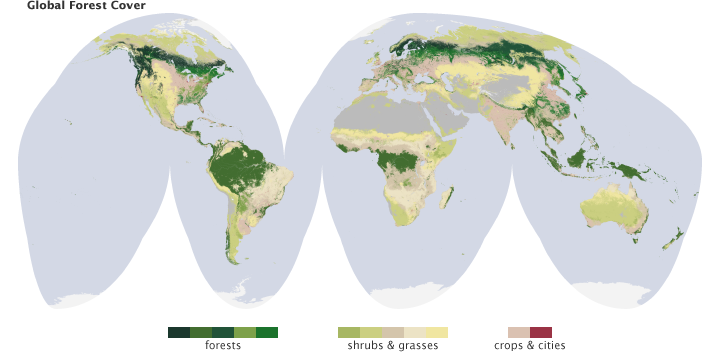
This is not a rainforest!
A story wherein I reveal resistant and deliberate ignorance.
Researchers have described a new selective target in muscle regeneration. This is the association of alpha-enolase protein and plasmin, findings which could be used to develop new treatments to regenerate muscular injuries or dystrophies.
In 1991, the Pinatubo volcano eruption was a disaster for the Philippines and the effects were noticed across the world - it threw tons of ash and other particles into the atmosphere, which caused less sunlight to reach the Earth's surface. Global temperatures dropped by half a degree for years after that.
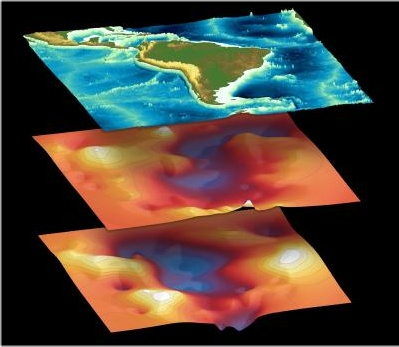
Clearly, volcanic eruptions can have a strong short-term impact on climate but a group of researchers are delighting doomsday believers by contending climate change will have an impact on volcanic eruptions. The researchers from GEOMAR Helmholtz Centre for Ocean Research Kiel and Harvard University say they have strong evidence by using models of major volcanic eruptions around the Pacific Ocean over the past 1 million years.
The relationship between the work of science and works of fiction has gone on for a long time. It's time to put a ring on that finger.
It's no secret that fiction writers have been pilfering ideas from science for generations. Verne did it. Wells, Asimov, Clarke, Bradbury, Matheson, and of course Crichton, had a lot of success by finding out what was hot in science, taking an imaginary leap to the next step (or next hundred steps), and then turning it into a story, and a profit.
This trend has continued with movies, which routinely feature scientific factoids that have been Googled, copied and pasted from dubious or legitimate sites. Let's face it. Fiction needs Science in order to thrive.
But what does Science get out of it?
It is with some delay that I decide to write about Aldo here. The reason is simply that after a house move I still have not been reconnected to the internet at home, and my absence from work for christmas holidays makes things even harder, and my presence online a sporadic break rather than a constant of motion.
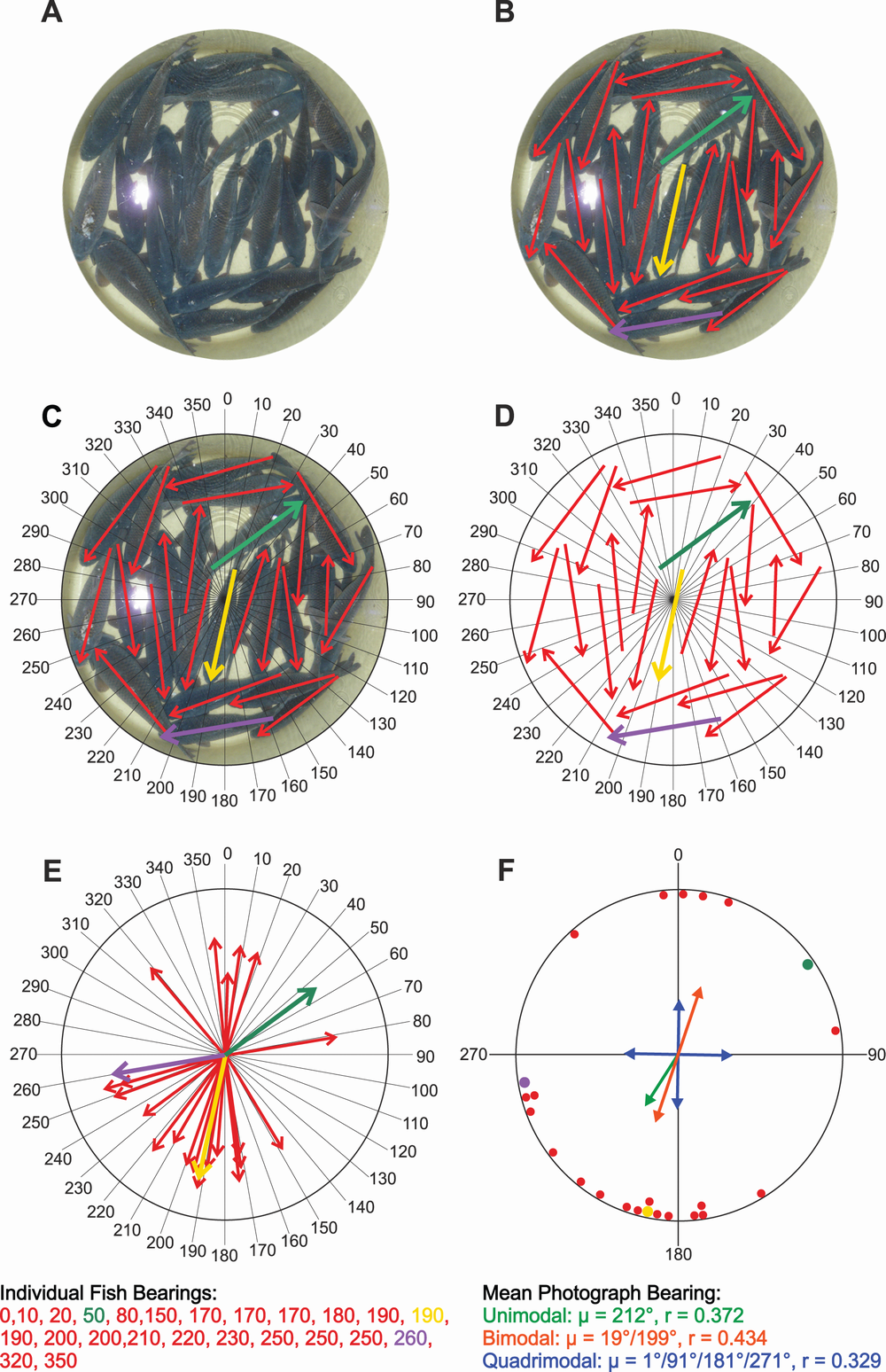
Czech researchers have hypothesized that carp in large tubs at Christmas markets possess a capacity to sense geomagnetic fields.
Collagen, the most abundant protein in the body, is widely used to build scaffolds for tissue engineering because it is biocompatible and biodegradable. Collagen is, however, hard to work with in its natural form because it is largely insoluble in water, and common processing techniques reduce its strength and disrupt its fibrous structure.
Researchers have fabricated an artificial protein in the laboratory and examined the ways living cells respond to it.
Can social networks determine which students need the most help and which ones excel and might be guided to further study or careers in that subject area? Information Systems graduates say they can do it.