




UPDATE: for more on this, I only now realize that my friend at Resonaances had written about it yesterday... It is nice to see that he agrees with my conclusions, anyway. Also Peter has news on it, and as usual additional links...

---

My ATLAS colleagues will have to pardon me for the slightly sensationalistic title of this article, but indeed the question is one which many inside and outside CERN are asking themselves upon looking into the new public material of ATLAS Higgs boson searches using the 2011 dataset in conjunction with the first part of 2012 data.

Dogs can sniff out Clostridium difficile, the infective agent that is responsible for many of the dreaded "hospital acquired infections", in stool samples and even in the air surrounding patients in hospital with a very high degree of accuracy, finds a study in the Christmas issue published on bmj.com today.

Yes, dogs can smell a superbug infection in poop. Can you smell a rat at BMJ this Christmas?

The findings, they write in one of this year's spoofs, support previous studies of dogs detecting various types of cancer and could have great potential for screening hospital wards to help prevent C. difficile outbreaks, say the researchers.

Opinions of the tooth fairy as kind and giving may need to be revised following "mounting reports of less child-friendly activity", according to a paper published in the BMJ's Christmas edition which is sure to fool mainstream media editors who are used to scare journalism and miracle vegetable of the week stories and may want to mix it up a little. 

Researchers from across London, they write, have become concerned following misdemeanors of the mythical character and a worrying trend in malpractice. One boy in particular became extremely distressed because the tooth fairy "had put a tooth in his left ear" after he left it under his pillow.

 An investigation turned out he was right

Our immune system does not shut down with age, says a new study published in PLOS Pathogens today. T cells can respond to virus infections in an older person with the same vigor as T cells from a young person.

Researchers examined individuals, younger than 40, between 41 to 59 years of age and older than 60, infected with three different viruses, including West Nile, and found the older group demonstrated perfectly normal immune responses.

Both the number of virus-fighting T cells and the functionality of the T cells were equivalent in all three groups.

Current global conditions provide numerous challenges for future generations. The United States has a mind-boggling federal deficit. Developing countries have rapid population growth that will lead to increasing energy demands and a larger carbon footprint. At the international level we have volatile energy markets, limited natural resources, and will have inevitable climate change based on historical precedent.  
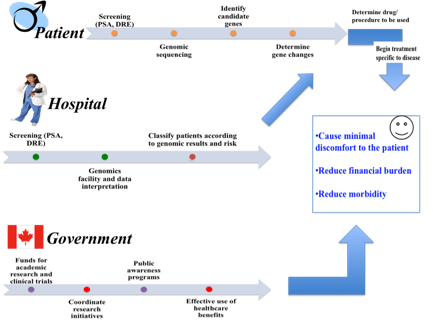
“Personalized medicine! What is that?”

Your question is justified. 

It was also something that Terry Procter from Peterborough, Ontario thought when he was sent a questionnaire for his opinion on the subject. He was diagnosed with prostate cancer and had his prostate removed in 2007. So, what is personalized medicine and what is the connection to cancer?

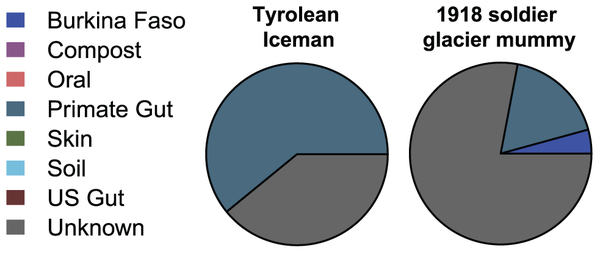
If you are an organic food or paleo diet lover and think it means your gut microbiome resembles your ancestors in any way, you are wrong.  We aren't even close to 100 years ago much less ancient times.  The microbiome does not lie.

A team analyzed microbiome data from ancient human fecal samples collected from three different archaeological sites in the Americas, each dating to over 1000 years ago. They also did a new analysis of published data from two samples that reflect rare and extraordinary preservation: Otzi the Iceman and a soldier frozen for 93 years on a glacier. 

Science can make better corn and, well, better everything - except perhaps the Christmas tree.

The genome of conifers like spruce, pine and fir has remained pretty much the same for the last 100 million years - a remarkable feat of genomic stability. Researchers analyzed the genome of conifers and compared it to that of flowering plants. Both plant groups stem from the same ancestor but diverged about 300 million years ago.

The Linac Coherent Light Source (LCLS) at the SLAC National Accelerator Laboratory is using X-rays to measure, in atomic detail, a key process at work in extreme plasmas like those found in stars, the rims of black holes and other massive cosmic phenomena.

Wilms' tumors, a type of cancer typically found in the kidneys of young children, might have a new weapon against them. A new therapeutic approach that one day might be used to treat some of the more aggressive types of this disease could be possible now that  scientists have isolated cancer stem cells that lead to the growth of the tumors.

