I read the text below in the Facebook page of a colleague and friend, Christopher Hill. The text was meant as a facebook rant - sort of - but it raises important points. I liked what he wrote and I asked him if I could repost it here to the benefit of a larger audience. He graciously agreed. NB: the title of the post is mine.
Now that the election and Sandy is (sort of) over, I want to post a rant that I didn't think was appropriate before now.
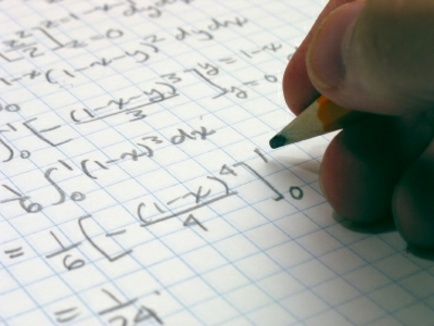
First, Nate Silver. I have heard him called everything from a genius to a wizard to a witch in recent days. He is none of the above. He is a guy who understands mathematics (in particular statistics) enough to be able to use it to predict elections.
The CDF and DZERO collaborations at the Fermilab Tevatron collider just saw published on Physical Review D (PRD 86, 092003) their final combination of their most recent and precise measurements of the mass of the top quark.
This result, which is probably going to be the definitive one by the Tevatron experiments, reaches a precision in the top mass which is comparable to the precision of the scale you have in your bathroom, despite the fact that measuring your body weight is a quite simpler matter than determining the mass of an elementary particle, let alone one which exists for less than a trillionth of a trillionth of a second.
A digression
A new prostate cancer awareness survey found widespread misconceptions about the disease and says the emotional impact on men is underestimated.
The physical effects of prostate cancer are widely known but men know more myths than facts about how prevalent it is and what could happen. Janssen Biotech, Inc. has released the results of its "Mind Over Manhood: Misconceptions About Prostate Cancer" survey and it reveals a significant gap between the facts about prostate cancer and what men believe about the disease.
In the past, the stereotypes of autism often included a savant capability in some specific thing. A new look at eight child 'prodigies' suggests there may actually be a link between the children's special skills and autism.
Or, people who are really good at some things tend to develop less socially.
Of the eight prodigies they looked at, three had a diagnosis of autism spectrum disorders and as a group, the prodigies tended to have slightly elevated scores on a test of autistic traits compared to the control group. Half of the prodigies had a family member or a first- or second-degree relative with an autism diagnosis.
The most startling thing to me about the election of 2012 was how spookily accurate polls were. Social scientists in one camp want to dismiss determinism while the other camp has biology-envy but either the deterministic side got a big boost on Tuesday or the opposing sides in this election were so entrenched there was virtually no reason to vote, other than to see who had the best Get Out The Vote campaign. As I discussed in
How Accurate Are Those Political Polls?, that is where the magic happens. Could polls predict how successful a Get Out The Vote campaign is?Maybe. I know one party is scrambling to see what went wrong.
BOSTON, MA—“The trees are certainly shorter out here,” said Luke.
The East Coaster in me bristled instantly. “Well, sure, nothing’s going to measure up to a Redwood,” I said, “but these guys along the road are hardly the best that Massachusetts has to offer.”
As Luke mused out loud over the tall trees that could be found in his home state of Oregon, I thought about what the forests of the Northeastern United States would have looked like centuries before the highway we now cruised was constructed.
A journalist I am following on twitter just posted the question in the title of this post. I felt bound to try and give an answer with as simple concepts as I found meaningful. So, what makes a unstable particle unstable ?
One answer is this: a particle is unstable if there is a way, not forbidden by any physical law, to convert its rest-mass into other forms of energy. One may understand this by thinking of entropy: any system left free to evolve will do so in the direction of maximum entropy. So since a single particle state is a very low-entropy system, while the decay products of its disintegration have a multitude of possible configurations and a higher entropy, the system will naturally evolve in that direction.
“ ‘Chills’ (frisson manifested as goose bumps or shivers) have been used in an increasing number of studies as indicators of emotions in response to music …”
 But in a new research project, investigators from Hanover University of Music and Drama (hmtmh) in Germany focused their attention not just on chills which are exclusively musically-induced, but also on those initiated by aural, visual, tactile, and taste stimulation.
A comprehensive set of experiments were devised to investigate.
Here is an interesting statistic: if we multiply the (approximate) number of computers currently present on planet Earth by the (approximate) number of transistors contained in those computers we get 10^18, which is three orders of magnitude larger than the number of synapses in a typical human brain. Which naturally prompted Slate magazine’s
Dan Falk to ask whether the Internet is about to “wake up,” i.e., achieve something similar to human consciousness.
In its third century, psychological science will come of age but a mature discipline carries with it responsibilities, chief among them the responsibility to maximize confidence in findings through good data practices and replication.
In the recent issue of
Perspectives on Psychological Science (free to read), writers reflect on the discipline's ongoing commitment to examine methodological issues that affect all areas of science — such as failures to replicate previous findings and problems of bias and error — with the goal of strengthening the discipline and contributing to the discussion that is taking place throughout science.