One of the things I emphasize to my students in composition classes is that claims require evidence. All claims in a paper should be backed by evidence. Not simply stated and assumed true. Not propped up by fallacies. Backed by evidence.
The communication of science to the general public is a subject dear to me, but unfortunately one that the majority of my colleagues neglect to consider as one to which to devote time and efforts.
In the last decade blogs have started to fill the huge gap that exists between scientific journals and general news media, a gap that no popularization magazine can bridge, given their restricted scope. More recently, I see efforts that employ video and graphics more heavily than before, and this is of course a step in the right direction - reading is harder, or at least less immediate, than watching an image or following a video clip.
Last night I had a sappy mama dream about holding and nursing my baby. Half-waking from it, I found myself wondering if the baby--scheduled to remain comfortably ensconced in my womb for another four months--might have had the same dream.
Sulfur has been portrayed as a secondary factor in regulating atmospheric oxygen - carbon gets all the press - but new findings suggest that sulfur’s role may have been underestimated.
As sulfur cycles through the land, the atmosphere and the oceans, it undergoes chemical changes that are often coupled to changes in other such elements as carbon and oxygen. This affects the concentration of free oxygen.
If only there were a field that examines the spiritual, therapeutic and psychological aspects of human-nature relationships, I'd abandon my graduate studies in Theoretical Phys Ed and embrace this new discipline instead.
Luckily, there is. For those of you dumb enough to have spent $80,000 for a two-year program in Environmental Journalism at Columbia but now can't (they closed it - even unlimited student loans reached a gullible student limit), Ecopsychology is here.
Methicillin-resistant Staphylococcus aureus (MRSA) infections doubled at U.S. academic medical centers between 2003 and 2008, according to a new report published in Infection Control and Hospital Epidemiology.
MRSA infections, which cannot be treated with antibiotics related to penicillin, have become common since the late 1990s. These infections can affect any part of the body, including the skin, blood stream, joints, bones, and lungs. The findings run counter to a recent CDC study that found MRSA cases in hospitals were declining. The CDC study looked only at cases of invasive MRSA—infections found in the blood, spinal fluid, or deep tissue. It excluded infections of the skin, which the new study includes.
The horns of creatures as different as elk and rhinoceros beetles - along with other decorative, mate-attracting structures - are sensitive to changes in nutrition. They aren’t diabetic, but they are insulin-dependent; if they want to grow big horns and therefore attract mates.
Is there a 'biological clock' that women recognize innately, and act on accordingly? New research casts some doubt on that.
Prior to World War II and dating back to the 1890s, the phrases “social technology” and “social engineering” carried strong connotations of central planning. This became particularly true in the Soviet Union, where the terms appeared in various tracts.
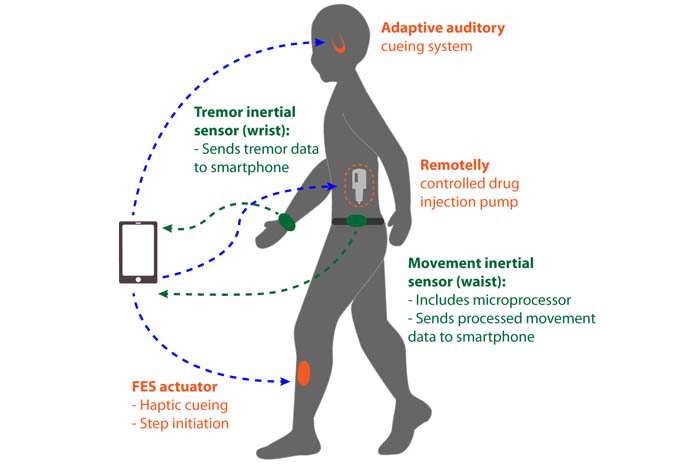
Parkinson’s disease is the second most common neurodegenerative disease after Alzheimer’s disease.
Now patients are getting some high-tech help. REMPARK (Personal Health Device for the Remote and Autonomous Management of Parkinson’s Disease) is a wearable monitoring and actuation system that identifies the motor status of Parkinson’s patients in real time. The system will also determine what phase a patient is in while walking or performing everyday activities and provide a cue to initiate movement when a gait-freezing episode occurs.







 mitosis explains increasing oocyte depth with age.png "Oocytes: Maybe That Biological Clock No Longer Ticks")