


What goes on underneath the most deadly volcanoes?  As my PhD investigates the processes that occur below the ground on Santorini, I thought I would try to explain some of what goes on under every active volcano.

The advances in genetics and genomics have given rise to a flourishing personal genomics industry. All you need is a credit card and you can order a DNA kit on the internet. Once it arrives, all you have to do is rub a swab over your cheeck and send it back. A little later, voila, genetic information is sent to you, indicating your risk for a certain disease, or telling you whether your child is really yours, or something else.

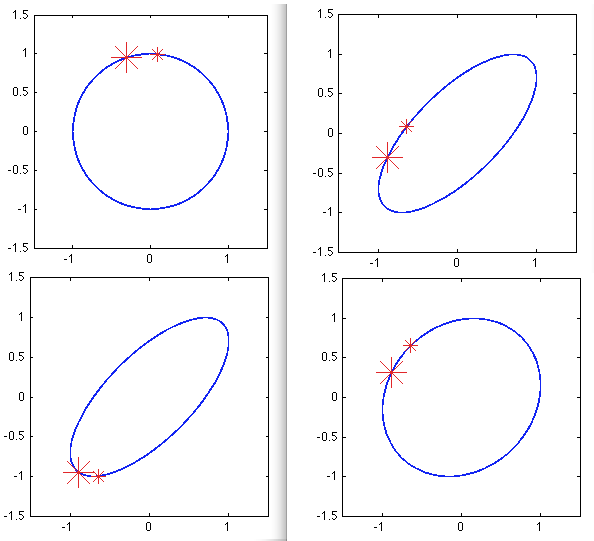
This is a continuation of "As is well known about elliptic trajectories" where I have put it as a sort of homework to find out which force fields support elliptic trajectories. The "problem" has been solved in a response to my first post. That other field is known as isotropic harmonic oscillator. It is discussed below. Now I will come with my personal story behind all this.

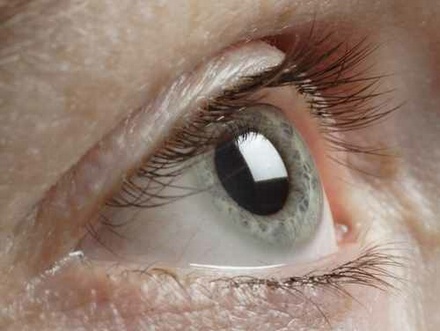
Physical activity is always good for you but a new analysis says it may patients reduce their risk of developing glaucoma. Higher levels of physical exercise appear to have a long-term beneficial impact on low ocular perfusion pressure (OPP), an important risk factor for glaucoma.

The analysis examined the relationship between physical activity and current OPP in 5,650 men and women aged 48-90 who live in the U.K. and were part of initial cohort from 1993-1997.

Chinese researchers have created a hypothesis for a quantum cloning machine able to produce several copies of the state of a particle at atomic or sub-atomic scale, or quantum state, which if produced could have implications for quantum information processing methods such as encryption systems.

Quantum cloning is difficult because quantum mechanics laws only allow for an approximate copy—not an exact copy—of an original quantum state to be made, as measuring such a state prior to its cloning would alter it. In their study, they demonstrate that it may be possible to create four approximate copies of an initial quantum state, a process called asymmetric cloning.

Prevailing wind shear patterns prohibit cyclones in the Arabian Sea from becoming major storms but a new study says winds are weakening and that has enabled the formation of stronger cyclones in recent years -- including storms in 2007 and 2010 that were the first recorded storms to enter the Gulf of Oman.

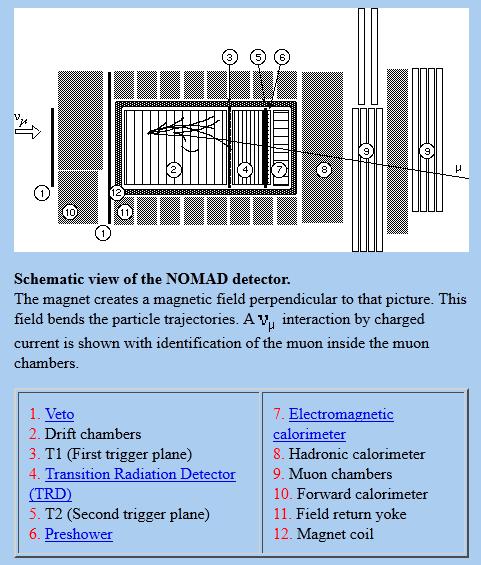
The Arxiv today features a quick-and-dirty study of the occurrence of electron-positron pair signal in the NOMAD detector, which obtains very strong bounds on the superluminal behaviour of energetic muon neutrinos like the ones whose speed has been recently and famously measured by OPERA.
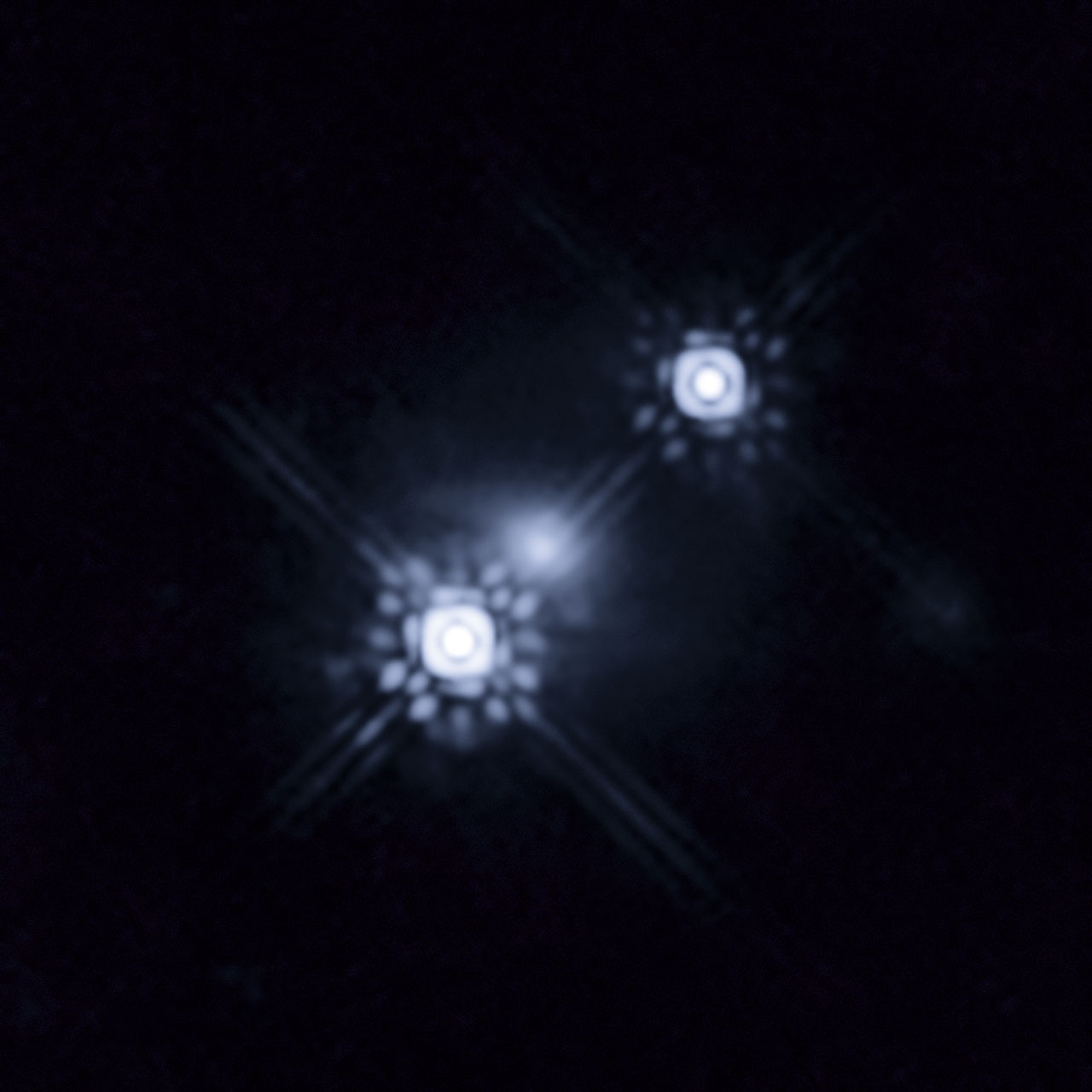
 Black holes are invisible but the forces they unleash cause some of the brightest phenomena in the Universe; quasars. The gravitational lensing effect of stars in a distant galaxy and the Hubble Space Telescope have teamed up to observe a quasar accretion disk, the brightly glowing disk of matter that is slowly being sucked into its galaxy’s central black hole, which heat up and emit extremely bright radiation as they 'enter'.

Result: Researchers were able to directly measure the disk’s size and plot the temperature across different parts of the disc; a level of precision equivalent to spotting individual grains of sand on the surface of the Moon.

Parking is a funny thing; no one is ever happy with it. Even if you go to Disney World, which has come as close as anyone to mastering the perception you are moving while you really go nowhere inside the park itself, the parking is horrendous outside.  If something is popular enough you want to go, the parking will be crowded.  Sometimes you may not go at all because you think about parking.

Researchers estimate that for every 110 vehicles circulating on the roads looking for spaces, there are 100 available spots, both in lots and on the street.  If so, that number is quite high, downright inefficient, but it still isn't high enough to make parking palatable.

In a recent study, scientists used simulations to model the behavior of a closed, granular system comprising a chain of equal-sized spheres that touch one another and are sandwiched between two walls. Energy travels through this system as solitary waves, also known as non-dispersive energy bundles. When the system was disturbed by multiple energy perturbations, akin to someone tapping on each of the walls, the energy spread unevenly through the system.

