


One of the fundamental precepts we laid out in the original Science 2.0® vision was collaboration.  It's tricky stuff, collaboration, it requires scientists who are often competitors to other labs to be more open - and that may never happen, but for smaller groups who want it to happen, there are tools in the works that can help.  

One of those, Mendeley, has come out of beta and released Mendeley Desktop v1.0 for Windows, Mac, and Linux, following two other milestones for the company, 1 million users who have now downloaded the application and a database with its 100 millionth paper uploaded. 

There hasn't been much of a debate about this paper at Science 2.0, so I thought I might briefly review it, and see what everybody else thinks. But, before we start, I should make one thing clear. I'm not a psychologist. I'm not even an evolutionary psychologist; I'm a paleontologist. And I should also make it clear that I am often very dubious of a lot of the findings of evolutionary psychologists, which often seem to me like pontificating on very banal things with very little actual science going on.
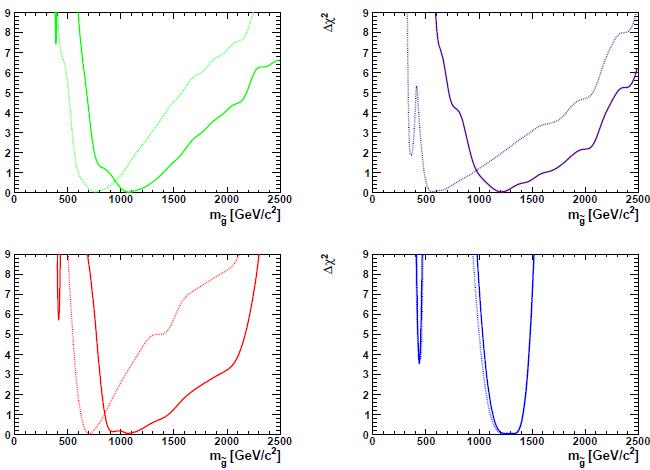
While experimentalists gathered in Grenoble present the latest results on High-Energy Physics searches and measurements, phenomenologists like Sven Heinemeyer are working 24/7 to update the picture of the breathing space left for Supersymmetry, in the light of the most recent searches.

You of course do not need to be reminded that Supersymmetry is not a theory but a framework, within which a host of possible manifestations of subnuclear physics are configurable based on the value of 120-or-so free parameters. Because of that, if one wants to discuss in detail what are the most likely versions of SUSY left on the table, and what is the value of the most representative and critical theory parameters, one needs more than paper and pencil.

Mark Osteen's One of Us


There are many memoirs out there, many stories by individuals about their journeys as parents of disabled children, and some are good, some are great, and others are neither. Some writers are polished and offer their journeys with a luminosity of prose that leaves your soul fed. Other memoirs, while polished and offering a distinct voice, a unique insight, leave you with a heavy heart, a soul weighed down by the limbo, the purgatory, the family finds itself in. Osteen's tale, One of Us, does that: leaves the reader weighted and yet lost.
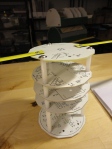
The question 'what can you do with such a tiny satellite' has many answers.  This week we're looking at Calliope's faster, cooler cousin, the ion-drive testing platform called FRETS1.

An ion engine in a satellite the size of a soda can

Frets1 TubeSat
Ignaz Venetz - Climate Change Pioneer - #3


There is no such thing as a perfect translation.

En effet, on peut être utile sans atteindre à la perfection;

Agenda, ou tableau général des Observations et des Recherches dont les résultats doivent servir de base à la théorie de la Terre, H. B. de Saussure, 1796.

This article contains my translation of Ignatz Venetz's 1821 prize-winning Essay on the variations of temperature in the Swiss Alps - Memoire sur les variations de la température dans les Alpes de la Suisse

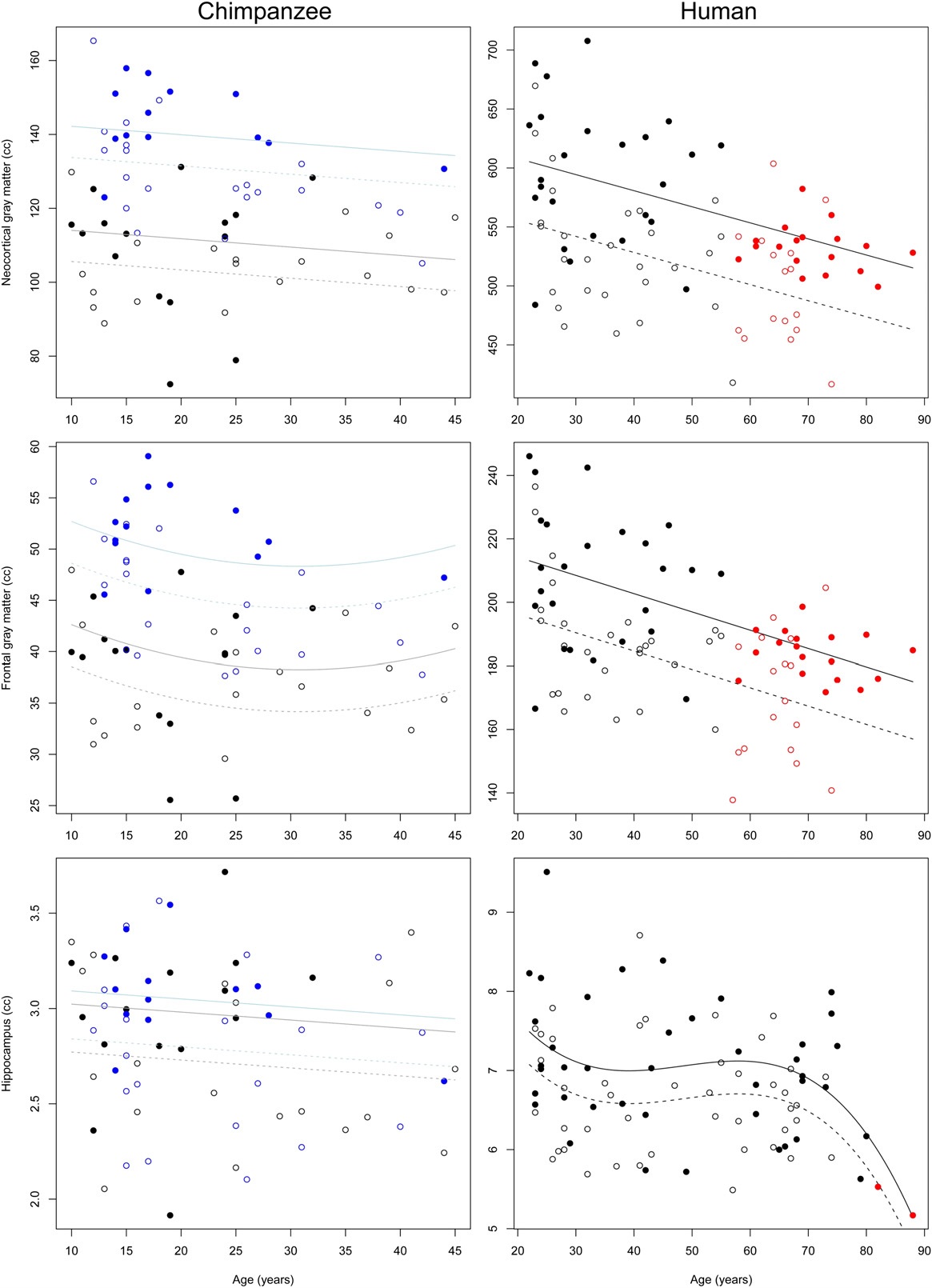
Age does  a lot of things to us. And to our brains, which shrink when we grow older. Those incredibly complex neural networks inside our skulls not only shrink, but they also become more susceptible to scourges such as dementia and Alzheimer’s disease. People who do not suffer from these cognitive dysfunctions, also show aging effects in their brains, such as the accumulation of amyloid-beta plaques.

To trace the evolutionary roots of the aging brain, researchers have previously investigated whether similar effects occur in the brains of rhesus monkeys (which diverged from the ‘human lineage’ about 30 million years ago). These primates showed only very limited effects of age in their brains. So, the mystery remained.

Occasionally, my interests in the psychology of belief and my love of sci-fi intersect. Imagine if you will my howling with disgust when one of my favorite shows perpetuates the 10% myth of brain use (and they all do it!). 

Last night, we watched "Rules of Engagement," a third season Stargate SG1 episode in which Apophis has rounded up a bunch of young men and has them training to be infiltrators; SG1 gets stunned by them when they gate to the planet and think that the men in military uniforms are a missing SG team.
With the end of the space shuttle, we may also be seeing an end to manned space travel as a science endeavor.  I am not saying we shouldn't send people into space, we certainly should, but it should be just that - a bold voyage into the unknown and not rationalized with science, where it is not a very good one.  Robots are cheaper and better and the Congressional hearings are less messy if a robot dies.

President Obama likely agrees about robots, since he canceled the manned successor to the space shuttle, the Constellation project and there is no valid replacement in sight.

Lets gamble; participating costs you only 50 cents per game. The odds are in your favor! Two out of three times, you win and get a dollar. So we start playing, and it seems as if we walk along time, every game we get to a point in the road where it splits into three paths, two of them are winning one-dollar branches, one is the zero-dollar branch, there we toss a three sided fair die, then we ‘find ourselves’ in one of the three branches. However, I cheated.

