


In the category of lesser-known holidays that could be celebrated on December 25th, the coronation of William of Normandy in 1066 A.D. as first King of what we know as modern England would have to be considered.    It was the last time a foreign nation would conquer the island nation and years later the Brits gave us all Shakespeare, Christmas Island and America.

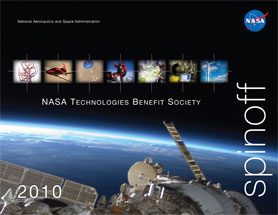
Given all the NASA funding, you think we'd get something from it!  Oh, wait, we do.  SpaceRef pointed me to the NASA SpinOff 2010 report.  What did we get for our $19 billion annual NASA budget?  I mean, that's a lot of money, that's... oh, wait, that's not a lot of money today.  My mistake.  True, you could buy 19 Stealth Bombers for that cost.  Or fight a typical war for 1 month.  But could you... save the airlines $2 billion in fuel costs with NASA wing mods?  Make a sensor that's in 1 in 3 cell phones?  Turns out we do get some bang for our buck.
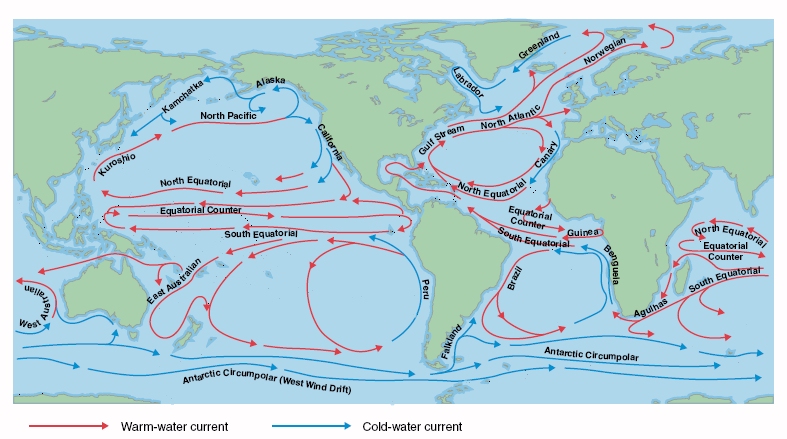
Blue sharks in the Gulf Stream, in the western Atlantic, probably spend all day eating squid.

At first, that doesn't seem remarkable. Every big predator likes to eat squid, and sharks are no exception. And there are plenty of squid in the Gulf Stream, particularly Illex illecebrosus, which could arguably be referred to as the Humboldt squid of the western Atlantic. Illex illecebrosus and Dosidicus gigas are in the same family of large, muscular oceanic squid--Ommastrephidae--and they exhibit similar daily vertical migrations.
What do you get when you cross Science 2.0, the cultural buzzterm that really took off in 2010 (and brought with it a whole host of colloquial meanings veering into 'web 2.0-ish, it means whatever you want it to mean' jargon) with a western world Christmas season?

You get an excuse to do a compilation of science articles, that's what.

So once again this year I have compiled topical articles from this year and seasons past.

One more of the many crazy results of the idiotic “war on drugs” is that we have to pay lots of money for chemicals that actually cost next to nothing. For example, adding up time and money spent on health insurance, physicians, and pharmacies, taking care of Attention Deficit Hyperactivity Disorder (ADHD) is plainly not a viable option for many poorer people or those with a tight schedule, say single mothers taking care of their kids while having a job. Nobody gets a year’s worth of medication; you have to go at least every month again or more frequently, especially in case of ADHD medicines, so to feed your doctor and the pharmacist. Got insurance?

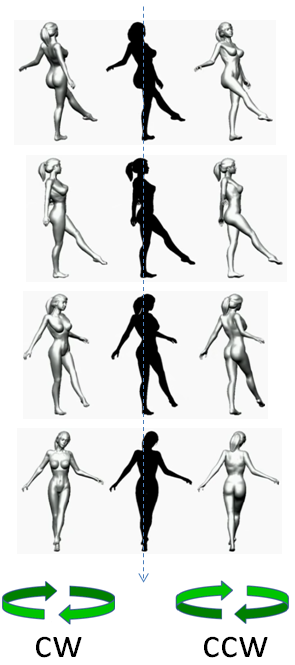
In the Silhouette Illusion (video at the bottom), a silhouetted woman is seen spinning on one foot, her leg extended.

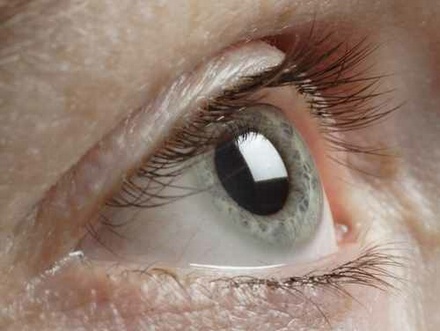
Scientists writing in Cognition have said that our ability to recognize and remember faces peaks at ages 30 to 34 - a decade later than most of our other mental abilities.

Some prior studies had suggested that face recognition might be slow to mature but fewer suspected that facial recognition might continue building for so many years into adulthood. The late-blooming nature of face recognition may simply be a case of practice making perfect.
If you were around in the early days of the iPhone, you may have thought users were in love with it.   Proponents spoke of it in romantic terms and looked for reasons to discuss it, with questions like, "So what kind of phone do you have?"

It turns out they may have been and a similar effect occurs in people passionate about things like cars and guns - it looks like love, according to a new study in the Journal of Consumer Research.   "Is it possible for consumers to be in love with their possessions?" ask authors John L. Lastovicka (Arizona State University) and Nancy J. Sirianni (Texas Christian University). When it comes to technology, cars, bicycles, and firearms, the answer seems to be a big yes.
A reader of this blog asked in the comments thread of a recent piece the following interesting question:

"Assuming mH = 201 GeV/c2, how many Higgses shoud have been produced at
the Tevatron by now with an integated luminosity of 10 inverse
femtobarns? And how many H -> ZZ -> µµµµ would one expect to see?"
For too long, scientists have ducked away from public service, not because their peers have been unwilling to elect them, but because there is a sense among scientifically educated people that politics is something to be avoided -- something that is inherently corrupting about the idea of becoming a politician causes most scientists.  For too long, our long term public welfare has been held hostage by our public representatives who act as primarily as politicians rather than statesmen and stateswomen.  The distinction between the two being that politicians seek only to advance policies which secure their next election, while statesmen and stateswomen seek to secure the next generation.

