A 30,000-year-old finger bone found in a cave in southern Siberia came from a young girl that was neither an early modern human nor Neanderthal, but instead belonged to a previously unknown group of human relatives who may have lived throughout much of Asia during the late Pleistocene epoch, according to new research (Reich, D. et al. Nature 468, 1053-1060 2010.
As sure as death and taxes, and as timely as a Swiss watch, the Tevatron collider never ceases to awe us. Well into its twentysixth year of life, the aged and celebrated proton-antiproton collider sitting just a few meters underground in the west Chicago suburbs hit the mark of 10 inverse femtobarns of collisions delivered to the core of the CDF and DZERO detectors.
10 inverse femtobarns! Ten inverse femtobarns of proton-antiproton collisions is a HELL of a lot of them. Plus, you should multiply that number by two, since the same number of collisions happened inside two different collision areas -those manned by the two competing collaborations.
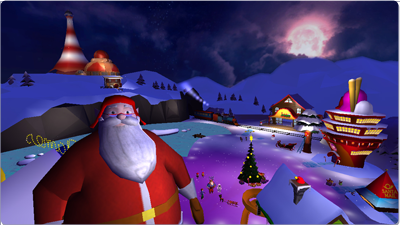
In the 1989 holiday classic "Scrooged", the chairman of the television network predicts that because there were so many pets in America they would become steady viewers in 20 years - which would be 2009. So he asks network executive Bill Murray to introduce Door Mice instead of Door Men in their live Christmas Eve version of Dickens' "A Christmas Carol", in order to get a head start on appealing to television-watching pets.
Far fetched? Perhaps, though singing mice are sure to get everyone's attention, not just your cat.
Humans have greater susceptibility than other primates to certain infectious diseases which could be explained by species-specific changes in immune signaling pathways, a University of Chicago study finds.
The first genome-wide, functional comparison of genes regulated by the innate immune system in three primate species discovers potential mediators of differences in disease susceptibility among primates.
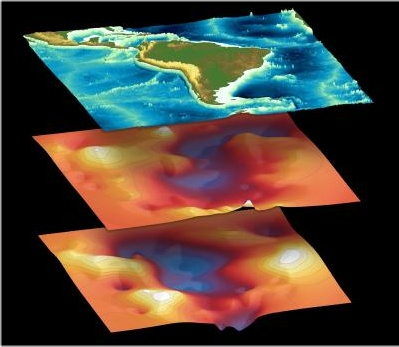
Mountains are the epitome of durability but some new data shows how ancient precipitation was really the driving force behind the mountains of the Farallon Plate between 65 and 28 million years ago.
50 million years ago, mountains began rising in southern British Columbia and over the next 22 million years, mountains began rising down western North America as far south as Mexico and as far east as Nebraska, says the new research.
The economic reasoning underlying network neutrality regulationadopted this week by the Federal Communications Commission is fundamentally flawed, according to Professors J. Gregory Sidak and David J. Teece in an article published in the Journal of Competition Law&Economics.
Sidak and Teece explain that the FCC's proposed regulations would have the effect of banning or restricting optional business-to-business transactions between broadband Internet service providers (ISPs) and content providers for enhanced delivery of packets over the Internet.
It's worth dusting this off: a simple, accurate equation that decides to the penny how much you should spend on anyone's gift this holiday season. Get cracking you slacker.
Full of fear, I nervously packed the first Calliope test build into my carry-on badge and made ready to fly from DC to San Francisco. Would the TSA (airport security) people allow me to ship a liter-sized array of PCB boards stuck together with PVC separators?
This 'Traveling with DIY Electronics' article has good recommendations for international travel, where there exists customs forms and other niceties. However, I was traveling domestic, and there isn't really a 'this is not a bomb' form I can fill out in advance.
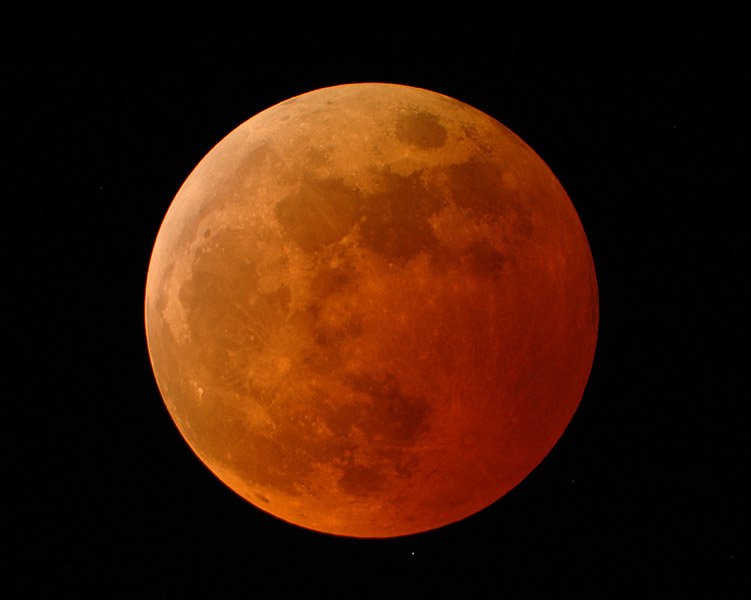
As we noted a few times this month, a lunar eclipse is happening soon and while lunar eclipses occur twice a year, this is the first time on the Winter Solstice since 1554 A.D. The second most popular question we get about lunar eclipses (First being "Is it safe to look at? Answer: "Yes") involves the reddish color - people want to know why the moon looks red during a lunar eclipse.
First, the basics: A lunar eclipse happens when the moon, Earth, and the sun all line up with Earth in the middle. It is an eclipse because Earth's shadow is cast onto the full moon which dims its surface.