The RMS Titanic, which hit an iceberg and sank in 1912 and then was found by searchers in 1977, still has a few mysteries left.
A brand-new bacterial species dubbed Halomonas titanicae by scientists from Dalhousie University in Halifax and the University of Sevilla, was found aboard the Titanic and is contributing to its deterioration.
The researchers isolated the Halomonas titanicae micro-organisms from a 'rusticle' collected from the Titanic, 3.8 km below the ocean surface.
Near the end of my book, Anti-S ocial Engineering the Hyper-Manipulated Self, I discuss twenty-two interesting intentions. Some of these intentions had, as their sole purpose, a control beside which other, more pressing, relevant intentions could be measured. Such is it that I came to discuss Santa Claus.
Merry Christmas.
Intention: If you're good, Santa Claus will bring you a Christmas Present.
Why is there anything? It is kind of conceivable that there could be no thing 'existing' at all – no world, no universes, no consciousness. However, there is at least something.
The opposite of “there is something” is “there isn’t anything (e.g. observed)” but not “there is (e.g. observed) some nothing”. This is important to avoid much ado about nothing. “Nothing” refers to the absence of anything. “Nothing” is not another something.
Researchers have created the first brain-wide wiring map of a fruit fly, a breakthrough that is being compared to the genome for geneticists, and they say it paves the way for a comprehensive analysis of information processing within and between neurons and ultimately a deeper understanding of control and causality in fly behavior.
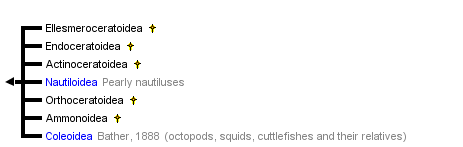
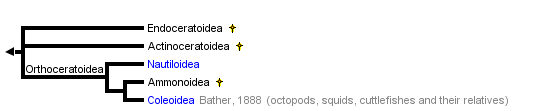
Some people might suggest the nautilus as the ancestor of modern squid, since they're the only "ancient-looking" cephalopods most of us have seen. But the lineage that led to modern nautiluses and the lineage that led to modern squid diverged long before there was anything that looked like a squid.
Here is a tree of evolutionary relationships within the
Cephalopoda, from the magnificent Tree of Life website.
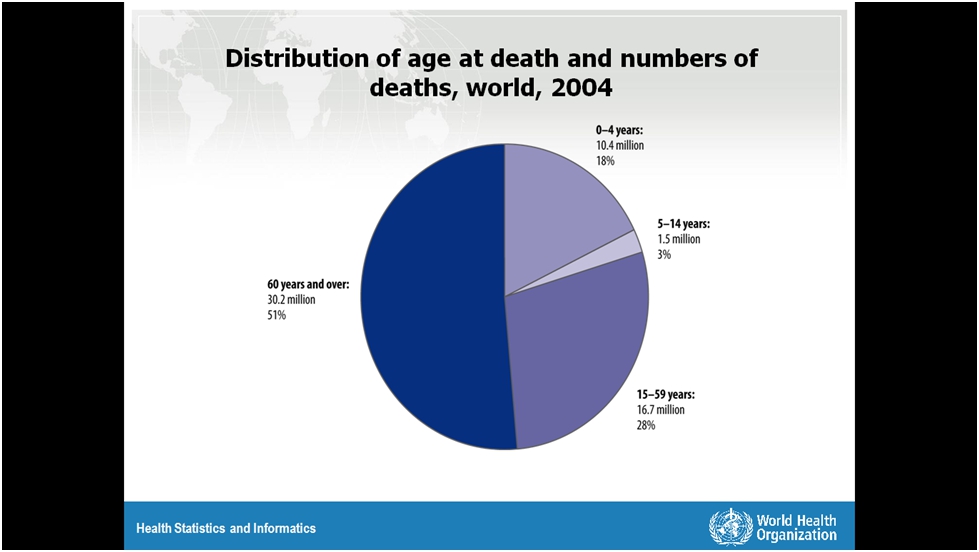
The three problems of humanity were outlined in a talk by Nick Bostrom (of Oxford University, UK) at
TED in April 2009. While I'm sure there are some that will consider these points to be quite reasonable in setting goals, I'm continuously amazed at the lack of rigor or introspection these claims aim at.
In a nutshell, the talk identified three (3) problems that were perceived as needing to be addressed to "fix" humanity. In this article, I will discuss the first one.
Problem #1: Death is a BIG problem.
Botulinum Toxin A is a commonly used cosmetic treatment, where the drug paralyzes small muscles in the face to reduce the appearance of wrinkles. If you have ever seen someone who looks normal and then suddenly looks like The Joker, you have seen Botox in action. A new study by researchers at the Faculty of Kinesiology, University of Calgary, is raising questions about the therapeutic use of botulinum toxin A.
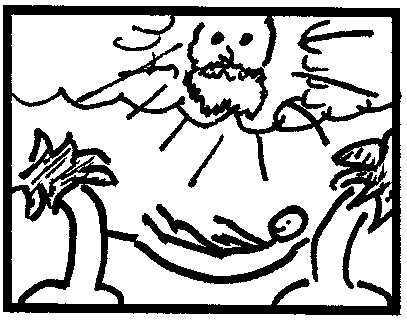
What happens when you die? What's right and wrong? What's the purpose of life? Aaaaarrghhh! Chill out, God has the answers. And the religious part of your brain knows it.
The anterior cingulated cortex is the human home of anxiety. And it's increasingly chill in people with religious conviction. In fact this anxiety center is quieter in people with any strong convictions that answer big questions, including conservative political ideologies. (Lest ye nail this author to the cross of liberal media bias, this is not necessarily a bad thing: it seems that many people could benefit from a chill pill shoved into their brain's anxiety center.)
If you are unaware, a supernova is an exploding star. In certain types of supernovae, the detonation starts with a flame ball buried deep inside a white dwarf and the flame ball is much lighter than its surroundings, so it rises rapidly making a plume topped with an accelerating smoke ring.
A team of physicists have mimicked this type explosion of a supernova in miniature.
“We created a smaller version of this process by triggering a special chemical reaction in a closed container that generates similar plumes and vortex rings,” says Stephen Morris, a University of Toronto physics professor.
A new study says that exposure to polluted air in young mice led to an accumulation of abdominal fat and insulin resistance even if they ate a normal diet.
The U.S. Environmental Protection Agency(EPA) says that nearly one out of every three people in the United States is at a higher risk of experiencing health effects related to the presence of polluted air. Because of the tiny size of fine-particulate air pollution - 2.5 micrometers or smaller in diameter, or about 1/30th of the average width of a human hair - pollutants could reach deep areas of the lungs and other organs in the body.