Quite in advance with respect to the stated goals of its 2010 collider program, the Large Hadron Collider has produced yesterday night the instantaneous luminosity of 10^32 cm^-2 s^-1 in the core of the ATLAS and CMS detectors. This is great news for all of us: at such a collision rate, on average one top quark pair is produced every minute, and one 120 GeV Higgs boson (if the thing exists) every 10 minutes makes its apparition there! (Calculations are
in this recent post).
Human presence in space enable us to do more than just observe Earth from a far. We develop space technology that come in handy here on Earth in numerous applications. Or, as is so touchingly demonstrated in the
Chilean miners rescue 'miracle', we learn more about the human species (medical and psychological) so that we can literally help save human lives under extreme conditions here on Earth.

The San Jose mine in Chile as seen from space. Credit: NASA
Lunch Hour Lectures have been running at University College London since 1942. It's terrific to know that even at the height of World War II, British citizens wanted to learn about the latest science in an informal setting.
Scheduled for today, the first one for the 2010-11 season has (well, had?) professor of genetics Steve Jones on ... incest.
New research suggests that walking at least six miles per week may protect brain size and in turn, preserve memory in old age.
For the study, 299 dementia-free people recorded the number of blocks they walked in one week. Then nine years later, scientists took brain scans of the participants to measure their brain size. After four more years, the participants were tested to see if they had developed cognitive impairment or dementia.
There is no quick fix for obesity - exercise devices on TV targeting fat are a hoax, for example. Where is the first place most people lose weight? Their face, yet no one is exercising their face.
So-called natural remedies for people desiring quick obesity fixes are also a lucrative market but a new study of medical records in Hong Kong revealed 66 cases where people were suspected to have been poisoned by a 'natural' slimming therapy. In eight cases the people became severely ill, and in one case the person died.
Intense, passionate feelings of love can provide effective pain relief on a par with painkillers or even illicit drugs like cocaine, according to a new study.
That's not to say you should rely on a string of affairs when you have a headache, but a better understanding of these neural-rewards pathways that get triggered by 'love', or winning money, could lead to new methods for producing pain relief.
Malware - malicious software written for purposes like identity theft - could get a lot more dangerous.
With so much information stored, and advancements in programming, malware programs could soon not only engage in traditional data theft or taking over a computer, but also 'steal' data on behavior patterns, a higher level of danger than easily detectable attacks.
The National Academies (the National Academy of Sciences, the National Academy of Engineering, and the Institute of Medicine) announced the recipients of their 2010 Communication Awards today. Part of the Keck Futures Initiative, these awards recognize excellence in reporting and communicating science, engineering, and medicine to the general public. With support from the W.M. Keck Foundation, these $20,000 prizes have been awarded since 2003. This year's winners will be honored during a ceremony on Oct. 22 at the Keck Center in Washington, D.C.
Winners:
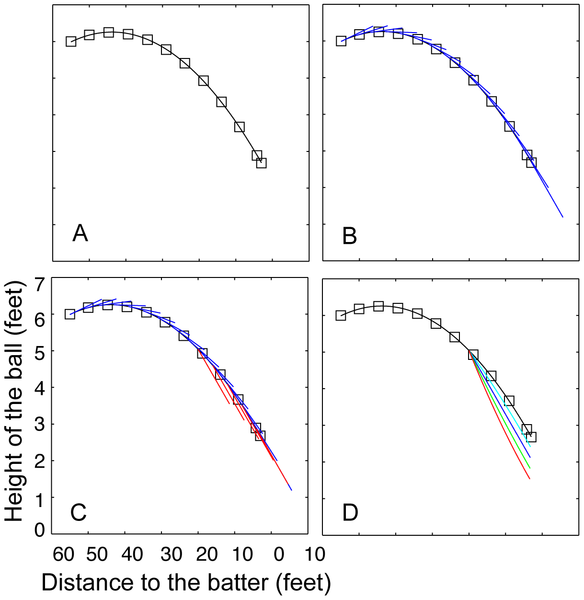
Baseball players will tell you that a fastball can rise - and elementary physics says it can also, the same way an airplane rises because the teardrop shape of a wing causes air to go over the top faster than below the flatter bottom, 'sucking' it into the air. Sure, if the baseball is going 200 MPH it can happen. But they don't.
Polyethylene terephthalate (PET) is the third most common synthetic polymer and accounts for about 18% of world polymer production. It is an aromatic/aliphatic polyester which possesses very practical thermal properties that are not found in the all aliphatic commodity thermoplastics polyethylene or polypropylene: a glass transition temperature (Tg) near 67°C and a melting temperature (Tm) of 265°C. But like those two, it is derived from fossil fuels: the key aromatic component of PET, terephthalic acid, is derived from petroleum, while ethylene glycol is derived from petroleum or natural gas.