I will be attending next week to a conference in Split (Croatia). The conference is titled "
LHC Days", and has the purpose of bringing together experimental physicists working at the main CERN experiments with theorists and experimentalists from all over the world, to discuss the current status and the future perspectives of research in particle physics, focusing of course on the Large Hadron Collider at CERN.
We've had any number of discussions about the changing face of academic research given the fact that we keep being told America doesn't do enough science education but there aren't enough jobs in research to go around.
With success in an ever-more competitive post-doctoral environment requiring more excellent science than ever to achieve the next step, it's not a surprise some will boost their standing by holding others back.
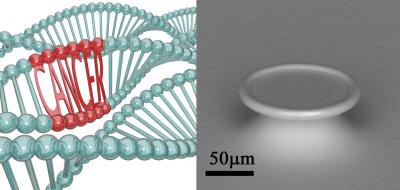
Imagine that a machine draws your blood, screens it for genetic mutations and chemical variations that can cause cancer, and then pops out a drug tailor-made for your DNA.
The hypothetical drug would target and fix the point irregularities which have accumulated over time that can lead to the formation of tumors — and cancer.
"Personalized cancer drug delivery? Depending on the approach, it could be as soon as 10 to 15 years away," says Viterbi professor Andrea Armani , an assistant professor of the Mork Family Department of Chemical Engineering and Materials Science.
Our ideal image of the perfect partner differs greatly from the one we have, according to new research from the University of Sheffield and the University of Montpellier in France.
Why would we choose partners with a different height, weight and body mass index than those we would ideally choose?
It may be that we take what we can get.
The study found that most men and women express different mating preferences for body morphology than the actual morphology of their partners and the discrepancies between real mates and fantasies were often larger for women than for men.
Stem cells help regenerate or repair damaged tissues, primarily by releasing growth factors that encourage existing cells in the human body to function and grow.
There has been an ongoing ethical controversy about human embryonic stem cell research but progress has been made nicely using adult stem cells, such as from marrow donors.
It may be just a coolness factor for kids, but one classroom in Canada is getting a big boost in reading thanks to canine teaching assistants.
University of Alberta researcher Lori Friesen's says one Alberta classroom showed positive success when small children signed up for weekly reading or writing sessions with her and one of her dogs. During that time, they would read children's literature or work on the student's writing.
A thirteen year old girl from Montana was visiting family in the Denver area. The sight of a huge cloud of smog in the sky made the girl think, “Oh my gosh! What are we doing?” This shocking discovery led to an interest in renewable energy.
Today, that young lady is Chandra Macauley and she's a student at Montana State University majoring in chemical engineering. In 2009, she studied abroad in Sweden where she experienced a new perspective on renewable energy that showed her promising results she felt could serve as a model for renewable energy development in the United States. She disagrees with people that say going green isn't economical because an entire country is proving that renewable energy is a viable solution.
It’s been a little more than two years since I finished my master’s in psychology, and I was looking through some of the work I’d done in my social psychology class when I ran across a discussion post on implicit and explicit norms. At the time I was an adjunct instructor in developmental reading and writing; I've just this semester moved to a full-time English instructor position.
The piece remains of interest to me, both because of my role as an instructor and as mom to three on the spectrum. Explicit norms are for obvious reasons easy to grasp; they’re the rules that are clearly stated; implicit norms are much harder, especially for folks who have difficulty with socially-based learning.
You’ve heard that space is curved – that’s gravity. You’ve also been told that you cannot really understand curved space. Sure, you can come to know curvy mathematics by studying general relativity or differential geometry, but you cannot grasp curved space in your bones…for the obvious reason that, in our everyday human-level world, space is flat, and so we have a brain for thinking flat.
Or, at least, that’s what they say.
But there is at least one variety of curvy mathematics that your brain comprehends so completely that you don’t even know you know it. It concerns your visual field, and your innate understanding of the directions from you to all the objects in your environment.
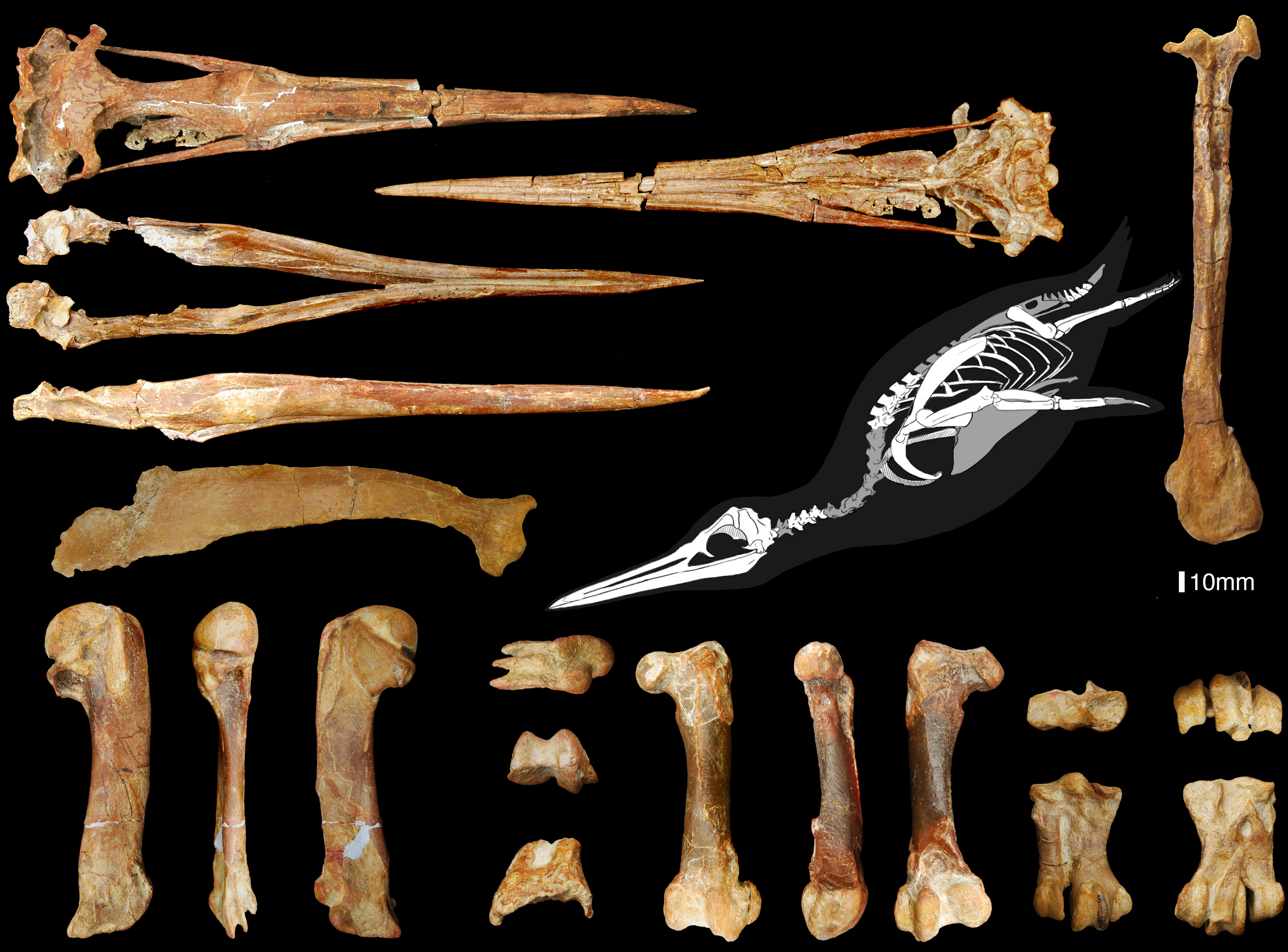
A 36-million-year-old penguin fossil from Peru shows the new giant penguin's feathers were reddish brown and grey, much different from the black tuxedoed look of living penguins - and it had scales.
The new species, Inkayacu paracasensis, or Water King, was nearly five feet tall - twice the size of an Emperor penguin, the largest penguin today. The fossil shows the flipper and feather shapes that make penguins such powerful swimmers evolved early, while the color patterning of living penguins is likely a much more recent innovation.