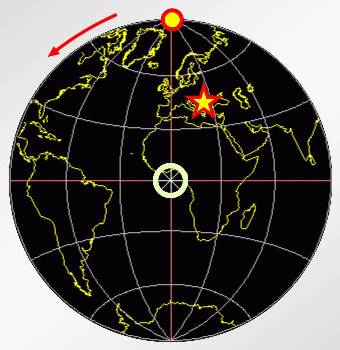
Ever been stuck in an airport? A foreign country? Try being stuck in orbit! Poor Air Force Major Abacha Tunde plus a colleague were trapped on a Soyuz in orbit for over 14 years. Fortunately, thanks to email, they were (presumably) able to get help getting down. Here is their tale.
As related by Steve Johnson and verified using teh Internets, "the writer claimed to be an astronaut on the International Space Station who couldn't return from space due to a revolution in his country putting a halt to its space program. Fortunately, his rich uncle had just died, and if you'd let him use your bank account to route the money to China (for which you'd of course be rewarded), the Chinese would sell him a spot on their space shuttle."
Citizen scientists are doing big things in astronomy in 2010. A few days ago,
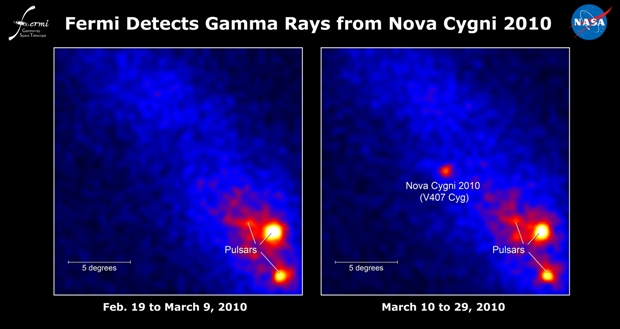
three amateurs discovered PSR J2007+2722, a neutron star that rotates 41 times per second and a recent Science article highlights V407 Cyg in the constellation Cygnus, which is 9,000 light-years away and is a symbiotic binary containing a compact white dwarf and a red giant star about 500 times the size of the sun.
On March 11, amateur astronomers Koichi Nishiyama and Fujio Kabashima in Miyaki-cho of Saga Prefecture in Japan imaged a dramatic change in the brightness of V407 Cyg - 10 times brighter than an image they had taken three days earlier.
A few months ago, Google opened the Android Market to allow anyone to load software but now studies show that an average of one in every five applications had access to personal information , which could lead to all sorts of viruses, spyware, and malware being created to attack users.
Weird World Weather
There is a lot of happy talk out there that is premised on the belief that you can't tell the public the bad news because it’ll scare them and they'll not do anything, or they will fall into despair.
David W Orr
The majority of "fused" people, those who view themselves as completely immersed in a group, are willing to commit extreme acts for the good of their compatriots, says research soon to appear in Psychological Science.
In the study, the researchers recruited 506 college students at the Universidad Nacional de Educacion a Distancia in Spain. Based on the students' answers in online questionnaires, the researchers identified 38 percent of the participants as "fused" as compared to "non-fused," with Spain. They then measured their self-sacrificial behaviors.
If you want to really get back to nature, it still involves meat. A team of researchers has discovered evidence that human ancestors were using stone tools and consuming the meat and marrow of large mammals 1 million years earlier than previously documented.
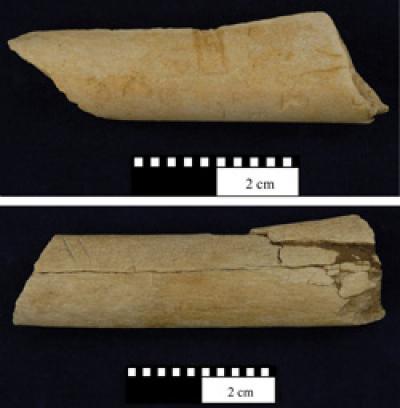
While working in the Afar region of Ethiopia, the Dikika Research Project (DRP) found bones bearing unambiguous evidence of stone tool use - cut marks made while carving meat off the bone and percussion marks created while breaking the bones open to extract marrow. The bones date to roughly 3.4 million years ago and provide the first evidence that Lucy's species, Australopithecus afarensis, used stone tools and consumed meat.
One solution to the heart risk caused by obesity, although an obtuse one, is to add things to the junk food industry instead of taking away some junk food.
Researchers at Imperial College London writing in the American Journal of Cardiology suggest fast food vendors provide statin drugs free of charge. Statins reduce the amount of unhealthy LDL cholesterol in the blood, and trial data has shown them to be highly effective at lowering a person's heart attack risk.
In the study, Dr. Darrel Francis and colleagues calculate that the reduction in cardiovascular risk offered by a statin is enough to offset the increase in heart attack risk from eating a cheeseburger and a milkshake.
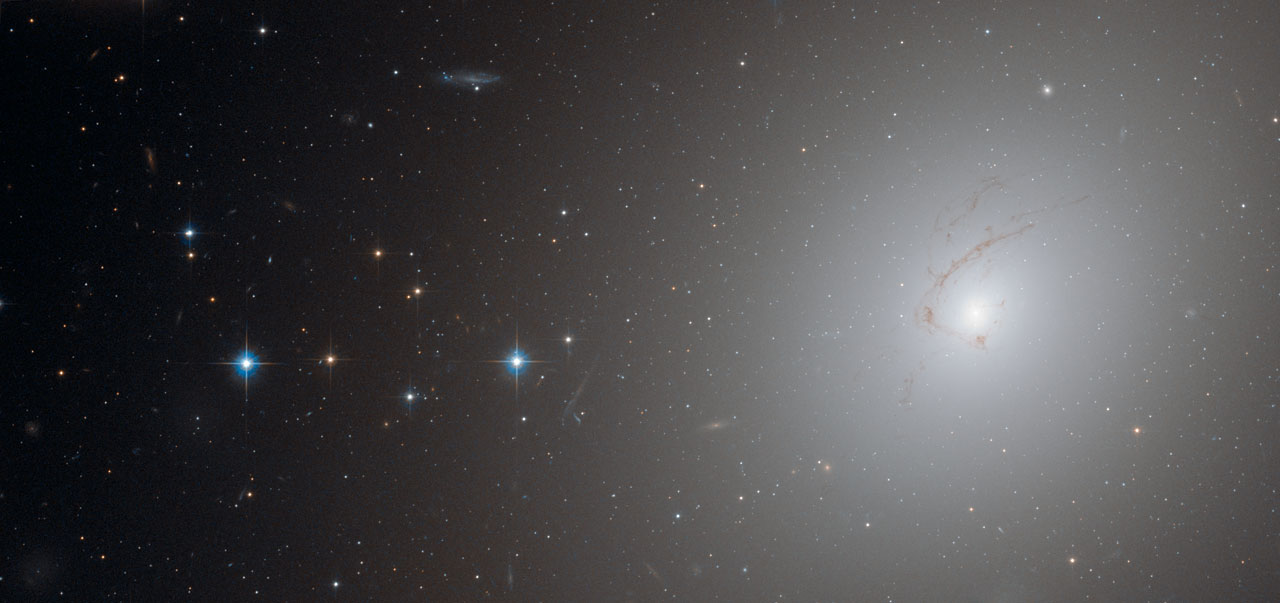
The odd shape of NGC 4696, the largest galaxy in the Centaurus Cluster (galaxy cluster Abell 3526), leads to fundamental science questions. First, why is it such a strange shape? And what are the odd, capillary-like filaments that stretch out of it? What is the role of a large black hole in explaining its odd appearance?
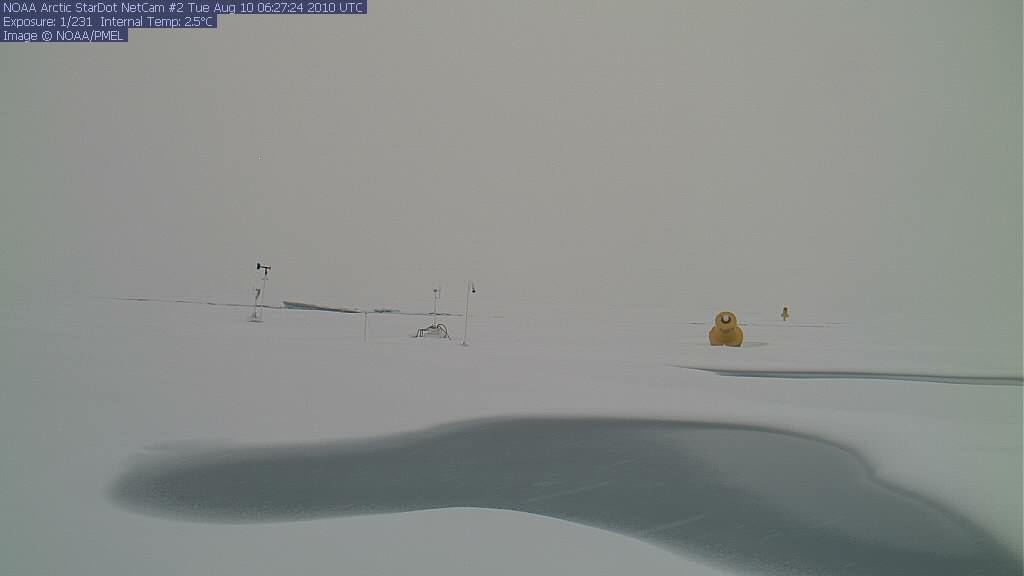
Arctic Ice August 2010 - Update #2Since I last posted an update, many things have happened in the Arctic and sub-Arctic.
In my last update -
Arctic Ice August 2010 - Update #1 - I noted that there were no floes in the main pack bigger than 35km2. I invited my readers to find a floe bigger than that anywhere in the main ice pack. Nobody did. Yes, there were a few bigger floes - even big enough to be called ice islands - but they were not in the main pack.
A multiplet is a simple thing to describe: it is a collection of several identical or nearly identical things. Here, however, a difficulty arises because a "multiplet" is a manifestation of symmetry groups, and symmetry groups are tough objects to discuss. So if in a scientific paper you write "the new hadron might belong to a SU(3) multiplet", you have the additional trouble that you need to avoid discussing group theory to an unwilling listener. What is SU(3) ? Do we actually care?
Thus wrote Tommaso Dorigo in
The Language Barrier on 26th May this year.