






Portuguese scientists have just published a revolutionary new approach to treat rheumatoid arthritis (RA) which, if translated to humans, can change the way we treat autoimmunity (and so diseases like RA but also diabetes and MS) and, with it, the lives of millions of patients

The new treatment by Joana Duarte, Luis Graca and colleagues from the Instituto de Medicina Molecular (IMM) in Lisbon is remarkable because it specifically stops the abnormal immunological response behind RA without touching the rest of the immune system, and a short treatment has long lasting effects suggesting that it might even cure the disease.

Scientists from Tübingen say they have revealed an evolutionary dilemma - plants that are more resistant to disease grow more slowly and are less competitive than susceptible relatives when enemies are rare.

Individuals of one and the same plant species often differ greatly in their ability to resist pathogens. While one rose succumbs to bacterial infection, its neighbor thrives. Scientists from the Max Planck Institute of Developmental Biology in Germany say they have tracked down an explanation for this common phenomenon. Their conclusion: disease resistance can incur high costs. Especially resistant plants of mouse ear cress (Arabidopsis thaliana) produce fewer and small leaves, and have a competitive disadvantage in the absence of enemies.
The Yangtze River in China is 40 million years older than was previously thought, according to new research.

A study of minerals reveals that the Yangtze River began to cut the Three Gorges area around 45 million years ago, making it much older than previously believed. 

The Yangtze River, the third-longest river in the world, has played a central role in the development of Chinese culture, and the Three Gorges, which separate the Sichuan Basin in the west from the lowlands of central and eastern China to the east, have particular historical, cultural, and geomorphological significance.
Researchers in China have created an electromagnetic absorbing device for microwave frequencies. The device, called an “omnidirectional electromagnetic absorber”, is made of a thin cylinder comprising 60 concentric rings of metamaterials and is capable of absorbing microwave radiation, so they compared it to an astrophysical black hole which soaks up matter and light.
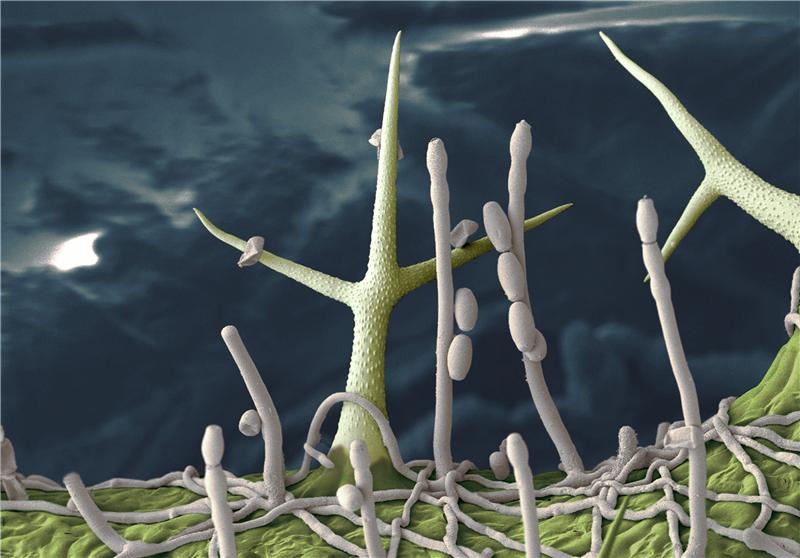
The End of the World as Farce

Our road to The Road begins in 1947, with Ward Moore's Greener Than You Think, an apocalyptic comic satire that just cries out for a movie adaptation by Trey Parker and Matt Stone.
The End of the World as Farce

Hummingbirds require an enormous amount of energy to beat their wings fast enough to hover and maneuver. In many ways they appear to retain  some of the flight patters of insects, but they have an enormous amount of mass in comparison. Many changes in cell structure must occur to allow this high metabolism rate, and most specifically in mitochondria to be able to provide such large quantities of energy.

Quite a few changes in cell morphology and physiology might be expected to help deal with these large metabolism rates. Greater oxygen and carbon dioxide diffusion rates in the lungs would speed the movement of these gasses, as well as increased cardiac output and increase in capillary density.

Arctic Ice June 2010


This article describes the current state of the Arctic sea ice and makes some predictions for the month ahead.  The predictions are based on my visual analysis of hundreds of satellite images. 

I begin with some background and explanatory materials and then show how satellite images can be analyzed to show the mechanisms of  ice consolidation and fracture.  In the concluding part I show some images of the Arctic ice at the time of writing and point out what I think will happen to that ice during this month.

3 Quarks Daily is a 'filter blog' that compiles stuff from around the web on a daily basis, in science, design, literature, current affairs, art, and anything else they deem inherently fascinating.

They say the name derives from that moment in 1964 when Murray Gell-Mann and George Zweig postulated the existence of three new subatomic particles and Gell-Mann decided to name them "quarks", an unusual word meaning "croak" or "caw" which James Joyce had used in Finnegans Wake: "Three quarks for Muster Mark!" 
The pheromone that attracts female mice to the odor of a particular male has been identified and named ‘darcin’ by researchers writing in BMC Biology (they say they named it after Darcy from Jane Austen’s “Pride and Prejudice” - for those who have not read it, i.e., all men, he is the attractive guy who doesn't know it).  This unusual protein in a male’s urine attracts females and is responsible for learned preference for specific males.

I recently finished the draft for my upcoming book, Harnessed: How Language and Music Mimicked Nature and Transformed Ape to Man (Benbella, 2011). To give you a better idea of it’s aim, here is the current draft of the introduction.

The Reading Instinct

