Google Flu Trends is not as accurate at estimating rates of laboratory-confirmed influenza as CDC national surveillance programs, according to a new study presented at the ATS 2010 International Conference in New Orleans.
Google Flu Trends uses the popularity of certain Google search queries in real time to estimate nationwide rates of influenza-like illness activity, a non-specific combination of symptoms including a fever with either a cough or a sore throat without any confirmatory laboratory testing. While some traditional flu surveillance systems may take days or weeks to collect and release data, Google search queries can be counted almost instantaneously.
Paleontologists from the Smithsonian Tropical Research Institute and the University of Florida have uncovered the nursery of the ancient shark species Carcharocles megalodon in what is now Panama. Researchers say the nursery provided a safe environment for young, vulnerable sharks.
"Adult giant sharks, at 60-70 feet in length, faced few predators, but young sharks faced predation from larger sharks," said Catalina Pimiento, visiting scientist at STRI and graduate student at the University of Florida. "As in several modern shark species, juvenile giant sharks probably spent this vulnerable stage of their lives in shallow water where food was plentiful and large predators had difficulty maneuvering."
The most effective way to reduce indoor tanning among young women is to warn them about the risk of developing leathery, wrinkled skin. Researchers writing in the Archives of Internal Medicine say harping on the risk of skin cancer is unlikely to deter tanning.
"They're not worried about skin cancer, but they are worried about getting wrinkled and being unattractive," said June Robinson, a professor of dermatology at Northwestern University Feinberg School of Medicine. The study examined the best strategy to wean college-age women who are considered addicted or pathological tanners from tanning salons.
The safe deposit in front of you is wide open. Twenty stacks of one-hundred dollar bills stare you in the face. Each stack a hundred bills thick. So many Benjamins. All for Jude, the other remaining contestant. That is... provided you don't touch the money.
You prepared yourself a zillion times. Still it feels like you are placed in an entirely new situation, a nightmare you never considered.
In 1457 B.C. at Megiddo, named in the Bible Derekh Hayam (Hebrew: דרך הים), was fought the first battle remembered by military history.
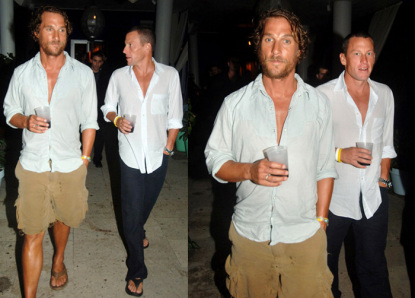
Lance Armstrong will be in my neighborhood tomorrow but he won't be coming by for coffee. It's the first stage of the
Amgen Tour of California, starting in Nevada City and ending in Sacramento 104 miles later.
While around the world particle physicists are working frantically to produce important new results to be shown at ICHEP 2010 -the International Conference on High-Energy Physics, which is held every two years and is arguably the single most important meeting for this branch of science-, new discoveries get claimed in an asynchronous way. And some of them in a very asynchronous way, I should say, since they are based on 40-years-old data.
First, I have to apologize for my extended absence from both this site and my blog... I've not only been experiencing some career path type crises, but also studying for, taking, and hopefully passing comps.
Comps, or comprehensive exams or qualifying exams, are what students in Ph.D. track programs take at the completion of all the course work (usually) or around the end of the third year in the program. From what I know of them - so mostly in applied psychology fields - they literally encompass anything you might have learned in a course (or were expected to learn) or what might have been offered in courses you didn't take, but could have.
Today I am including a guest paper on this blog, from my academic supervisor, Dr Mitzi Waltz.
The paper written back in 2006, and things have improved slightly since, two of the organisations cited have since merged to become "Autism Speaks" and there have been significant appointments to the US Inter Agency Autism Co-ordinating Committee, two colleagues of mine Stephen Shore EdD and Ari Neeman.
Here follows the original paper, which has considerably influenced my own research position:
I recently saw an article that surprised me, and it isn't often I am surprised by anything that shows up on the Internet. It was written by Adrienne J. Burke at the New York Academy of Sciences and titled "
Conversations with seven Science 2.0 pioneers" but that isn't what surprised me either; Science 2.0 gets used all of the time and it is a registered trademark (of yours truly) but I only bothered to trademark it when people started trying to use it to make money. The NYAS article is free so they aren't going to get a cease-and-desist or anything like that.