No. 1 “Evolution is the external and visible manifestation of the differential survival of alternative replicators.”
This is my all-time favourite, the Dawkins Fallacy, the definition of evolution Richard Dawkins gave in The Extended Phenotype p.82. The fallacy it contains is so obvious I’m amazed that his colleagues have not drawn his attention to it. The survival of replicators is a result of evolution, an outcome, and therefore cannot be the definition of evolution. If we said that fire is the visible manifestation of the production of ash, the statement would be true but meaningless. It would not be a definition of fire and it would tell us nothing about fire, just as Dawkins’ definition tells us nothing about evolution.
The search for planets capable of sustainable life (as we know it) is on, but with an infinite number of planets astronomers are focusing their attention on each system's 'habitable zone', where heat radiated from the star is just right to keep a planet's water in liquid form.
They have found planets orbiting red dwarf stars because those make up about three-quarters of the stars close to our solar system. Potentially habitable planets must orbit closer to those stars, perhaps one-fiftieth the distance of Earth to the sun, since they are smaller and generate less heat than our sun.
Matthew C. Nisbet, assistant professor in the School of Communication writing in Nature Biotechnology, says there are changes that must be made to ensure quality science communication in the future.
Some of his recommendations, based on the results of a science communication workshop in Washington, D.C., are:
1. Scientists should pursue a trust- and dialogue-based relationship with the public. The goal is not to 'sell the public' but to democratize public input about scientific issues so that members of the public can meaningfully participate in science-related decision making, which is not
framing, but then ...
A group of researchers say they have clarified the role that retinoic acid plays in limb development. Their study in Current Biology says that retinoic acid controls the development (or budding) of forelimbs, but not hindlimbs, and that retinoic acid is not responsible for patterning (or differentiation of the parts) of limbs.
This research corrects longstanding misconceptions about limb development and provides new insights into congenital limb defects.
I awoke early this morning, confused in my half-asleep stupor as to why the neighbors were rolling the garbage cans up and down the driveway while at the same time the nearby naval air station was staging extremely low-flying drills about 10 feet from the roof.

After I ruled out the garbage can theory (garbage day is Wednesday, so that would just be silly) and I didn't see Maverick and Goose buzzing the house tower, I thought, "Is that thunder?" It couldn't be - I'd never heard thunder like that, and I grew up in the upper midwest where tornadoes are the only relief from mosquitoes.
But it was.
At parties, some people are intimidated when I say I'm an astronomer (or, worse, astrophysicist). They assume I'm a haughty ivory tower genius who laughs at little people like them. It's so hard to reassure them that, no, I don't laugh, I merely chuckle. But I do feel it's my duty to help make life easier for the non-astrophysicists out there.
So, say you're at a party and you meet a famous astronomer. It doesn't matter which one, we're all famous (or at least published). Here are 6 things
not to say.
- I'm an Aquarius, can you tell me my future?
- I'm angry because Pluto isn't a planet anymore!
- What will happen in 2012 when the Earth, sun and the center of our galaxy line up?
“May you live in interesting times!” So goes the ancient Chinese curse, and times certainly must have been interesting for Alexander Ivanovich Oparin, who was 23 years old when he graduated from Moscow State University in 1917. Lenin and the Bolsheviks had just seized power, the Czar and his family were imprisoned, then assassinated a year later, and the war between Red and White Russia began.
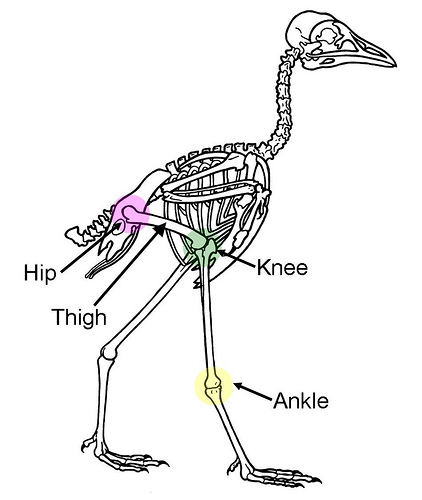
Paleontologists and some in biology have long believed that modern birds are the direct descendants of ancient, meat-eating dinosaurs.
Researchers at Oregon State University contend they have made a fundamental new discovery about how birds breathe and have a lung capacity that allows for flight – and the finding means it's unlikely that birds descended from any known theropod dinosaurs.
It's been known for decades that the femur, or thigh bone in birds is largely fixed and makes birds into "knee runners," unlike virtually all other land animals, the OSU experts say. What was just discovered, however, is that it's this fixed position of bird bones and musculature that keeps their air-sac lung from collapsing when the bird inhales.
Jellyfish blooms are up almost everywhere and it's going to become a menace. The reason? Over-fishing and excess nutrients from fertilizers and sewage, say researchers from The Commonwealth Scientific and Industrial Research Organisation (CSIRO), Australia's national science agency.
"Dense jellyfish aggregations can be a natural feature of healthy ocean ecosystems, but a clear picture is now emerging of more severe and frequent jellyfish outbreaks worldwide," says CSIRO Climate Adaptation Flagship and University of Queensland scientist Dr Anthony Richardson.
According to a research abstract presented at SLEEP 2009, adolescent obesity is associated with having less sleep and eduction in sleep could be related to a higher caffeine intake, more hours of technology use and increased symptoms of sleep disorders such as snoring.
Results indicate that children who slept less consumed more caffeine and had more hours of screen time (use of television, Internet, computer and video games). A higher body mass index (BMI) was also associated with shorter sleep duration. More hours of screen time were also associated with higher caffeine consumption.