Variations in the brightness of the Q0957+561 quasar, also known as the “twin quasar” due to its duplicated image on Earth, are intrinsic to the entity itself and not caused by the gravitational effects of possible planets or stars from a far away galaxy.
This is the conclusion of a study carried out by Spanish researchers resolving a mystery that has intrigued astronomers for the past 30 years.
The origin of species may be almost as random as a throw of the dice, says Iosif Pinelis, a professor of mathematical sciences at Michigan Technological University, who claims to have worked out a mathematical solution to a biological puzzle: Why is the typical evolutionary tree so lopsided?
In other words, the reason some descendants of a parent species evolve into hundreds of different species while others produce so few goes beyond natural selection and into math; simple probability yields a surprisingly elegant solution, Pinelis says.
A century-old drug that failed in its original intent to treat tuberculosis but has worked well as an anti-leprosy medicine now holds new promise as a potential therapy for multiple sclerosis and other autoimmune diseases.
"We never expected that an old antibiotic would hit this target that has been implicated in multiple sclerosis, psoriasis and type 1 diabetes," says Johns Hopkins pharmacologist Jun O. Liu "People have been working for years and spending tens of millions of dollars on developing a drug to inhibit a specific molecular target involved in these diseases, and here, we have a safe, known drug that hits that target," known as the Kv1.3 potassium channel.
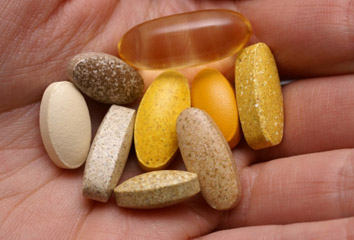
As children, we grow up with the notion that vitamins provide the key to thriving bodies. Without the proper vitamins, we wouldn’t grow up to be “big and strong,” and would instead be weak and useless versions of ourselves. Carrying this need for vitamins into adulthood, we can now buy vitamins in bulk, and consume them in pill form whenever we need to. It seems that every other week, we are told another miracle that is carried out by vitamins. Vitamin C will stave off colds; vitamin E will help prevent Alzheimer’s, and Vitamin D will treat cancer.
Continuing our discussion of biophysicist John R. Platt's classical paper on “strong inference” and, more broadly, the difference between soft and hard science, another reason for the difference between these two types of science mentioned but left unexamined by Platt is the relative complexity of the subject matters of different scientific disciplines.
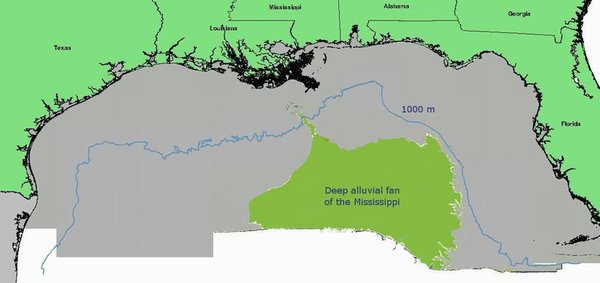
Dumping tires in the water to create an artificial reef sounds either inspired or crazy. It turned out to be crazy but there was a scientific hypothesis to it. You just had to buy into their chain of logic.
There was also a lesson. Not everything needs to be done in a large experimental setting but the justification to go ahead and do it is always cost and the protecting the environment right now. 'You care about the environment, right?' I can't think of a single time a question has been phrased that way that someone hasn't tried to sell me something. And the cost savings are always framed to be immediately practical, though in the case of the artificial reef made of tires, the cost to clean up was 5000 times as much as it was supposed to save.
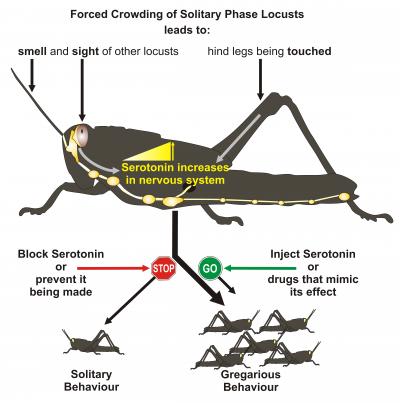
Desert locusts are harmless, solitary creatures until they get a certain chemical - and it isn't firewater, catnip or anything that comes from Colombia. It's serotonin, a common brain chemical, but in the right amount they turn into hordes of hungry ... well ... locusts.
With desert locusts, the expression of this swarming characteristic generally means serious trouble for nearby farmer. Locusts are known to sometimes swarm by the billions, and they often devastate crop yields. Dr. Stephen Rogers from the University of Cambridge and the University of Oxford in the UK says about 20 percent of the world is affected by desert locusts.
Researchers from Northwestern University's Feinberg School of Medicine appear to have reversed the neurological dysfunction of early-stage multiple sclerosis patients by transplanting their own immune stem cells into their bodies and thereby "resetting" their immune systems.
The patients in the small phase I/II trial continued to improve for up to 24 months after the transplantation procedure and then stabilized. They experienced improvements in areas in which they had been affected by multiple sclerosis including walking, ataxia, limb strength, vision and incontinence. The study will be published online January 30 and in the March issue of The Lancet Neurology.
MS is the result of damage to myelin - the protective sheath surrounding nerve fibres of the central nervous system - which interferes with messages between the brain and the body. For some people, MS is characterised by periods of relapse and remission while for others it has a progressive pattern. Symptoms range from loss of sight and mobility, fatigue, depression and cognitive problems.
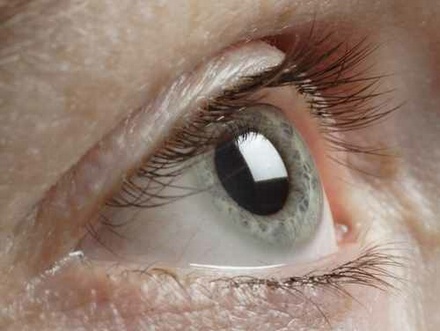
Scientists have known for more than 200 years that vision begins with a series of chemical reactions when light strikes the retina, but the specific chemical processes have largely been a mystery. A team of researchers from the United States and Switzerland say they have shed new light on this process by "capturing" this chemical communication for future study and say it may lead to the development of new treatments for some forms of blindness and vision disorders.