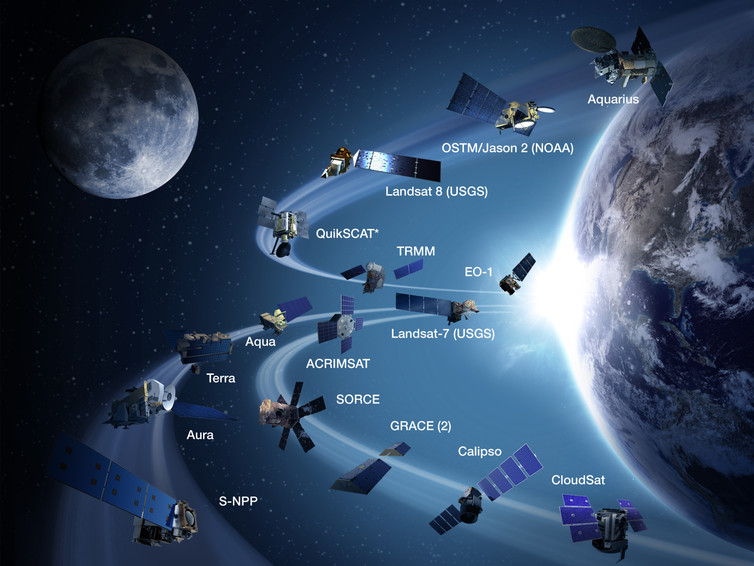
We know that there is sound on planets and moons in the solar system – places where there’s a medium through which sound waves can be transmitted, such as an atmosphere or an ocean. But what about empty space? You may have been told definitively that space is silent, maybe by your teacher or through the marketing of the movie Alien – “In space no one can hear you scream”. The common explanation for this is that space is a vacuum and so there’s no medium for sound to travel through.

But that isn’t exactly right. Space is never completely empty – there are a few particles and sound waves floating around. In fact, sound waves in the space around the Earth are very important to our continued technological existence. They also they sound pretty weird!

After one of the most divisive presidential elections in American history, many of us may be anxious about dinner-table dialogue with family and friends this Thanksgiving. There is no denying that the way we communicate about politics has fundamentally changed with the proliferation of technology and social media. Twitter bots, fake news and echo chambers are just a few of the highlights from this election season. Much of how we’re conversing online can’t – and shouldn’t – be replicated around the family table. We are getting out of practice at conducting meaningful, respectful conversation.

Stereoscopes entertained every Victorian home with their ability to produce three-dimensional pictures. Typewriters and later fax machines were once essential for business practices. Photo printers and video rentals came and went from high streets.

When innovative technologies like these come to the end of their lives, we have various ways of remembering them. It might be through rediscovery – hipster subculture popularizing retro technologies like valve radios or vinyl, for example. Or it might be by fitting the technology into a narrative of progress, such as the way we laugh at the brick-sized mobile phones of 30 years ago next to the sleek smartphones of today. 

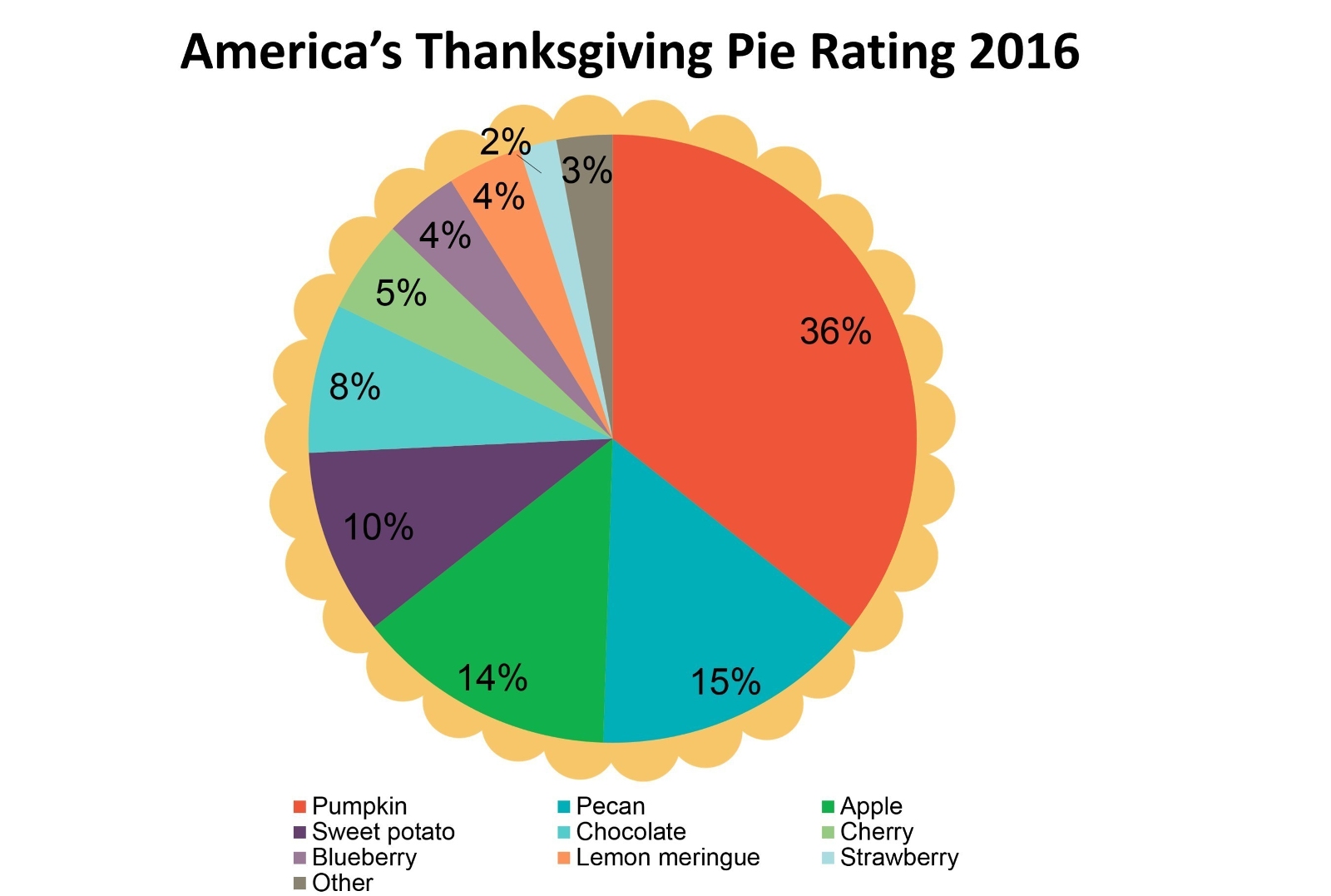
According to a Delta Dental survey out today, American adults overwhelmingly want a little pumpkin at Thanksgiving, it has 36 percent favorability, more than double that of American's next favorite Thanksgiving pie, pecan, which ekes out only 15 percent.  

The Delta Dental Plans Association Fall 2016 Survey was conducted between October 18 and October 25, 2016 among a nationally representative sample of 1,009 Americans 18+. The margin of error is +/- 3.1 percent. Pumpkin pie is most popular in the West (46 percent) but that drops to 30 percent for people in the South. Additionally, 39 percent of Midwesterners prefer it, and 33 percent of Northeasterners.


Cancer cells are so deadly because of their ability to quickly invade and a new study contends that part of the blame rests with mitochondria, the energy factories of the cell. Mitochondria are organelles inside most of our cells that generate energy and so play a crucial role in a tumor's ability to generate the energy needed to invade healthy tissue.

A new environmental claim about endocrine disruptors would seem to be an early Christmas gift for the fundraisers and lawyers at the Environmental Working Group and NRDC but the scientist employed at each of those groups likely feels a little dread.

Because the new endocrine disruptor is salt, and despite the perennially low quality science that dribbles from their websites, even they must realize how stupid it looks. Maybe even enough worry that remotely inquisitive individuals might wonder, "Hmm. Salt is disrupting my 'endocrines?' Huh?? Maybe the other endocrine stuff they write about is garbage too."

When a tree dies, or when we run across decaying wood in a forest, our first reaction is to think we should remove it. However, the ecology of the forest is such that saproxylic organisms, including fungi and insects, depend on the dead wood that naturally generates the dynamics of the forest. The fact is, however, that there is a real obsession to eliminate it as soon as possible because it seems dirty and like it will attract pests. The biggest problem associated with dead wood is that dead wood plays a very important role in forest life.

Once again this year, consumers say they are weighing their options for making healthier choices. And 81 percent say they wish they had made healthier choices before - but 70 percent have no plans to make their holiday meals healthier this year even though 37 percent realize they can eat healthier with simple meal substitutions.

Welcome to the world of Internet surveys.

The survey of 1,022 adults was conducted by ORC International on behalf of Ready Pac Foods. This online omnibus was live on November 3-6, 2016.


Key findings from the holiday survey include:

Taking music lessons increases brain fiber connections in children, according to a recent small study. The researchers studied 23 healthy children between the ages of five and six years old. All of the children were right handed and had no history of sensory, perception or neurological disorders.

None of the children had been trained in any artistic discipline in the past.

The study participants underwent pre- and post-musical-training evaluation with diffusion tensor imaging (DTI) of the brain. DTI is an advanced MRI technique, which identifies microstructural changes in the brain's white matter.

Thanks to savvy marketing by food corporations who are looking for health halos to put over their food, consumer demand for food products formulated without synthetic additives has increased.

There is a big drawback, demonstrated by Chipotle and others who are hoping to make themselves look healthier when selling junk food - it still has to be safe to eat. Additives, synthetic or not, are needed for food safety reasons, so food product developers are faced with the challenge of developing more "natural" additives that can produce comparable in safety results with synthetic versions.