






It's a First World Idyll that ancient indigenous people sustained themselves using nature's bounty, in harmony with the land.

Science knows otherwise. Instead, from Alaska to Washington, indigenous people created productive clam gardens to ensure abundant and sustainable clam harvests. There was nothing natural about it.

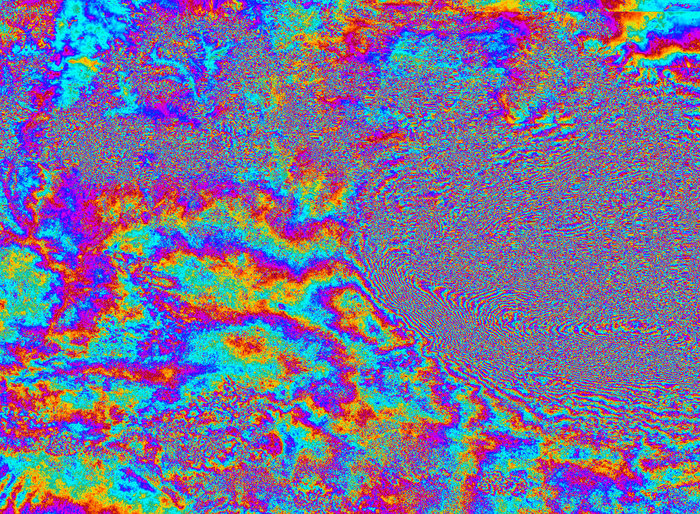
On April 25th, a 7.8-magnitude earthquake struck Nepal, claiming over 5,000 lives and affecting millions more. Relief efforts are under way and satellite imagery is helping to visualize the damage but radar images from the ESA Sentinel-1A satellite showed why Nepal’s capital, Kathmandu, experienced so much damage

The maximum land deformation, shown in before and after pictures, is 8 miles away. The two acquisition dates lead to rainbow-colored interference patterns in the combined image, known as an ‘interferogram’, enabling scientists to quantify the ground movement.
The world's population is getting healthier and part of that reason for that is sanitation - but a larger population and a still limited infrastructure means a complex and multi-dimensional approach is needed to manage a rising tide of solid waste

There is no magic bullet solution like importing modern trucks or technologies or to improve roads. The challenges are daunting - the World Bank’s Urban Development department estimates that the amount of municipal solid waste will reach 2.2 billion tons per year over the next decade. 
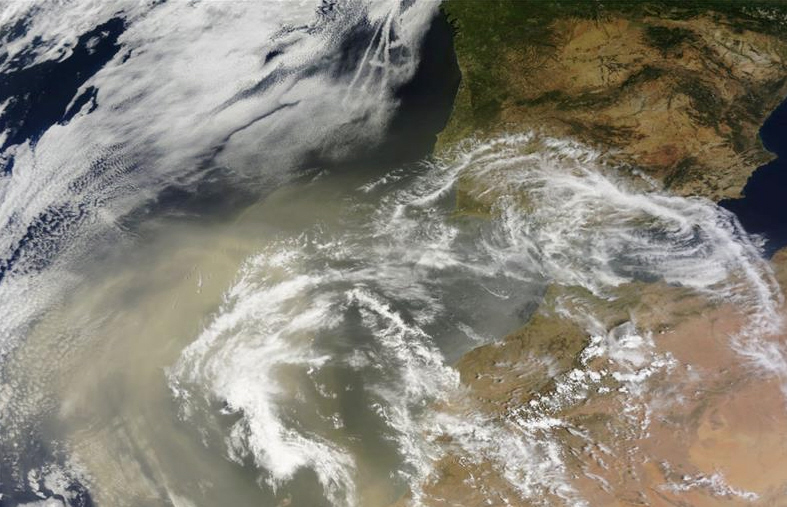
British people may not like blood rain but Sahara Desert dust is not traveling 2,000 miles over an ocean just to make their cars dirty - it also helps cool things down. 

Researchers have analyzed the composition and radiative effect of desert aerosols during two episodes which simultaneously affected Badajoz (Spain) and Évora (Portugal) in August 2012 and found that it caused radiative cooling of the Earth's surface. Atmospheric aerosols (solid or liquid particles suspended in the atmosphere) are difficult to examine for various reasons - they remain in the atmosphere for only a short time and their cause may be natural or anthropogenic.

Genetic variation is important in a healthy population and recombination, or crossing-over, which occurs when sperm and egg cells are formed and segments of each chromosome pair are interchanged, is a vital part of maintaining genetic variation.

Honeybees take it to a whole other level and a new study finds that the extreme recombination rates found in this species - 20X higher than humans, higher than measured in any other animal  - seem to be crucial for their survival.

Every day, thousands of people need donated blood but blood transfusions require that the blood type of the donor match that of the recipient., unless it is blood without A- or B-type antigens, such as type O, that can be given to all of those in need. Mismatched blood with A or B antigens could provoke an immune reaction and even cause death. 

For that reason, Type O is often in short supply, but science may soon have a solution. Stephen G. Withers and colleagues write in Journal of the American Chemical Society of an efficient way to transform A and B blood into a neutral type O that can be given to any patient. 

Economic sanctions and divestment campaigns are attractive but often flawed tactics for accomplishing international political goals.

The social stigma the campaigns create often fails to match the economic pain these campaigns inflict, making the costs of resisting them for governments like Russia, Syria and Iran tolerable in most cases.

Indeed, sanctions succeed less than a third of the time they are imposed, according to researchers at the nonpartisan Peterson Institute for International Economics, and divestment campaigns have an even less certain track record.

Self-driving cars are expected to revolutionize the automobile industry. Rapid advances have led to working prototypes faster than most people expected. The anticipated benefits of this emerging technology include safer, faster and more eco-friendly transportation.

Scientists have mapped the human genes triggered by the phytonutrients in soy, revealing the complex role the legume plays in both preventing and advancing breast cancer.

New genetic testing of Iñupiat people currently living in Alaska's North Slope has determined the migration patterns and ancestral pool of the people who populated the North American Arctic over the last 5,000 years and found that all mitochondrial DNA haplogroups previously found in the ancient remains of Neo- and Paleo-Eskimos and living Inuit peoples from across the North American Arctic were found within the people living in North Slope villages.


