




The big question in policy circles for the last month has been, would the Obama administration that has repeatedly said that putting solar panels on public land should be allowed side with science or with environmentalists when it came to natural gas?
The leading theory of what causes ice ages around the world -- changes in the way the Earth orbits the sun- has been cast into doubt by a new study.

The study raises questions about the Milankovitch theory of climate, which says the expansion and contraction of Northern Hemisphere continental ice sheets are influenced by cyclic fluctuations in solar radiation intensity due to wobbles in the Earth's orbit; those orbital fluctuations should have an opposite effect on Southern Hemisphere glaciers.

A new study finds that even a brief nap can significantly improve memory retention of learned material.

Saarland University graduate student Sara Studte, PhD supervisor Axel Mecklinger and co-researcher Emma Bridger have examined how power naps influence memory performance.
I just came back from Boston and the annual meeting of BAARN – the Boston Area Antibiotic Resistance Network symposium held at the Broad Institute.  The meeting was interesting but the atmosphere was funereal. Many of those losing their jobs with the closure of Cubist’s research center in Lexington, Mass were there as were many whose jobs are threatened at AZ’s facility in Waltham, Mass.

One major topic of discussion during the breaks was – where will all the antibiotic research go?

A comprehensive study examining clinical trials of more than 95,000 patients has found that glucose or sugar-lowering medications prescribed to patients with diabetes may pose an increased risk for the development of heart failure in these patients.

Patients who received the new drug Bendavia before undergoing angioplasty or receiving a stent to clear blocked arteries after a heart attack showed no significant reduction in scarring as compared to patients given a placebo, according to a study presented at the American College of Cardiology's 64th Annual Scientific Session.

Remember the social media storm about the color of the dress? Did you see blue and black or white and gold?

It was some harmless fun that drew in millions of online commenters.

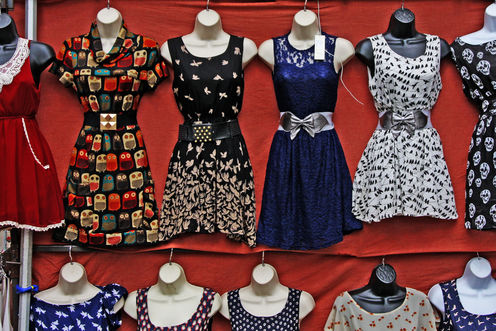
But clothes are not frivolous, flippant or foolish. In telling and talking about clothes, we reveal much about ourselves, our lives, and the experiences that we drape around our bodies. Whether bought or handmade, passed down or reconstructed, clothes help us to construct meaning as we remember those things in our lives that matter.

By Ben P.


America has the luxury of being able to dash from one culture war to another, primarily because we are a wealthy country with plenty of food and medicine and energy, providing ample opportunity for people who have never lacked for any of those to be opposed to science related to food, medicine and energy, while others can claim pollution is our friend or worry about abstract ideas like the conflict between science and religion.
The annual Rethink Media conference was held yesterday at Birmingham City University to address the future of the digital landscape and the challenges facing the sector and, predictably, there was plenty of blame to go around, and assurances that the answers were simple - but as usual when panels get together to lament the future, no one was doing anything.

Schools got the brunt of the cultural shame and blame.

“Schools need to fix the fact that technology is not being made aspirational for females”, urged Talk Talk’s Head of Digital, Rahul Chakkara. “Half of the talent is being lost at school level.”


