
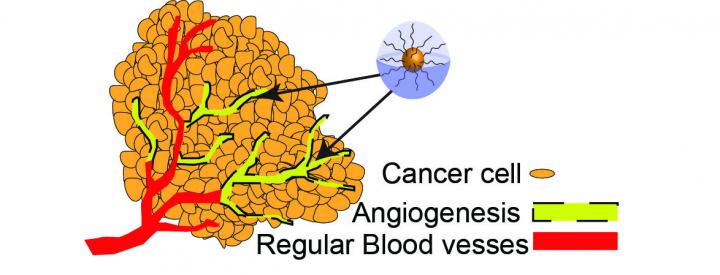


While preventing cancer is impossible, what will be possible soon is making cancer far more manageable, like diabetes, and treatment far less debilitating. A new drug delivery system called a "metronomic dosage regimen," uses significantly lower doses of chemotherapeutic drugs but at more frequent time intervals. This would have multiple goals of killing cancer cells, creating a hostile biological environment for their growth, reducing toxicity from the drug regimen and avoiding the development of resistance to the cancer drugs being used.

Lake Nona, Fla., August 25, 2016 -- Scientists at the Sanford Burnham Prebys Medical Discovery Institute (SBP) have identified a previously unknown way that stress hormones (glucocorticoids) shut off genes in the liver to help the body adapt to the fasting state. The study, published today in Cell Metabolism, describes an obscure protein, SETDB2, that's increased during times of fasting and alters the genome to help turn on genes needed to adjust to the absence of food.

New Haven, Conn.-- The Zika virus reproduces in the vaginal tissue of pregnant mice several days after infection, according to a study by Yale researchers. From the genitals, the virus spreads and infects the fetal brain, impairing fetal development. The findings suggest that the Zika virus may replicate more robustly in the female reproductive tract than at other sites of infection, with potentially dire consequences for reproduction, said the researchers.

The study was published online Aug. 25 in Cell.

During the 2016, after 8 years of politicians refusing to work together, it may surprise you to learn that other groups do consult experts outside their own circles. It won't surprise you to learn a group of academics think that's a bad thing, and that cancer care guidelines should never meet with the companies that actually create cancer care.

Yet that's what the University of North Carolina Lineberger Comprehensive Cancer Center sets out to do, and does; they think that any consulting means scientists and doctors are for sale. 

Does how much hair a man has matter in how he is perceived? A gigantic cosmetic surgery industry say it's true. What we unclear was how much was objectively true versus how much it was just a confidence-builder. If a man was self-conscious about being bald, he may seem more insecure. With hair, that might go away. Does that make him seem more attractive, though? 

A new paper in JAMA Facial Plastic Surgery claims they are more attractive - at least on surveys.

Researchers have identified a DNA variation in a gene called PDSS2 that appears to curb coffee consumption. The authors suggest that the gene reduces the ability of cells to breakdown caffeine, causing it to stay in the body for longer.
This means that a person would not need to consume as much coffee to get the same caffeine hit.

The researchers looked at genetic information from 370 people living in a small village in south Italy and 843 people from six villages in north-east Italy. Each of the study participants was asked to complete a survey that included a question about how many cups of coffee they drank each day.

University of Hawai'i Cancer Center researchers discovered new genetic markers associated with a fast rate of nicotine metabolism, which potentially leads smokers to smoke more, thereby, increasing their risk for lung cancer.

Dr. Loïc Le Marchand, a professor and leading epidemiologist in the UH Cancer Center's Epidemiology Program, and his colleagues, identified differences in the CYP2A6 gene that are associated with a high rate of nicotine metabolism. Smokers who have these CYP2A6 markers may smoke more cigarettes and/or inhale a greater amount of nicotine per cigarette than smokers who metabolize nicotine less rapidly, in order to maintain stable levels of nicotine in the blood.

In the last decade, hurricanes have been essentially inconsequential. Sandy was so mild by the time it hit New York City that Manhattan media had to invent the term "Super Storm" to talk about it, because tropical storm sounded too nice.

Studies show that men are not as environmentally friendly as women. Let's face it, not too many "man caves" feature solar panels, recycle bins or posters of electric cars. It's just not manly.

But could men be persuaded to go green? New research indicates the answer is yes -- and it's all about branding.

Peer pressure is a proven social motivator, and seeing a friend or colleague succeed at a task can boost individual effort. Researchers at the New York University Tandon School of Engineering probed this decidedly human attribute -- sensitivity to competition from peers -- and found that not only is virtual pressure from a computer-simulated peer just as motivating as the real thing, but that "fake" competition can be used for the good of science.

The research team formulated a mathematical model of human behavior that successfully predicted group responses across conditions -- one they hope other researchers will use to overcome the notoriously difficult task of encouraging wide participation in scientific projects.

