




LONDON, February 16 /PRNewswire/ -- The Royal Pharmaceutical Society of Great Britain (RPSGB) is concerned that Government proposals put forward by Lord Darzi(1) to aggregate local health services into 'polyclinics' or 'super surgeries' could put at risk the public's access to local pharmacies.

Currently 99% of the population can reach a pharmacy by car, walking or public transport within 20 minutes. The RPSGB has recommended strongly to the Department of Health that impact assessments should be mandatory so that local communities are able to understand the effects of any change.

A relatively small proportion of individuals with hypertension (high blood pressure) eat diets that align with government guidelines for controlling the disease, according to a report in the February 11 issue of Archives of Internal Medicine, one of the JAMA/Archives journals. In fact, since the introduction of a diet shown to help reduce blood pressure, the dietary quality of those with hypertension has decreased.

UK space scientist Emeritus Professor Alan Wells is to speak at the American Association for the Advancement of Science (AAAS) in Boston in February on: International Cooperation in Developing Swift and its Scientific Achievements.

Professor Wells' presentation will be on Saturday 16th February at around 11.00 a.m. as part of a symposium entitled: Worldwide Hunt to Solve the Mystery of Gamma-Ray Bursts. In it, he will discuss the breadth of international collaborations, including the prominent contributions from UK scientists, in new discoveries about gamma ray bursts obtained from the Swift satellite and coordinated observations from a global network of ground based telescopes.

New technology allowing a group of vehicles to exchange data automatically with each other and with traffic control centres could pave the way for a more efficient and safer European road network.

The Com2React team says their technology could be useful to drivers, traffic police, emergency services and companies with a fleet of vehicles to manage.

The researchers developed a system to help inform drivers of poor weather or road conditions immediately ahead, allowing them to choose alternate routes, easing congestion and cutting down on accidents, says Dr Chanan Gabay, Com2React’s (C2R) project coordinator.

Research carried out by scientists from Earthwatch, the international environmental charity, has reinforced the urgent need to protect Europe’s remaining peat bogs.

Dubbed the ‘rainforests of Europe’ as they are so diverse in wildlife, peat bogs contain more than 20 per cent of the world’s carbon. However, western Europe has lost most of its natural peat bogs, largely due to peat extraction for horticulture.

Doctors are adjusting their bedside manner as better informed patients make ever-increasing demands and expect to be listened to, and fully involved, in clinical decisions that directly affect their care.

You know, how doctors always said patients should be.

In a study just published in Clinical Orthopaedics and Related Research, Dr. J. Bohannon Mason of the Orthocarolina Hip and Knee Center in Charlotte, NC, USA, says changes in society, the population and technology are influencing the way patients view their orthopaedic surgeons. As patients gain knowledge, their attitude to medicine changes: They no longer show their doctors absolute and unquestionable respect.

WASHINGTON, February 16 /PRNewswire/ --

- President Praised for Creating PEPFAR; However, Proposed Changes in Priorities Cut Heart from Lifesaving Effort

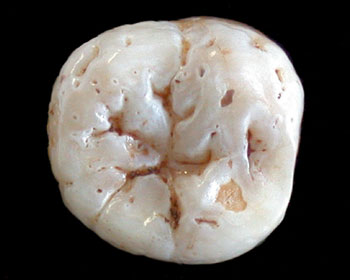
A 40,000-year-old tooth has provided scientists with the first direct evidence that Neanderthals moved from place to place during their lifetimes.

In a collaborative project involving researchers from the Germany, the United Kingdom, and Greece, Professor Michael Richards of the Max Planck institute for Evolutionary Anthropology in Leipzig, Germany and Durham University, UK, and his team used laser technology to collect microscopic particles of enamel from the tooth.

Contrary to our previous beliefs, identical twins are not genetically identical. This surprising finding is presented by American, Swedish, and Dutch scientists in a study being published today in the prestigious journal American Journal of Human Genetics. The finding may be of great significance for research on hereditary diseases and for the development of new diagnostic methods.

How can it be that one identical twin might develop Parkinson’s disease, for instance, but not the other" Until now, the reasons have been sought in environmental factors. The current study complicates the picture.

For more than a decade, Peter Zandstra has been working at the University of Toronto to rev up the production of stem cells and their descendants. The raw materials are adult blood stem cells and embryonic stem cells. The end products are blood and heart cells – lots of them. Enough mouse heart cells that they form beating tissue.

