New research provides insight into how the brain can execute different actions in response to the same stimulus. The study, published by Cell Press in the April 16 issue of the journal Neuron, suggests that information from single brain cells cannot be interpreted differently within a short time period, a finding that is important for understanding both normal cognition and psychiatric disorders.
If we're going to get a $300 genome sequence any time in the near future, around the cost it will take to have it as part of routine medical care, the process has to get faster.
The obstacles to reaching that goal have been primarily technological: Scientists have struggled to figure out how to accurately read the 3 billion base pairs - the amount of DNA found in humans and other mammals - using current time-consuming and inefficient methods.
Genetic differences can influence one's risk of developing proteinuria, a condition that increases the risk of cardiovascular disease and chronic kidney disease (CKD), according to a study appearing in an upcoming issue of the Journal of the American Society of Nephrology (JASN). The results may be important for determining patients' health risks and for devising new medical treatments.
Approximately 12% of people in the United States have proteinuria (abnormal levels of protein lost in the urine), and African Americans and American Indians have higher risks of developing the condition than other groups. Researchers suspect that genetic variation likely accounts for part of their increased risks.
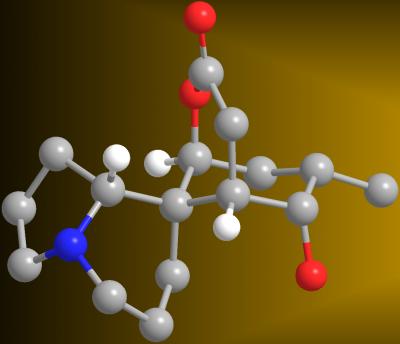
The club moss Lycopodium serratum is a creeping, flowerless plant purportedly used to treat a wide variety of ailments. It contains a brew of alkaloids that have attracted scientific and medical interest because of the use of the moss in homeopathy. However, the plant makes many of these compounds in extremely low amounts, hindering efforts to test their therapeutic value.
That is no longer a problem for what is arguably the most complex of these alkaloids, a compound called Serratezomine A: an alkaloid that could have anti-cancer properties and may combat memory loss. A team of synthetic chemists at Vanderbilt University reported in the Journal of the American Chemical Society that they have created an efficient way to make this molecule from scratch.
Today, five years after the inception of the DECIPHER database, researchers have published a report that reveals the developing role of the database in revolutionizing both clinical practice and genetic research.
The report explores the growing benefits of DECIPHER for researchers, clinicians and patients - highlighting how the data, provided by around 100 centres and shared openly worldwide, can benefit all three groups.
A study of gene expression in chickens, frogs, pufferfish, mice and people has revealed surprising similarities in several key tissues. Researchers writing in BioMed Central's open access Journal of Biology have shown that expression in tissues with a limited number of specialized cell types is strongly conserved, even between the mammalian and non-mammalian vertebrates.
Once thought to be only the realm of the blue-ringed octopus, researchers have now shown that all octopuses and cuttlefish, and some squid are venomous. The work indicates that they all share a common, ancient venomous ancestor and highlights new avenues for drug discovery.
Conducted by scientists from the University of Melbourne, University of Brussels and Museum Victoria, the study was published in the Journal of Molecular Evolution.
Dr Bryan Fry from the Department of Biochemistry at the Bio21 Institute, University of Melbourne said that while the blue-ringed octopus species remain the only group that aredangerous to humans, the other species have been quietly using their venom for predation, such as paralysing a clam into opening its shell.
Sleep is such an essential part of human existence that we spend about a third of our lives doing it -- some more successfully than others. Sleep disorders afflict some 50-70 million people in the United States and are a major cause of disease and injury. People who suffer from disturbed sleep have an increased risk of heart attack, stroke, hypertension, obesity, depression, and accidents. Nearly a fifth of all serious car crashes, in fact, are linked to sleeplessness.
Diagnosing sleep disorders is not necessarily easy. In standard "sleep studies," people spend one or more nights at hospitals or other inpatient centers, sleeping while sensors and electrodes attached to the head and torso record breathing, brain waves, heart rate, and other vital signs.
TORONTO, April 14 /PRNewswire/ --
- Provides Chromium Drilling Update
Noront Resources Ltd. (Noront or the Company) (TSX Venture: NOT) is pleased to present an update on its exploration activities in the Ring of Fire area of northern Ontario in the James Bay Lowlands.
HIGHLIGHTS - Noront continues an aggressive drill program, exploring the Ring of Fire with five drills; - Selected drill results for chromite include the following: - Hole NOT-08-1G077 intersects 35.38% Cr2O3 over 16.6 metres - Hole NOT-08-1G082 intersects 43.00% Cr2O3 over 9.0 metres - Hole NOT-08-1G085 intersects 44.02% Cr2O3 over 7.0 metres - Hole NOT-09-1G087 intersects 36.32% Cr2O3 over 10.2 metres - Hole NOT-09-1G089 intersects 42.22% Cr2O3 over 13.9 metres
Drilling Details:
DENVER, April 14 /PRNewswire/ --
Altira Group LLC - a pioneer and leader in venture capital and private equity funding for energy technology companies, today announced two significant investments totaling US$9.0MM.
Demonstrating its commitment to helping meet global energy demand Altira went against the national trend of declining venture capital investments by making multiple investments in energy technology.